×
 How does legacy system modernization help manufacturing industries preserve their existing investments?
Manufacturing industries still rely on aging legacy systems for their production. These outdated systems create compatibility issues, security vulnerabilities, scalability limitations, and increasing maintenance costs.
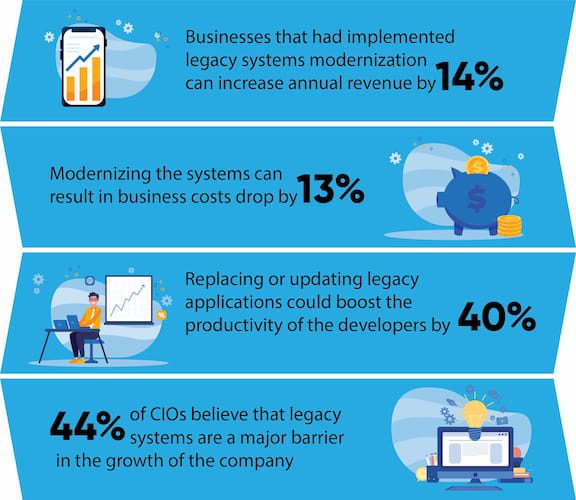
Studies have shown approx. 90% of businesses underperform due to outdated systems, and enterprises lose up to $2 million per downtime incident. With legacy system modernization, manufacturing industry can preserve their existing investments while enabling integration with modern technologies and minimize costs.
 Articles
The manufacturing industry is considered a powerhouse and economically critical sector. Millions of products are manufactured every day, and billions of dollars are exchanged. It was estimated that the global market of the manufacturing industry will be valued at approximately $44.54 trillion in 2023, which makes it about 16% of the global GDP.
Manufacturing industries rely on legacy systems to drive their operations. These resilient and reliable systems have become the essential foundation for businesses around the world. But now, with technology advancing at an extraordinary pace, maintaining this outdated legacy hardware has become tedious. This challenge has brought legacy system modernization to the forefront of manufacturing priorities.
In this blog post, explore how legacy system modernization will help preserve investments and discover the challenges in the manufacturing industry associated with legacy


Legacy systems are integral and long-standing technology for operations in manufacturing sectors. These were customized according to business requirements a long time ago, but as technology advances, they are becoming an obstacle.
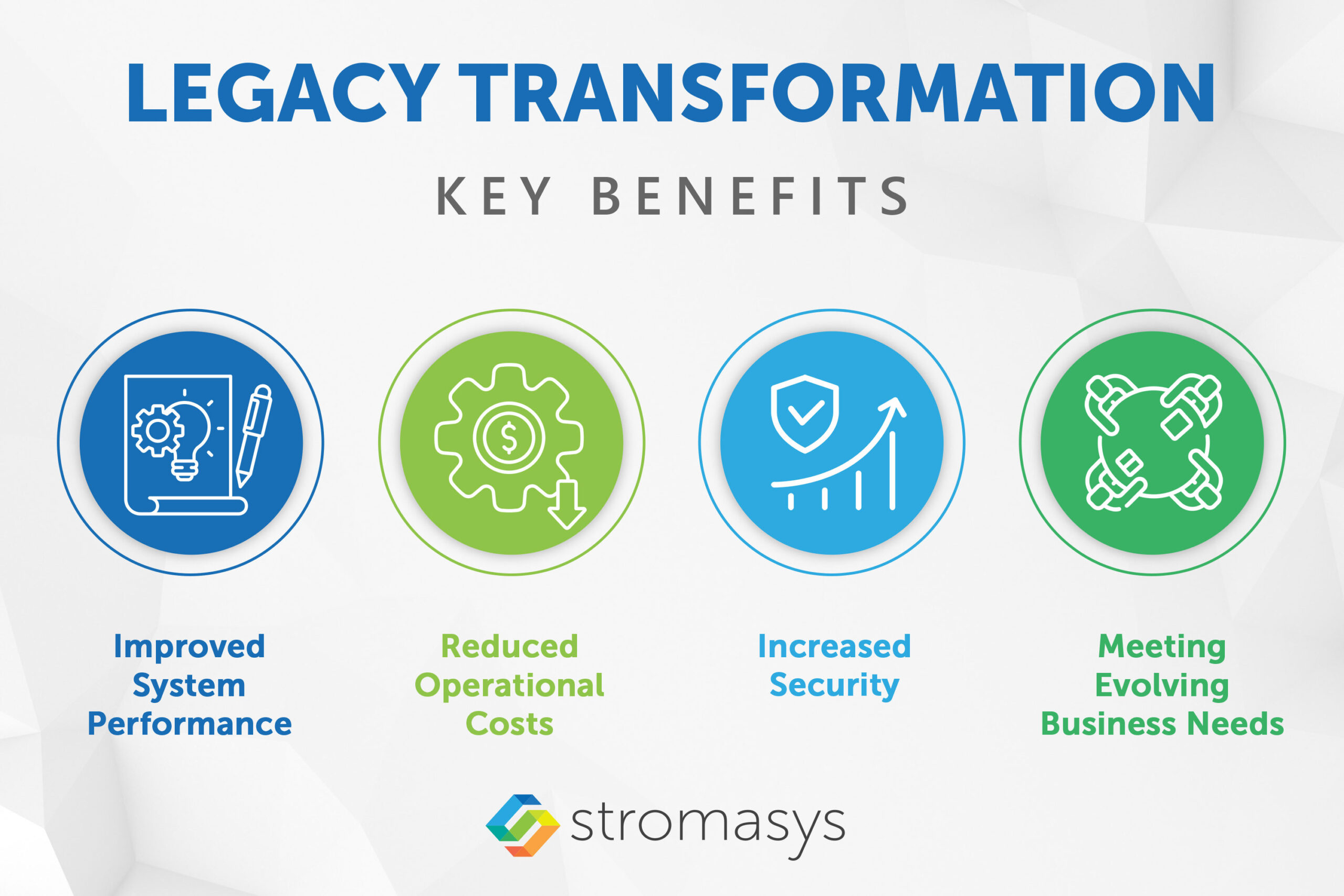
They are critical for maintaining operational continuity but are now moving towards the end of their life cycle. Challenges like downtime, supply chain disruptions, and cyber threats are just some common examples that businesses encounter. Legacy system modernization approaches, along with risk management strategies, are the solution for maintaining business continuity and stability.
Alteryx-commissioned IDC survey reported that around 90% of businesses are not performing efficiently due to their outdated legacy systems. There are several challenges of aging legacy, including:
Modern techs are often incompatible with outdated legacy systems, which results in integration issues that affect operations.
Older legacy hardware and software lack modern security features, making it vulnerable to cyber threats and can result in data leaks.
Aging legacy may not be fully equipped and unable to scale up their operations to meet the growing demands. This results in inefficient productivity and rising product costs.
Aging legacy systems require costly maintenance and specialized support, which results in increased expenses and is time-consuming.
With time, aging hardware and software are sometimes not supported by the manufacturer, and their parts are not readily available.
Legacy modernization allows manufacturers to preserve their initial investments or legacy systems while also enjoying the benefits of the latest technology by integrating them. By preserving these investments, businesses can leverage existing resources more efficiently and ensure a seamless transition to the updated systems without starting from scratch.
According to a Gartner study, legacy system modernization can reduce IT infrastructure costs by up to 74%. However, legacy system modernization is not easy, as it involves strategic planning and execution to preserve existing investments carefully.
Manufacturing industries have substantial data, processes, and customizations of their legacy system according to their business requirements, and having the complete infrastructure replaced can be extremely expensive and impractical.
Around 82% of the enterprises have faced unplanned system outages in the past three years according to the Vanson Bourne Research Study. These disruptions usually last up to four hours leading to huge financial impact. It is estimated that the businesses lose approximately up to two million dollars per incident. And downtime is one of the major problems that occurs if a business is still working on the aging legacy systems.
The key to creating a balance is leveraging existing investment (legacy system) and emulating it. This enables businesses to run their existing legacy systems on a modern platform where it can be easily integrated with new technologies and applications to strive for business continuity and competitiveness.
Here are the benefits of emulating the aging legacy systems:
For more than 25 years, Stromasys has provided legacy emulation and virtualization solutions across 70 countries. The Charon emulation solution extends the life cycle of aging legacy systems like SPARC, Alpha Server, VAX, PA-Risc, PDP, and more by emulating them from an older hardware platform to a newer one, like x86 or a cloud.
This approach is cost-effective, as it reduces maintenance costs, enhances performance and reliability, minimizes disruption during operations, and prevents security risks.
Stromasys experts first assess the aging legacy to identify the areas for improvement and then determine which modern strategy is best suited for the manufacturing business.
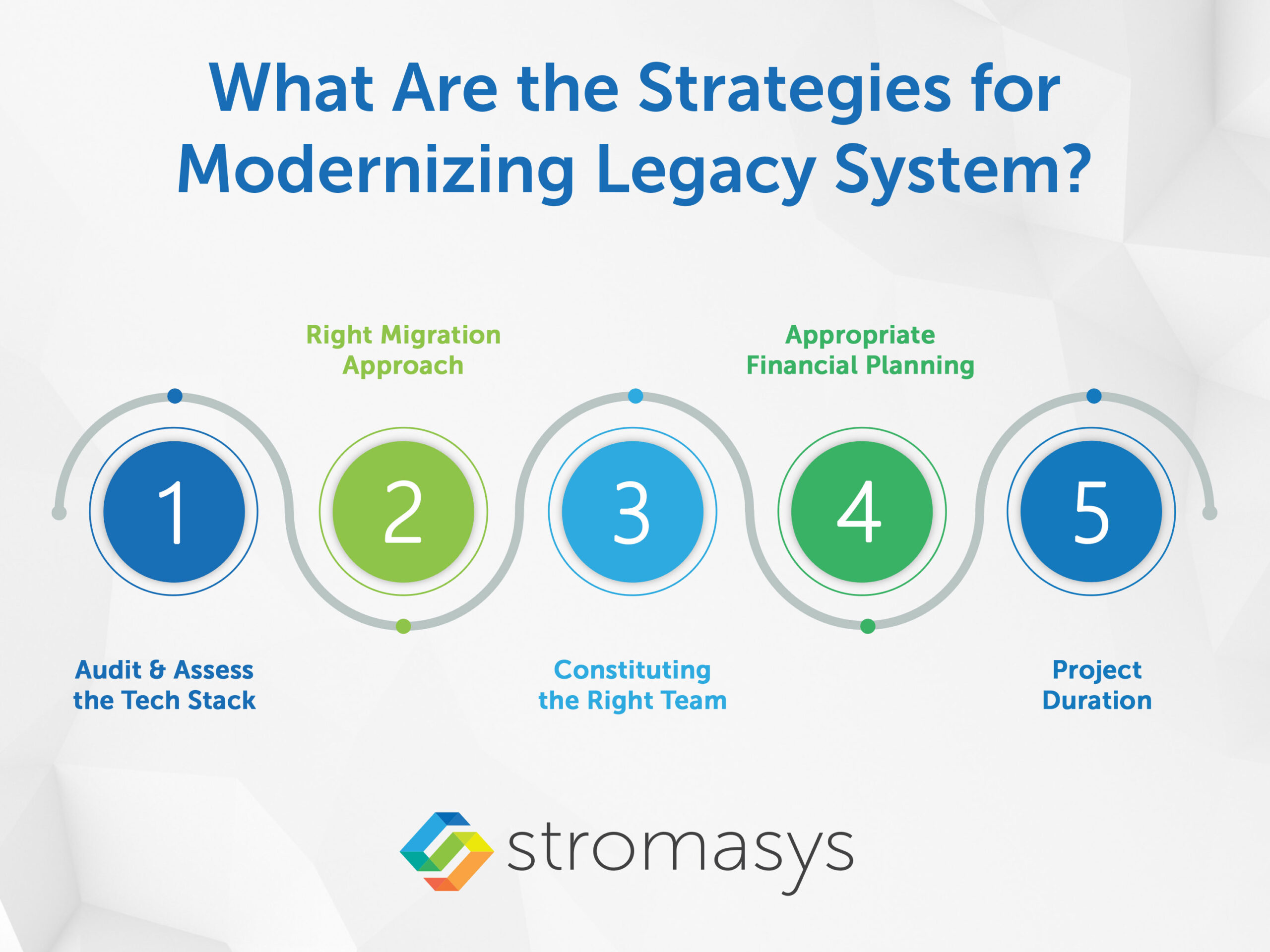
Stromasys is a leading provider of enterprise-class solutions for legacy system modernization and cross-platform server virtualization. Their advanced technologies and services help manufacturing companies preserve their investments while leveraging modern IT infrastructure and capabilities.
To understand which strategy best suits your business, Get in touch with Stromasys’s experts. They will help you with all your queries regarding the complexities of legacy system modernization.
Legacy system modernization is crucial for the manufacturing industry to remain competitive and efficient. By overcoming the challenges of the outdated legacy, manufacturers can secure their investments and take advantage of modernization’s benefits. Modernization not only improves operational efficiency but also minimizes downtime and security risks while reducing maintenance costs. With the right approach, businesses can transform their infrastructure and make informed decisions to ensure business continuity.
Modernization is not just about upgrading the infrastructure but also about using the latest technology to lead a more agile, efficient, and resilient manufacturing future that offers a better customer experience.
Outdated legacy systems are prone to security risk due to a lack of proper security measures, which can raise compliance issues and result in legal and financial penalties.


The IT landscape is rapidly evolving, and businesses still operating on legacy hardware are facing...
Read More
DEC Alpha hardware has been pivotal to many businesses due to its reliability, performance, and...
Read More
Legacy application migration is a new trending buzz of IT discussion. Businesses are migrating from...
Read More