
×

 WHY DOES YOUR HYPERVISOR SELECTION DEPEND ON YOUR STRATEGIC DECISION?
Virtualization gives you more advantages than you can count. It allows you to run multiple software through virtual machines on the same hardware. It feels like running separate servers, networks, storage, etc., but, in reality, you are running just one.
Choosing a hypervisor feels like you have to just check its specs, like CPU, memory, disk, network, and so on to make a decision, but it's more. You have to understand what you need, what you can afford, what hardware and software you have, the features, the license, the support, what you plan to do in the future... The list is endless.
However, knowing everything is better than later repercussions. It helps you make wise decisions and take the steps necessary with keeping that hypervisor.
 Article
Enterprises in the early days depended on classical hardware systems. This meant servers, storage, networks, etc. kept increasing as the business grew. More employees were needed. More maintenance. More repairs. More expenses.
Until virtualization came to the rescue. People had the lightbulb moment of dividing one piece of hardware and delegating multiple tasks to each. It didn’t just save people or companies or money; it saved the hardware world.
However, virtualization only has the necessary effect through careful hypervisor selection. After all, you need to think not just about having the right hardware but also the right software, which is where the hypervisor lies.
This blog tells you everything you need to discuss and the things you need to avoid for making a successful hypervisor selection. You read not only about all the points you need to consider but also the goals you need to achieve and the details that you should be careful about.
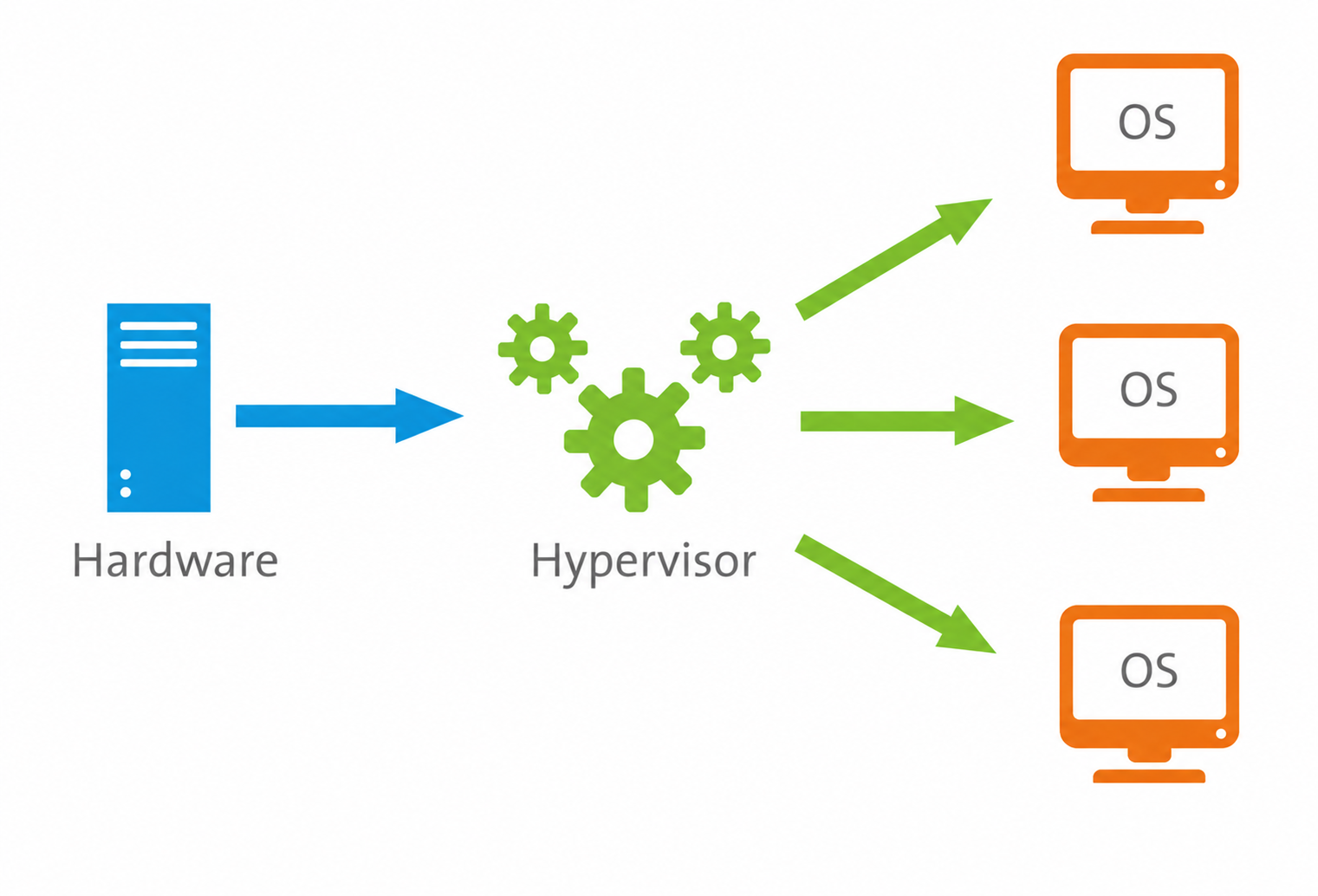
For a thorough hypervisor comparison, you must first understand virtualization. Virtualization is a process in which a single physical computing machine is divided into multiple virtual ones, like servers, storage, desktop, networks, etc. The virtual representations are known as virtual machines (VMs).
Each VM is isolated, running its own OS and applications. A software system lies between the physical resources (host machine) and the virtual ones (guest machines). This software is known as the hypervisor or virtual machine monitor (VMM). It splits the physical components like CPU, storage, memory, and network for use by the VMs by creating their virtual versions.
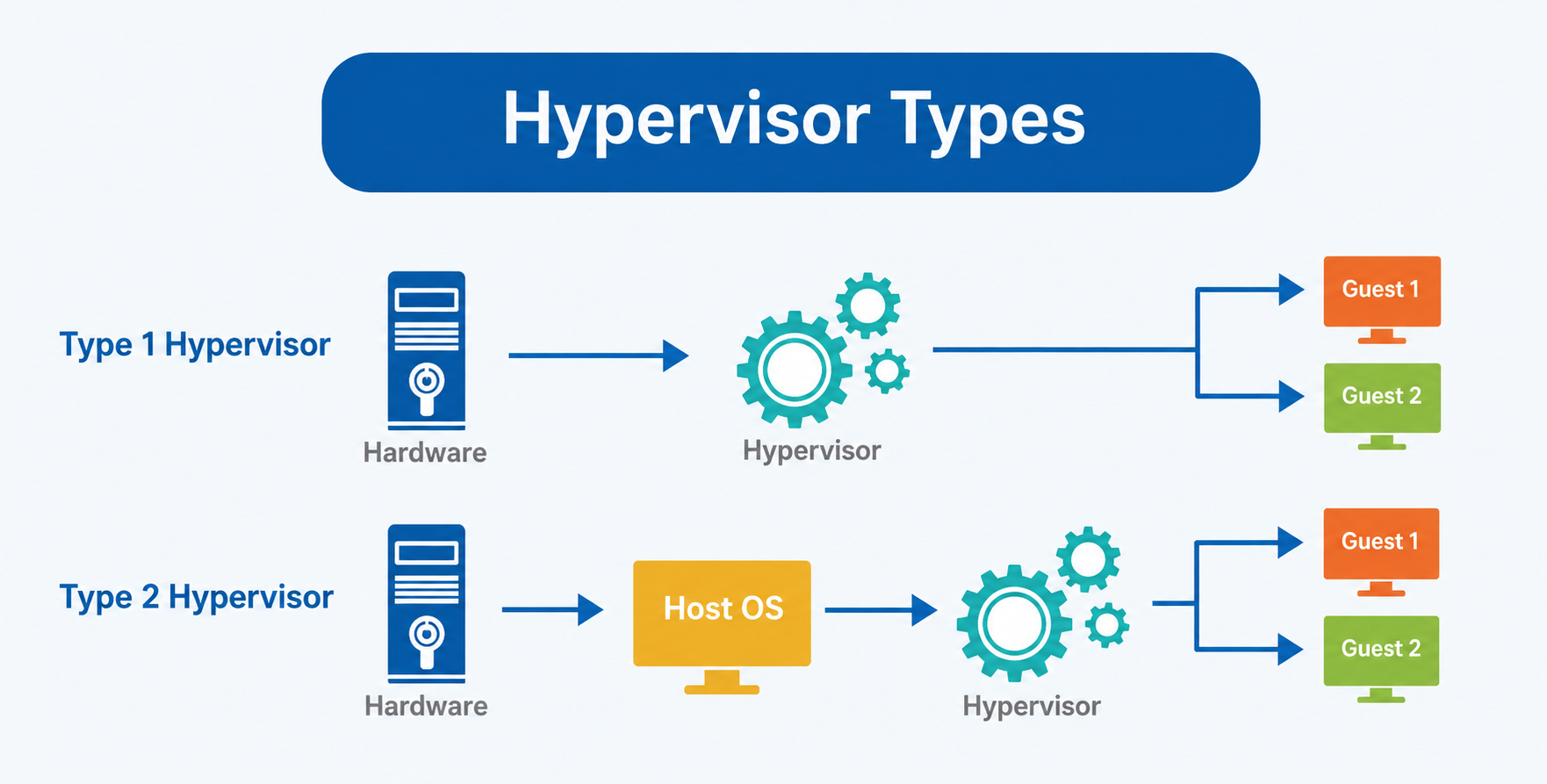
A hypervisor may be Type 1 or Type 2. The first, also known as bare-metal or native hypervisor, runs directly on the host hardware with no base OS. Expect high efficiency and security from this but understand that you will need a dedicated machine. It is used primarily for enterprises. Examples include Microsoft Hyper-V and VMware ESXi.
On the other hand, the second, also known as a hosted or embedded hypervisor, runs on the computer OS, just like an application. The host OS makes hardware calls for the guest OS; the guest has no direct connection to the hardware. It is used mainly for testing and development purposes and in desktop virtualization. Parallels Desktop and VMware Player are two examples.
You must determine how to choose a hypervisor that suits your needs and does not cost you more than before.
Virtualization started in the 1960s, growing in importance over the years, and it is not just due to reduced hardware or greater agility. People appreciate the variety of ways in which it is more advantageous than classic hardware, owing to scalability, resilience, and much more. This is all possible with the right virtualization platform selection.
Cyfuture Cloud reports that companies noted that their operational efficiency improved by 50% once they started using virtualization. This means faster working using less resources for better results. Ultimately, both the company and its employees benefit from that.
On the agility front, 66% of businesses experienced an increase, according to Fortune Business Insights. Such results would not have been possible in unvirtualized hardware. It goes on to show how virtualization makes businesses more than ready – it makes them smarter.
However, the only way you can ensure virtualization delivers the outcome that you need is careful consideration and collaborative deliberation. This includes the hypervisor selection, an integral part of any virtualization starting process.
Choosing a hypervisor that fulfills your requirements is key to success in virtualization, and companies can feel it in great amounts. Maximize Market Research points it out: the global market for hypervisors was USD 2.63 billion in 2025 and will grow to USD 16.33 billion in 2032, with a CAGR of 29.78% in the period.
Of this, Type 1 hypervisors emerged as the market winner in Europe by MarkWide Research. People chose it over Type 2, hybrid, and other options. It is also curious to note that while North America remained the largest market, Asia-Pacific was growing the fastest, as noted by Data Horizzon Research.
For hypervisor comparison by the companies providing them, VMWare still leads, but open-source options like KVM and Xen are gaining ground, according to ShapeBlue. However, can it provide the same kind of usage as the ones that are proprietary? The C-suite has such ambitions.
As Olivier Lambert, founder and CEO of Vates, said, “There is a gap in a lot of open-source projects regarding the way how easy or complex a program is to use. You always have the impression that it is DIY stuff. That’s how we have built our success in open-source projects by building the glue around to get something close to VMware in terms of the impression of usage.”
The following metrics will help in choosing a hypervisor fit for your needs:
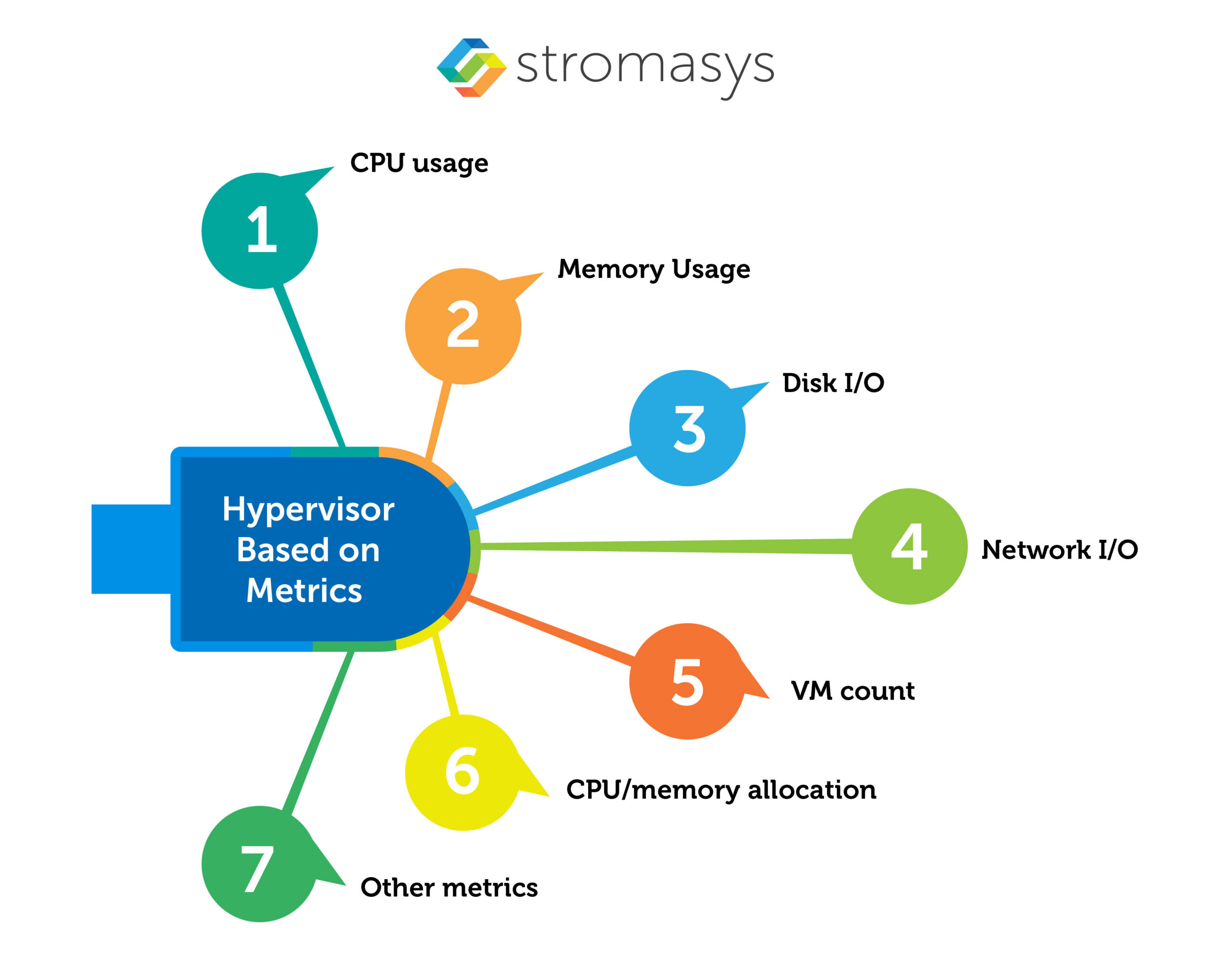
These are important to know:
However, the right method for hypervisor selection goes beyond metrics. You need to look at the bigger picture.
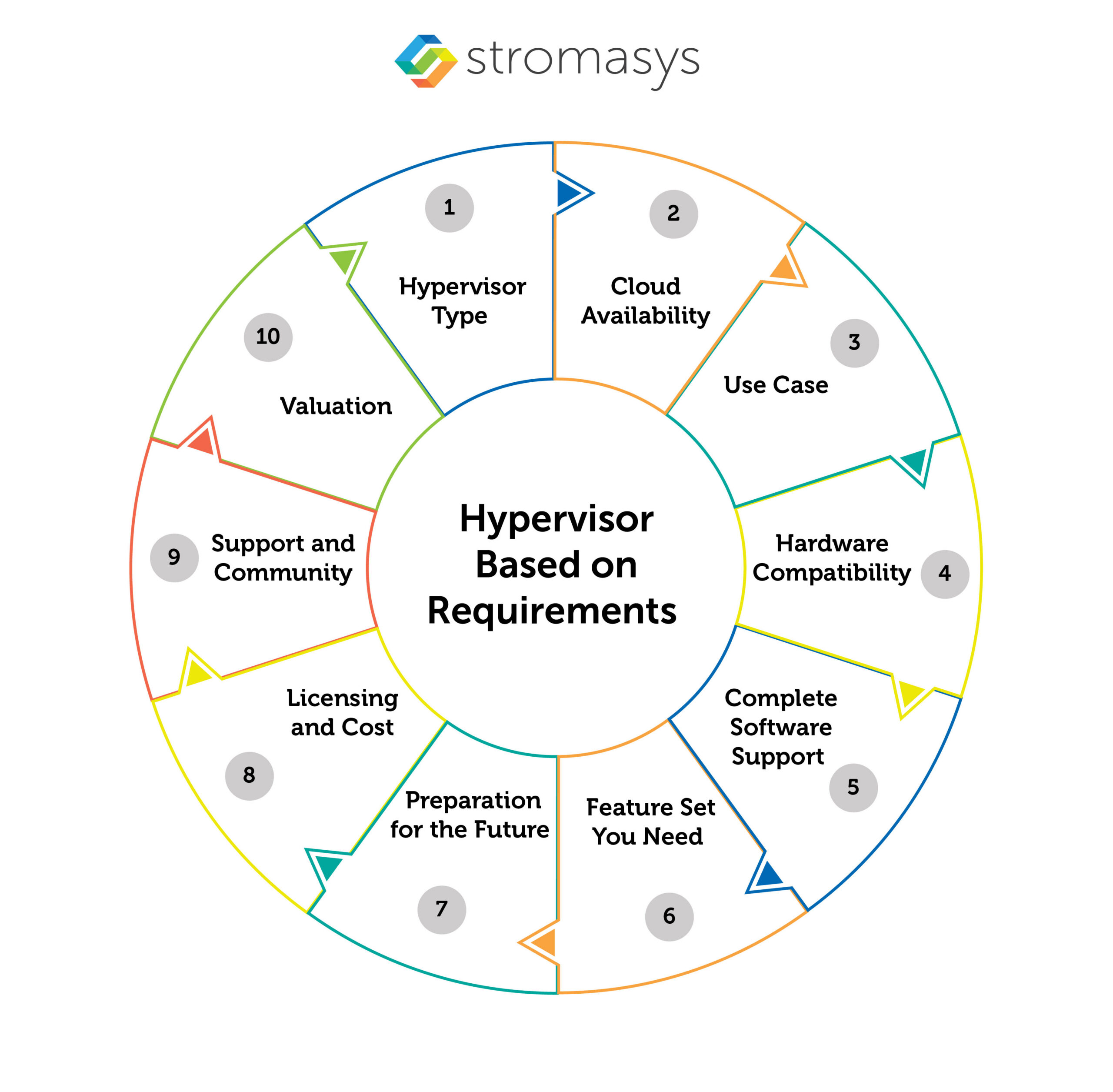
A good hypervisor selection goes beyond checking metrics. It goes beyond this/that and enters a realm of mix-and match. Here are all the things you need to consider before making a choice. You decide based on:
The first answer every company must obtain on how to choose a hypervisor is based on their workload requirements. It can be Type 1, Type 2, or hybrid. The first is for high-performance, enterprise‑grade virtualization, the second for development, testing, and experimentation. The third is for people who need both.
There is also the option of moving to the cloud. If you want disaster recovery, geographical portability, and scalability, choose the public or private cloud. Most companies go for a combination of both on-prem and cloud services for optimized resource allocation.
Your business requirements come first when you go for virtualization platform selection. If you run an enterprise or need a hypervisor for a data center, a solution like VMware ESXi/vSphere is the right choice for you. Whereas open-source options like KVM or Proxmox are the better choice for cost-effective, flexible deployments.
Nutanix AHV is perfect for integration across edge sites, while Microsoft Hyper-V works seamlessly in Windows-centric environments. Your case is best decided based on the enterprise approach and level of working.


Your hypervisor selection also depends on the hardware you provide. See if your CPU virtualization extension goes with the hypervisor. Your memory configuration and chipset should work with it.
While it may seem unimportant, your peripheral devices also must fit with the hypervisor you are choosing. Your entire working system must match with your hypervisor, so you do not face issues later.
The hypervisor you choose must gel well with the entire software set you will have in your guest systems. This includes the versions of the operating system and applications. Advanced capabilities and special integrations that you need should come within your checklist.
Your hypervisor selection should also count the features you need for the workload you demand. VLAN tagging, SDN integration, automation, live migration, networking, high availability, etc. are each required for specific cases. The hypervisor you choose should address them as you need.
What you plan to achieve in the future decides your hypervisor selection. Whether you want horizontal scaling, with scheduling for example, or vertical scaling, with resource size adjustments, make sure your hypervisor can progress accordingly.
You also need a hypervisor comparison between proprietary and open-source options depending on your needs. The first, which includes VMware, Hyper-V, etc., is perfect for enterprises that require access to special features and support.
On the other hand, if you need a free and flexible option, open-source hypervisors like KVM and Xen will do the trick. The type of hypervisor you go for will depend on your workload and expenditure cap.
During hypervisor selection, you should definitely consider whether support is available for every possibility in the short and long term. Troubleshooting guides and a community forum are necessary, especially with guaranteed users, for both open-source and enterprise hypervisors.
In enterprise options, SLAs and plug-ins are absolute necessities. Technical support in any circumstance ensures that difficulties or confusions are responded to. It should also come as quickly as possible.
Your virtualization platform selection will decide how much you end up spending. Every hypervisor expresses their cost on paper, including subscription, license, support, and toolset, but you also have maintenance, compatibility, add-ons, downtime, and others. The final cost will depend on your operations.
Choosing a hypervisor is more about what it entails for the enterprise and less about the metrics it comes with.
Legacy systems include outdated hardware and software which cannot, for all intents and purposes, be run anymore or are about to expire. Virtualization is a hard pass for such systems, since hypervisors cannot support them.
However, some hypervisors, like VMWare and Hyper-V, can run aging systems, albeit in controlled environments. While running them is easy, every operator and engineer must be cautious to maintain a smooth workflow.
Enterprises often have OS and applications that become legacy, but it is hard to start modernizing instantly, while other systems on the hypervisor still are with the times. As a result, they need time and preparation without turning off their workload.
The above and other such hypervisors allow such legacy systems to keep working while the company transforms the legacy system into a modern one. By discussing and deciding how to choose a hypervisor that is compatible with every software they have can an enterprise truly achieve the goals they wish to.
Looking at the hypervisor stats is as important as your current technology ecosystem, expenses, and people to help you. Yet, people are bound to make mistakes that they have to correct later, at a great cost to employee and C-suite peace-of-mind.
Stromasys can help those enterprises regain their peace through their world-class Charon emulation. It emulates SPARC, AlphaServer, VAX, PA-RISC, and PDP-11 hardware by mimicking their environment on modern x86 servers or the cloud.
Using lift-and-shift or rehosting, the software remains unchanged while moving from legacy hardware to modern platforms. Employees can continue with their day-to-day operations, feeling no changes whatsoever.

With the correct hypervisor selection, you can move the actions of the legacy system to modern, virtualized hardware without any complications or risks. Other software with modern versions on the virtual machine keeps working as they did without experiencing any changes.
When all your software and hardware requirements match, you look at pricing and support for hypervisor selection. The cost in case of open-source hypervisors is less, but so is technical support. Choose the option that suits your needs the best.


The IT landscape is rapidly evolving, and businesses still running legacy hardware are facing numerous...
Read More
DEC Alpha hardware has been pivotal to many businesses due to its reliability, performance, and...
Read More
Legacy application migration is a new trending buzz of IT discussion. Businesses are migrating from...
Read More