
×

 How does legacy system modernization transform the telecom industry?
By replacing the legacy systems, the telecom industry can seamlessly modernize the outdated infrastructure. There are various legacy modernization methods like lift-and-shift migration and hardware emulation. These approaches minimize risk, reduce implementation time to weeks, and maintain business continuity without retraining or service disruption.
By transforming the infrastructure, they can easily enhance reliability, scalability, efficiency, reduce costs, and enable innovation. It also helps telecom operators handle growing data demands, improve bandwidth, minimize downtime, and achieve up to 60% operational cost savings while ensuring future readiness and lower cybersecurity risks.
 Article
The US Telecom Market is estimated to reach $4617.78 billion by 2030. Clearly, today’s communication service providers (CSPs) must manage their business more efficiently than before to address increased customers and compete with the growing number of products.
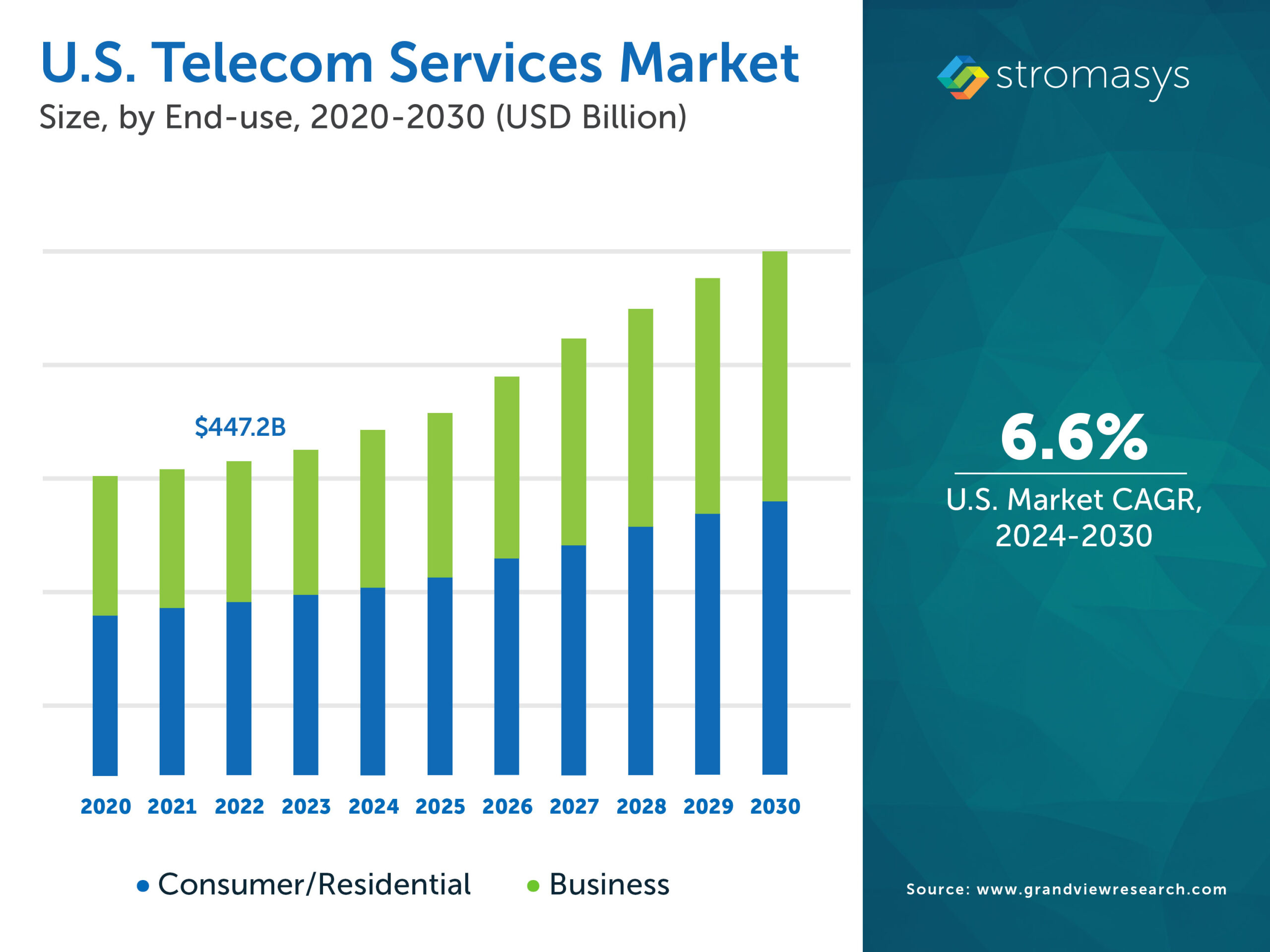
But in reality, only a few will succeed as most of them still use legacy systems to run their businesses. In fact, data suggests that telecom businesses still spend 60-80% of their IT budget on maintaining legacy systems.
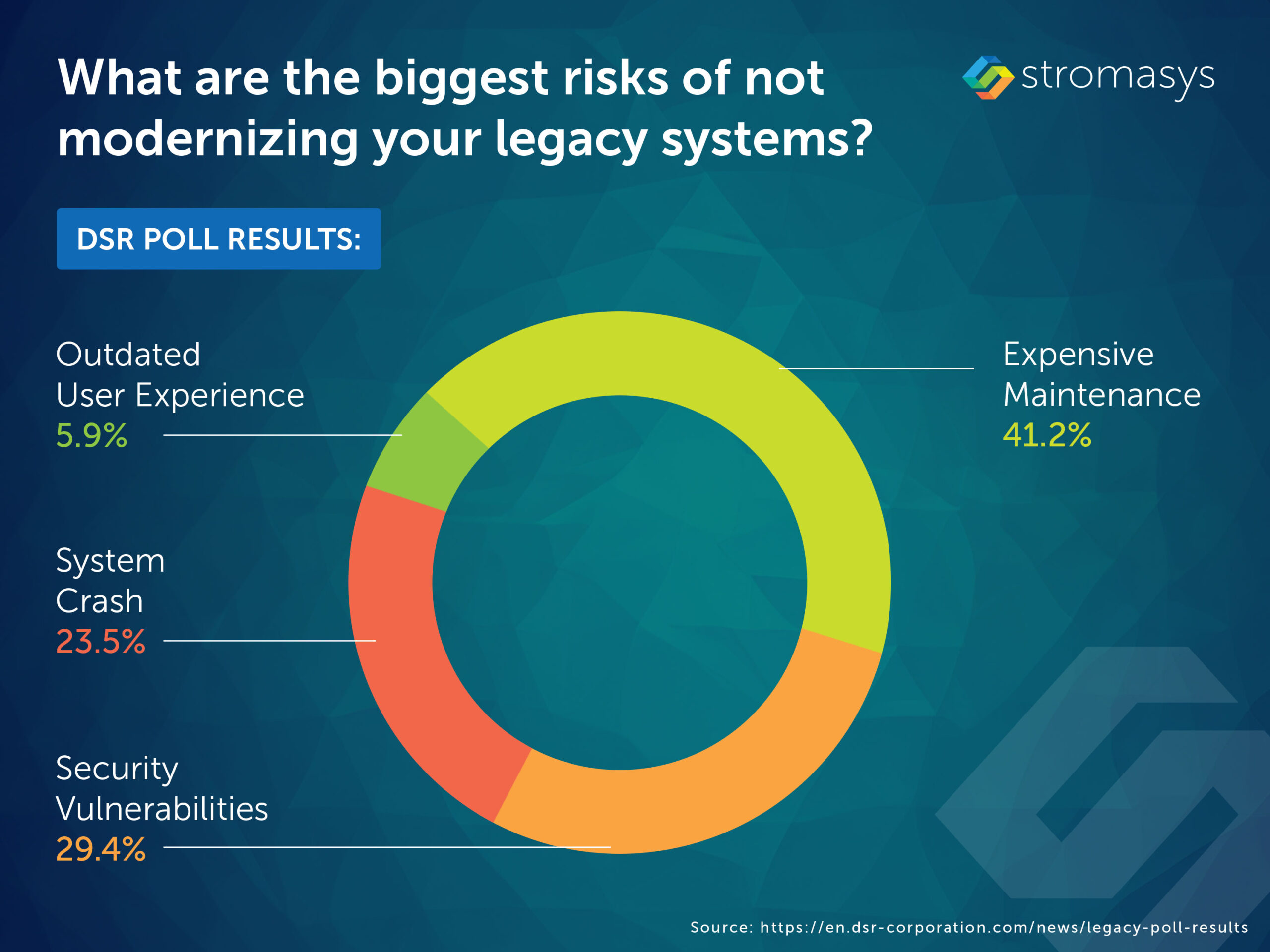
Maintaining the failing legacy hardware is like putting your business at risk. Unexpected system crashes can lead to production loss and unsatisfied customers.
The reality is that when legacy hardware fails, businesses wish they had planned ahead. When legacy hardware breaks, there’s no longer any time: getting the system up and running again is urgent and crucial to the company’s success.
So why hold on to the past when you can make your business more futuristic?
The lesson is clear: modernization is not an option. It’s crucial for any telecom enterprise that wants to thrive in the modern business landscape.


Now, you have reached a point where something must be done with the legacy system. But where to begin? This article aims to guide you through the process. Discover the proven benefits of Legacy modernization in telecom industry and how to do it correctly.
The irony with your business is that despite spending a lot of money maintaining your legacy telecom systems, the risk of business failure is increasing daily. Find out how Legacy modernization in telecom industry can save your business, where you will pay significantly less and still become risk-free.
According to a survey, you can save up to 60% (on your hardware and operation) a year by adopting legacy system modernization. Additionally, your energy costs are reduced, and efficiency improves. Over time, these savings add up, benefiting your bottom line. You can re-invest the extra funds into other important areas of your telecommunication business like marketing, customer service, and product development.
Research shows that the average hourly cost of server downtime ranges between $301,000 and $400,000. Thanks to modernization, downtime will become rare, and operations stay smooth. Also, redundancy and fault tolerance mechanisms ensure continuous communication.
Did you know the number of cybersecurity attacks that occur daily? It’s 2,200 attacks every day, which means there is 1 attack in every 39 seconds. Legacy systems are highly vulnerable and prone to security risks. So, it is evident that if you want to grow your business in this thriving telecom world, modernization is the only way forward.
Modern telecom infrastructure offers higher bandwidth capabilities. This means faster data transmission and improved network performance. Users experience seamless communication, and productivity gets a boost. Imagine video calls without lag or high-speed internet for remote work. That’s the difference modern hardware makes.
With modern infrastructure, scaling your network becomes much easier. As your business grows, your network can expand too. Whether it’s more users or new tech trends, legacy modernization in telecom industry prepares you for whatever comes next.
Technology evolves quickly. Legacy hardware becomes outdated and unsupported, leading to expensive upgrades or replacements. Legacy modernization in telecom industry helps you avoid these challenges, keeping your telecom infrastructure current and avoiding the high costs associated with obsolescence.
At this point, you are likely aware of the significance of legacy modernization and may be looking for a suitable strategy for modernizing the legacy systems in your telecommunication business.
Well, we understand the challenges involved in starting from scratch. Don’t worry. We are here to help you out. That is why we have developed this table so that you can compare and choose the right strategy for you:
| Criteria | Option 1: STATUS QUO (NO CHANGE) | Option 2: REWRITING THE APPLICATION | Option 3: LIFT AND SHIFT MIGRATION |
|---|---|---|---|
| BUSINESS RISK | ❌ Aging hardware, increased network downtime, dropped calls, and slow data transmission | ❌ Business continuity at risk, potential service disruptions, and high development risks | ✅ Minimum disruption, maintain call quality and data flow |
| COST OF CHANGE | ❌ No additional costs but high running expenses | ❌ High costs including development, deployment, and new licenses | ✅ Value for money, and lower total cost of ownership |
| IMPLEMENTATION TIME | ✅None | ❌ Lengthy process involving planning, execution, testing, and rollout | ✅ Minimal, quick deployment without service interruption |
| MAINTENANCE COSTS | ❌ High maintenance costs due to aging hardware | ✅ New hardware with modern support contracts | ✅ New hardware with reduced maintenance costs |
| PERFORMANCE | ❌ Outdated memory, capacity, and processing speed; affects call quality, data throughput, and latency | ✅ Enhanced performance with new hardware | ✅Improved bandwidth, latency, and overall network performance |
| USER TRAINING | ✅None | ❌ Extensive training required for new systems and applications | ✅ None – necessary applications remain unchanged |
| ENERGY COSTS | ❌ High energy consumption, inefficient old hardware | ✅ Energy-efficient new hardware | ✅ Energy-efficient new hardware |
The above table clearly shows that lift and shift migration is the preferred option. But what exactly is lift and shift migration? How does it differ from traditional migration? And who offers it?
We understand that you may have many questions, which is perfectly fine. Let’s examine this closely and explain it to you.
Complete legacy system migration or re-writing the application to run on more modern operating systems and hardware platforms is an expensive and risky proposition. The classic system has likely been running for twenty or more years, is composed of millions of lines of code, contains thousands of workflow processes, and has had hundreds or even thousands of
modifications over the years. Furthermore, the company is absolutely dependent on the proper and effective operation of the application to keep operations running.
Here lift and shift migration comes to the rescue. Lift and Shift migration is a legacy hardware emulation technique that allows you to run your legacy applications without the need for vintage hardware. A new hardware environment will be created to mimic the legacy hardware, allowing the older application to run as if it is on the older hardware. But in reality, it is running in a new environment. Decoupling the aging hardware from the software allows the software to operate more efficiently without being dependent on older hardware. Therefore, it helps to minimize the risks associated with outdated hardware and enhances performance.
Planning ahead is highly challenging without knowledge of legacy hardware emulation. So, how do you start with lift and shift migration?
Imagine managing your telecom infrastructure without the hardware headaches. Yes, we at Stromasys, make that possible with our very own Charon® legacy server emulator. By virtualizing your legacy telecom hardware, Charon® allows your telecom applications to run unmodified on modern, industry-standard servers. Say goodbye to the stress of hunting for spare parts for outdated network equipment.
Charon® stands out as an affordable, low-risk option that can be up and running quickly—often within a week. This means you can keep your reliable telecom applications, like network management systems or billing software, running smoothly without disruption.
Our solution is all about flexibility. Whether you see Charon® as a permanent fix or a temporary bridge to future projects, it’s designed to fit your needs. Protecting your software investments and easing decision pressure has never been easier.
The first step is simple: contact Stromasys. A dedicated Stromasys specialist will work closely with you to understand your goals and performance needs and thoroughly inspect your system. Together, we will analyze your telecom environment and recommend the best product and host system.
Next, we’ll install Charon on your industry-standard server or chosen public cloud and restore a full backup of your legacy telecom system. This stage allows us to thoroughly test your applications in the Charon environment, such as switching systems or customer databases.
We’ll identify and resolve any differences in behavior. Once functional and performance testing is successfully completed, we move to the final step: data migration.
Unlike software migration, this process keeps your applications unchanged. Interested in learning more? Let us help you secure and simplify your telecom infrastructure with the Charon® Emulator.
As the telecom sector rapidly evolves, outdated legacy systems can impede growth and efficiency. Thus, legacy modernization in telecom industry is no longer a matter of “I’ll think about it later.” – it’s a necessity.
Complete legacy system migration involves high costs and time, but lift-and-shift migration with the Charon® emulator doesn’t. This approach allows you to maintain your existing applications on new, reliable hardware, ensuring smooth and uninterrupted operations.
Legacy systems often come with high maintenance costs, frequent downtime, and security exposure, and they are generally of poor scalability. Moreover, these legacy systems find it quite difficult to support new technologies and meet customers’ expectations.


The IT landscape is rapidly evolving, and businesses still running legacy hardware are facing numerous...
Read More
DEC Alpha hardware has been pivotal to many businesses due to its reliability, performance, and...
Read More
Legacy application migration is a new trending buzz of IT discussion. Businesses are migrating from...
Read More