
×

 What are the steps to migrate your outdated SPARC systems to a modern IT infrastructure?
SPARC servers were once widely popular for their high reliability, but with aging hardware, businesses are now struggling with declining performance, limited scalability, and rising maintenance costs. Although the SPARC systems have reached their end-of-life, Solaris applications are still operational. Transforming SPARC infrastructure means migrating the Solaris workloads to modern platforms, such as x86 or a cloud environment. With lift-and-shift emulation, businesses can seamlessly transform their outdated SPARC infrastructure without making any modifications to the binary code.
Also, with a structured migration approach, businesses can reduce downtime and data risk while improving stability. Charon‐SSP uses the lift and shift migration approach to move the SPARC and Solaris workloads. It is available for both on-premises and cloud environments.
 Article

SPARC migration involves transferring SPARC workloads to a different environment, enabling business applications previously reliant on SPARC to operate on modern platforms.
Lift and shift or hardware emulation enables this capability. This method emulates SPARC hardware on contemporary platforms, allowing legacy applications to operate as if they are on SPARC.
The operating system, application, and data will be transferred from the original SPARC server to a different platform. Only the outdated SPARC hardware will be removed.
SPARC migration comes with a multitude of benefits that include:
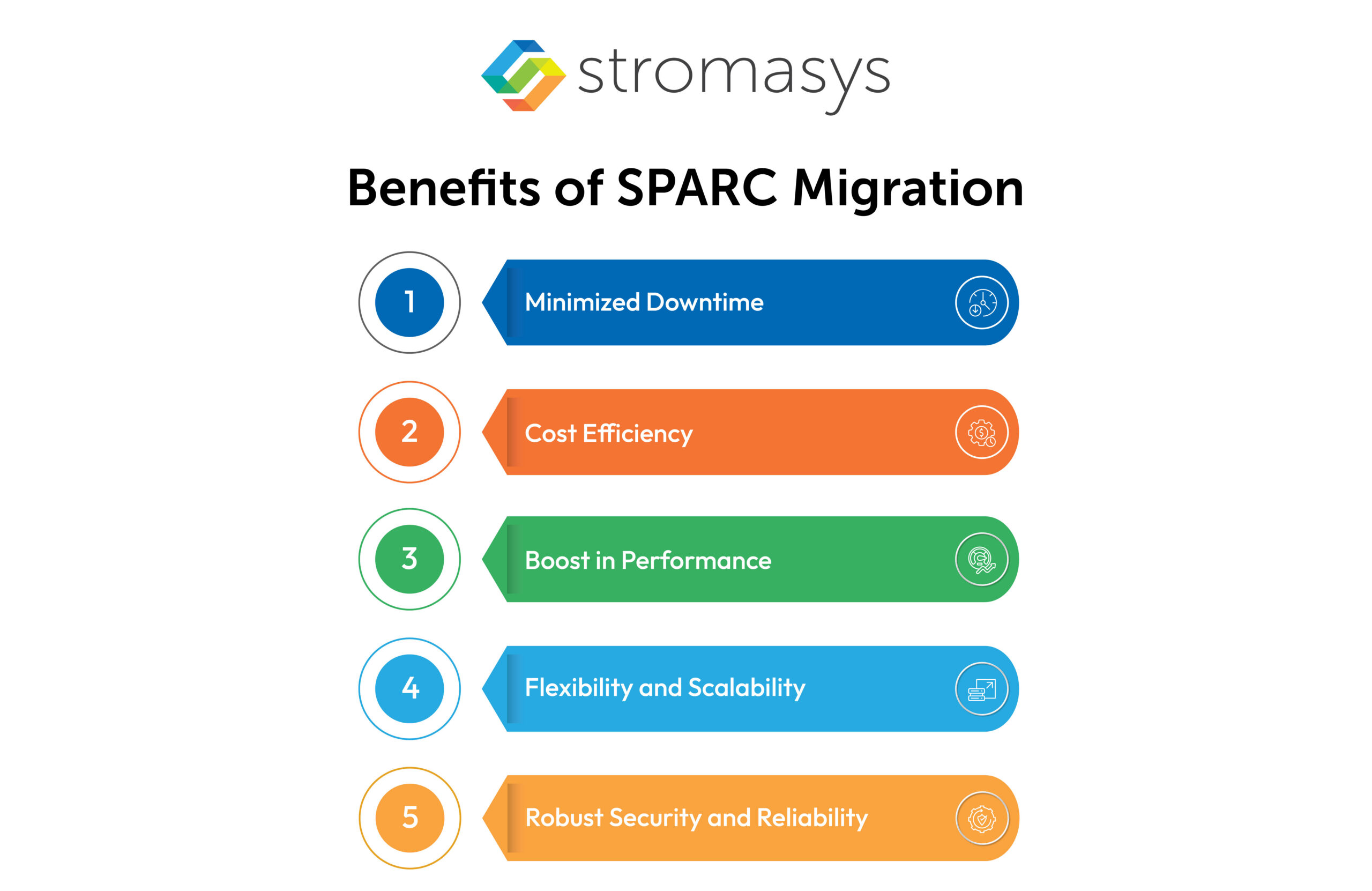
SPARC migration minimizes downtime and ensures businesses can continue their operations seamlessly without any interruptions and ensures businesses can continue their operations seamlessly without any interruptions.
Purchasing new hardware is expensive compared to migrating Solaris SPARC to x86 or cloud. Migrating not only extends the life of the server but is also cost-effective.
The new server will have improved processing power, good I/O speed, and memory speed, which will enhance data processing power and reduce latency.
Modern environments are more flexible and scalable, as they easily adapt to business requirements. This allows businesses to manage their resources efficiently.
The new server comes with advanced security features to protect against modern vulnerabilities and threats. It is also more reliable, ensuring the availability and integrity of business data.
Organizations typically choose from several migration paths:
1. Cloud Platform Migration
2. x86/Linux Platform Migration
3. Virtualization
Here are some steps that are to be followed while migrating the SPARC server:
The first step in SPARC server migration is to understand the objective of the migration, such as which platform, x86 or cloud, is to be moved. Then, a thorough assessment of all the hardware and software involved in this migration process is conducted.
Now, potential risks are identified to develop strategies that will help mitigate those without any data loss or downtime. Finally, a comprehensive SPARC migration plan is created that will include complete details like timelines, required resources, budget, and more to ensure a smooth migration process.
To prepare for the migration, businesses need to start by creating backups for all the configurations and critical data. It is also recommended that they perform a test migration to identify any potential issues and address them accordingly.
Before initiating the migration process for the SPARC server, it is suggested that any running programs or services be shut down to avoid data corruption. Now, businesses need to install and configure the new platform to which the legacy SPARC system will be migrated. Then, the data will be transferred, and its integrity will be ensured. Finally, replication of the original server’s setting is carried out to ensure continuity.
Once the SPARC migration process is complete, ensure all the applications function properly through in-depth testing. Get end-user feedback and immediately address any issues that might have occurred during the process. Ensure a smooth transition and provide support to resolve any issues while monitoring the server’s stability and performance.
Once the migration procedure is completed, conduct a thorough testing, and document each step for future reference. Update all the system manuals and guides. Highlight the changes and provide training for the IT staff and end-users who will operate and maintain the new server.
Many businesses are considering Solaris SPARC to x86 migration. These servers often run on Linux operating systems and are typically virtualized, which means they can run on multiple virtual machines. These virtual machines can be on a single physical machine and work efficiently. Even public cloud providers like AWS (Amazon Web Services), Microsoft Azure, and more are good options for hosting these new servers as they offer scalability and flexibility.
It is important to understand that applications running on the Solaris operating system (the operating system for SPARC) cannot be directly moved to Linux. They must either be adapted or reconfigured in a new Linux environment. Charon-SSP ensures proper application function on the new x86 servers, offering seamless SPARC to Linux migration.
When migrating the SPARC system to the cloud includes several key steps, such as assessing the current SPARC environment to understand the components and their dependencies. Now, select the cloud provider based on the business’s requirements. Once the provider has been finalized, plan the migration process, which includes data transfer, network configuration, and application refactoring.
Create a backup for all the data and conduct thorough testing to ensure the SPARC system’s compatibility with the cloud platform. Ensure all security measures are taken during the migration process. Finally, when the migration is complete, monitor the performance on the cloud platform to ensure optimal efficiency.
With careful planning and execution, SPARC migration to the cloud platform can offer several benefits, such as flexibility, scalability, security, and cost savings.
Stromasys is a leading emulation and virtualization solution for legacy systems like SPARC. Its Charon-SSP emulation solution creates a virtual replica of the original SPARC server.
The first step is to create a virtual replica of the SPARC system using a SPARC emulator (Charon SSP) on a standard x86 that is compatible with Solaris operating system and other critical legacy workloads.
Check for target environments like on-premises, virtualized environments, or cloud platforms.
To minimize the requirement of extensive modification to the applications, operating system, and databases, the “lift and shift” approach is used.

Stromasys seamlessly migrates the aging SPARC system to a newer server while enhancing performance, minimizing downtime, and reducing costs.
At Orange Business, their ERP system was the core of their operations, but it was operating on SPARC hardware, which was already running on fumes. Every day brought growing risks, and it would have gradually crippled the business processes if the action had not been taken immediately.
They knew rebuilding the entire new infrastructure would make holes in their pockets, and operational disruption was simply not an option. Any major failure could have brought business-critical processes to a halt.
That’s when Stromasys stepped in with Charon-SSP. They successfully migrated their critical workloads to Oracle Cloud in just three days, with zero downtime for the ERP. Also, they guaranteed full continuity for at least three more years for the solution.
The impact was immediate and powerful:
A senior finance executive called it “a vital step”. This ensured uninterrupted business continuity without touching their established processes. In the end, it gave the entire team real peace of mind, which allowed them to focus on growth.
Migrating SPARC servers offer several benefits, like enhanced performance, scalability, reduced downtime, and cost-efficiency.


Companies still rely on mission-critical applications running on Sun SPARC, Alpha, or other legacy systems like PDP, VAX,...
Read More
What was the biggest advantage of using a SPARC system for you? Maybe you were...
Read More
Sun SPARC hardware was introduced in the late 1980s and was popular for its high-end...
Read More