
×

 What is OpenSolaris OS, and why was it discontinued?
OpenSolaris is the open-source version of the Solaris operating system released by Sun Microsystems in 2005. They introduced this open-source version to foster community contributions and broader adoption. It introduced innovative characteristics like ZFS, DTrace, and Zones, making enterprise-grade features freely accessible to the public. Unlike commercial Solaris, OpenSolaris’s source code was royalty-free and open to the public, which allowed seamless custom distributions and open development.
After acquiring Sun Microsystems, Oracle discontinued OpenSolaris in 2010 to focus more on the commercial version of Oracle Solaris editions. It led to disappointment among many adopters, while successor projects, such as Illumos, OpenIndiana, Smart OS, and NexentaStor, continue to operate. Today, organizations running Solaris applications face aging hardware challenges, including maintenance costs and limited support, that are driving them to seek emulation solutions like Charon SSP to continue working on legacy workloads without any modifications.
 Article

OpenSolaris OS is an open-source (free) operating system. It originated from the Solaris operating system (which is not free) developed by Sun Microsystems. The planning started in the beginning of 2004 with a small pilot community. It later grew to more than 140 active external participants. In 2005, Sun Microsystems released the bulk of the Solaris code under the Common Development and Distribution License (CDDL). This led to the creation of a governed open-source project overseen by the OpenSolaris Governing Board.
OpenSolaris OS goes beyond just an operating system. It also has tools for installing, using desktops, extra software like Open High Availability Cluster, manuals, test programs, and more. In total, it’s made up of millions of lines of code.
But unless you build operating systems, the code won’t help you much. Because most people don’t want to build from scratch. They want an operating system that is already working and readily available.
But if you want to simply run OpenSolaris OS, it’s much easier to install the binary distribution (ready-to-use versions of a program or operating system).
Good news: there are several versions you can install, like Solaris Express, Shillix, BeleniX, NexentaCore, and MartUX.
As the name suggests, the “open” in the name OpenSolaris OS refers to open source. It means that anyone can see the code, and a lot of it is free for people to change or use variants with no royalty fees.
It was a change from Solaris’s normal proprietary model: users had usually paid to access the source code. OpenSolaris paved the way towards community involvement, enabling developers, hobbyists, and companies to contribute and innovate.
Not all the OpenSolaris bits were open source, though. Some components still had to be kept proprietary, for legacy and licensing reasons.
| Aspect | Solaris | OpenSolaris |
|---|---|---|
| Nature | A commercial, closed-source operating system | An open-source operating system, community-driven |
| Cost | Requires a paid license to use | Free to use and modify, with no cost involved |
| Source Code Access | Proprietary (source code not available to the public) | Source code is publicly available for modification and distribution |
| Relationship to Solaris | A commercial product sold by Oracle | Initially derived from Solaris |
| License | Sun/Oracle proprietary | CDDL (Common Development and Distribution License) |
Sun Microsystems began working with a small community in 2004 and eventually matured the project to allow external contributors.
Sun released the Solaris code under the CDDL license in 2005. These steps set the stage for a governed open-source project managed by the OpenSolaris Governing Board (OGB).
With this open architecture, third-party developers, universities and other institutions were able to create their own modules that satisfy the license requirements of their projects.
OpenSolaris integrated a mix of future-ready technologies and user-friendly tools, making it innovative for developers and enterprise-grade professionals alike. Below are some of the standout OpenSolaris features:
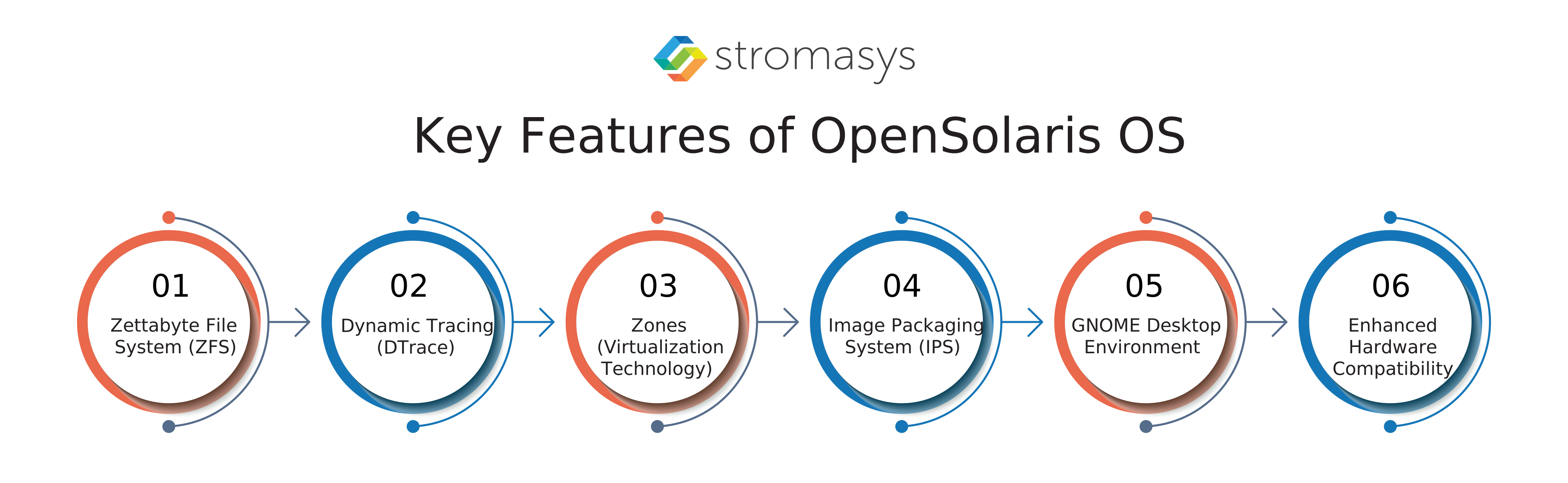
ZFS was revolutionary in how it redefined data storage and management. Key features included:
This diagnostic tool allowed users to gain real-time insights into system behavior. Whether diagnosing performance bottlenecks or debugging code, DTrace gave us a level of visibility that is hard to find on other platforms.
Zones are a lightweight and efficient OpenSolaris virtualization alternative that simplifies resource isolation for applications. This approach simplified deployment on workloads, minimizing the hardware footprint.
OpenSolaris introduced IPS for seamless software management. It simplified package installation, upgrades, and dependency resolution.
Designed for modern computing, GNOME complemented Solaris’s renowned CDE interface. It delivered better usability for workstation environments.
A lot of different drivers for network connections, storage devices, and GPUs could be used with OpenSolaris. Which, in turn, made sure that it would work in a variety of system environments.
Now that you know the key features, let’s look at some other important features:
Let’s see the important events from the history of OpenSolaris OS:
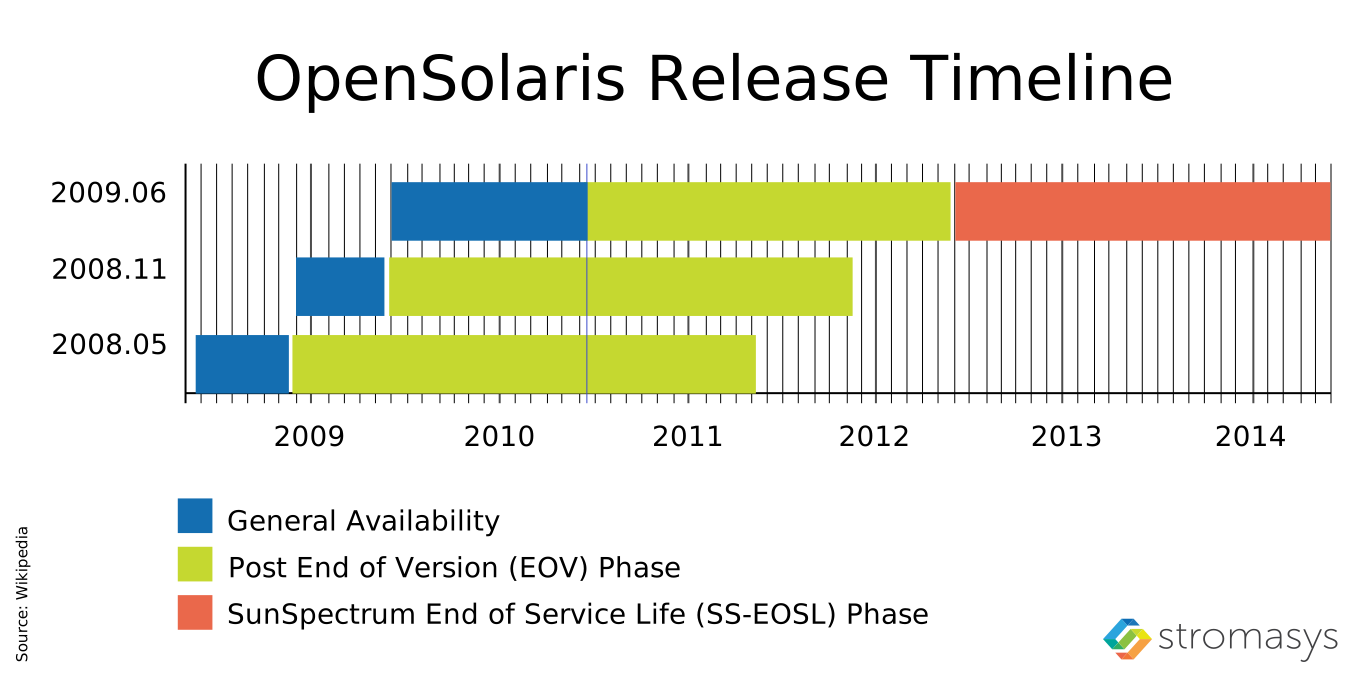
The first public version, OpenSolaris 2008.05, featured GNOME and Time Slider (similar to macOS’ Time Machine).
OpenSolaris 2008.11 continued to build momentum – thanks to ZFS improvements & IPS packaging.
OpenSolaris 2009.06 featured broader hardware compatibility, advanced IPS interactions, and virtualization with VirtualBox integrations.
OpenSolaris operating systems had a LiveDVD option for users or testers. It provided the ability to boot into a fully functional OS environment without installation.
Oracle acquired Sun Microsystems in 2010. Unlike Sun, Oracle’s focus was commercially oriented toward proprietary tech advancements rather than open-source initiatives.
They discontinued OpenSolaris to focus on Solaris’ proprietary commercial editions. This decision led to significant dissatisfaction among its developer community, pushing many to create forks of OpenSolaris.
The void left behind by OpenSolaris gave rise to new ambitious projects aiming to sustain its ethos and technological contributions.
Many companies depend on Solaris applications to execute business-critical workloads. However, the underlying hardware is outdated, which is the real problem with Solaris applications. With time, aging hardware becomes less reliable and more susceptible to Unplanned downtime.
Spare parts are harder to source. Hardware experts are becoming harder to find every year. Based on the Nexa Devs reports, the premium support for end-of-life systems costs 50-200% more than standard support, but it completely depending on the vendor and platform.
In addition, aging hardware incurs significant maintenance costs. According to a survey, technical debt compounds at roughly 20% annually if it is left unaddressed. Delay in modernizing legacy infrastructure can increase the costs by 20–25% while maintenance of legacy hardware cost climbs up to 15% annually after warranty expiration. (CTO Accelerator)
Not only that, but older infrastructure can become prone to cyberattacks risks. All of these obstacles create operational headaches for decision makers and can prevent business growth.
Moving beyond outdated hardware should remain the top priority for businesses continuing with legacy Solaris environments for mission-critical tasks.
Charon-SSP by Stromasys emerges as a game-changing solution here. It allows the decoupling of mission-critical OS and applications from aging SPARC hardware.
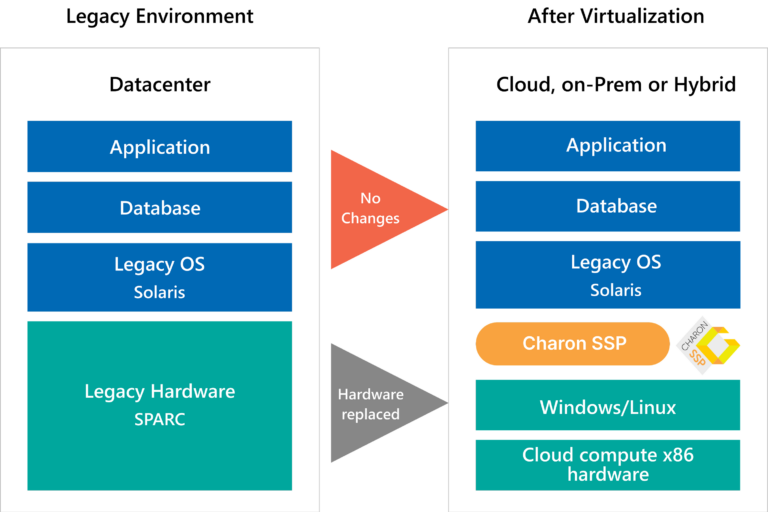
The best part of Solaris virtualization is that it doesn’t involve any code changes. Your application will remain intact, ensuring business continuity without sacrificing familiar processes.
Stromasys can offer you absolute peace of mind if your organization is still running Solaris applications.
OpenSolaris is the open-source release of Sun’s Solaris Unix operating system. It started in 2005 so the community could view, modify, and redistribute most of the code.


Companies still rely on mission-critical applications running on Sun SPARC, Alpha, or other legacy systems like PDP, VAX,...
Read More
SPARC hardware has been trusted by companies around the world for decades now, and rightly...
Read More
Sun SPARC hardware was introduced in the late 1980s and was popular for its high-end...
Read More