
×

 Why are enterprises planning a data center exit strategy?
A data center exit strategy is a structured process that involves retiring or relocating workloads and legacy or on-premises facilities into cloud or hybrid environments to ensure business continuity. It encompasses discovery and assessment, dependency mapping, workload classification, migration waves, and secure decommissioning. Enterprises opt for moving away from their traditional outdated data centers to escape rising costs, rigidity, skills shortages, and the inability of older facilities to support modern applications like AI, ML, and cloud technologies.
Hybrid models dominate because they balance scalability with compliance and data sovereignty. Gartner projects up to 90% of hybrid adoption by 2027. Various legacy modernization strategies from lift-and-shift to full refactor, with hardware emulation, are available. They offer a low-risk bridge for applications that cannot be rewritten quickly. Benefits include lower CAPEX, improved resilience, faster innovation, and capital reallocation. Survey reports have shown that manufacturing, transportation, and semiconductors demonstrate up to 40% cost savings and near-zero disruption when the exit is planned deliberately rather than reactively.
 Article
A data center exit strategy is a planned approach that usually follows a phased approach to migrate the critical workloads, applications, and infrastructure from the legacy data centers to cloud or hybrid environments. This migration process takes time and is not a single-time event. It requires a proper roadmap including current infrastructure evaluation, dependency mapping, workload classification, execution of the migration process, and final decommissioning.
You can say this process is more like carefully disassembling a bridge while traffic is still crossing it. You cannot shut everything down. Its core components include:
This helps with seamless migration from traditional data centers. Missing out on any steps can result in cost overruns, outages, and compliance gaps. The goal for migration is simple: eliminating the single point of source, as it is a constraint, so the business can move faster and spend smarter. This is why the data center exit strategy is fundamentally a risk management project as much as it is a technology one.
Maintenance of legacy facilities is not easy. It is expensive and quietly accumulates friction. Over time, the power consumption and cost of cooling the servers increase, while utilization remains uneven. Then there is the aging hardware approaching its end-of-service life that results in scarcity of replacement parts, forcing expensive spares or risky workarounds. And let’s keep in mind the declining legacy experts as they retire, taking away decades of knowledge with them. Finally, the security and compliance requirements like patching, zero-trust, or audit trails are harder to implement on older stacks.
Apart from these legacy challenges, a new rising issue is when AI workloads come into the picture. Most of the legacy data centers are not designed to meet the modern computing demands now. CBRE points out that AI-readiness of existing data center stock is a rising concern as most of the traditional facilities are outdated and were not designed for managing modern workloads. That mismatch results in constrained power delivery, inadequate cooling, and networking architectures that simply cannot flex the way containerized and AI-driven applications need them to.
This is the silent reality of legacy environments; the people who understood the original architecture have moved on, vendor support has lapsed, and there was nearly no documentation. Now, every year of delay compounds both operational risk and opportunity cost.
The deployment pull towards cloud and hybrid is rapidly increasing, as it’s not just about cost anymore. While cost does matter, there are other elements like security posture, compliance coverage, and speed. The public cloud offers elastic capacity, faster provisioning, and continuous feature velocity. The Hexaware report has highlighted that the cloud providers offer built-in security features like threat intelligence, automated updates, and compliance certifications such as ISO27001, PCI-DSS, AICPA/SOC, and HIPAA. This is a level of continuous security that many internal IT teams cannot easily replicate on their own.
Then there is the hybrid cloud deployment module, which is emerging as the pragmatic majority model. It is a practical middle path for a lot of enterprises that are not ready or able to go fully cloud native. The hybrid model gives enterprises a way to keep sensitive or highly regulated workloads on-premises while still getting the elasticity benefits of cloud for everything else.
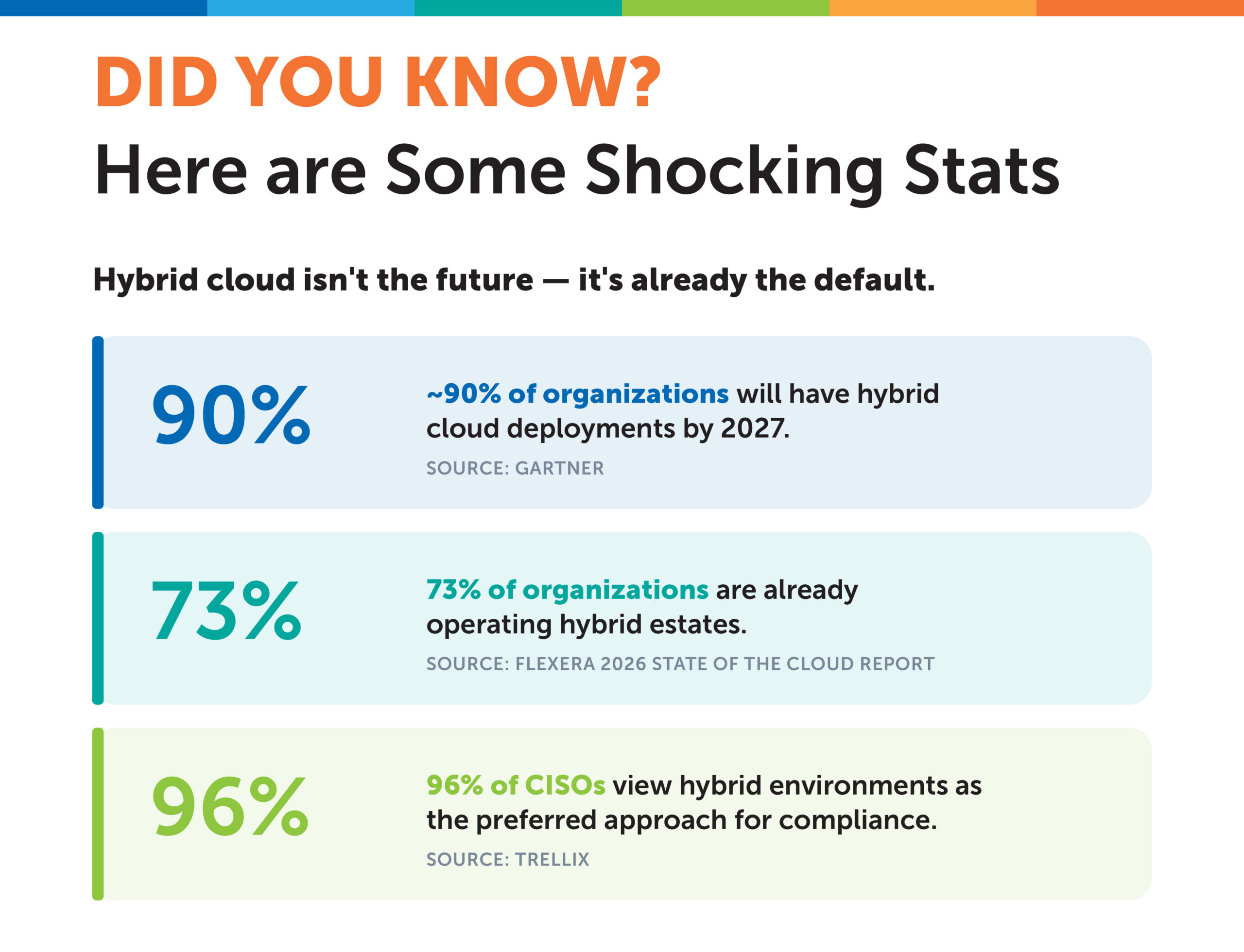
Here are some shocking stats:
Not every workload is the same and should leave in a similar manner. Here are some popular strategies for enterprises to choose from.
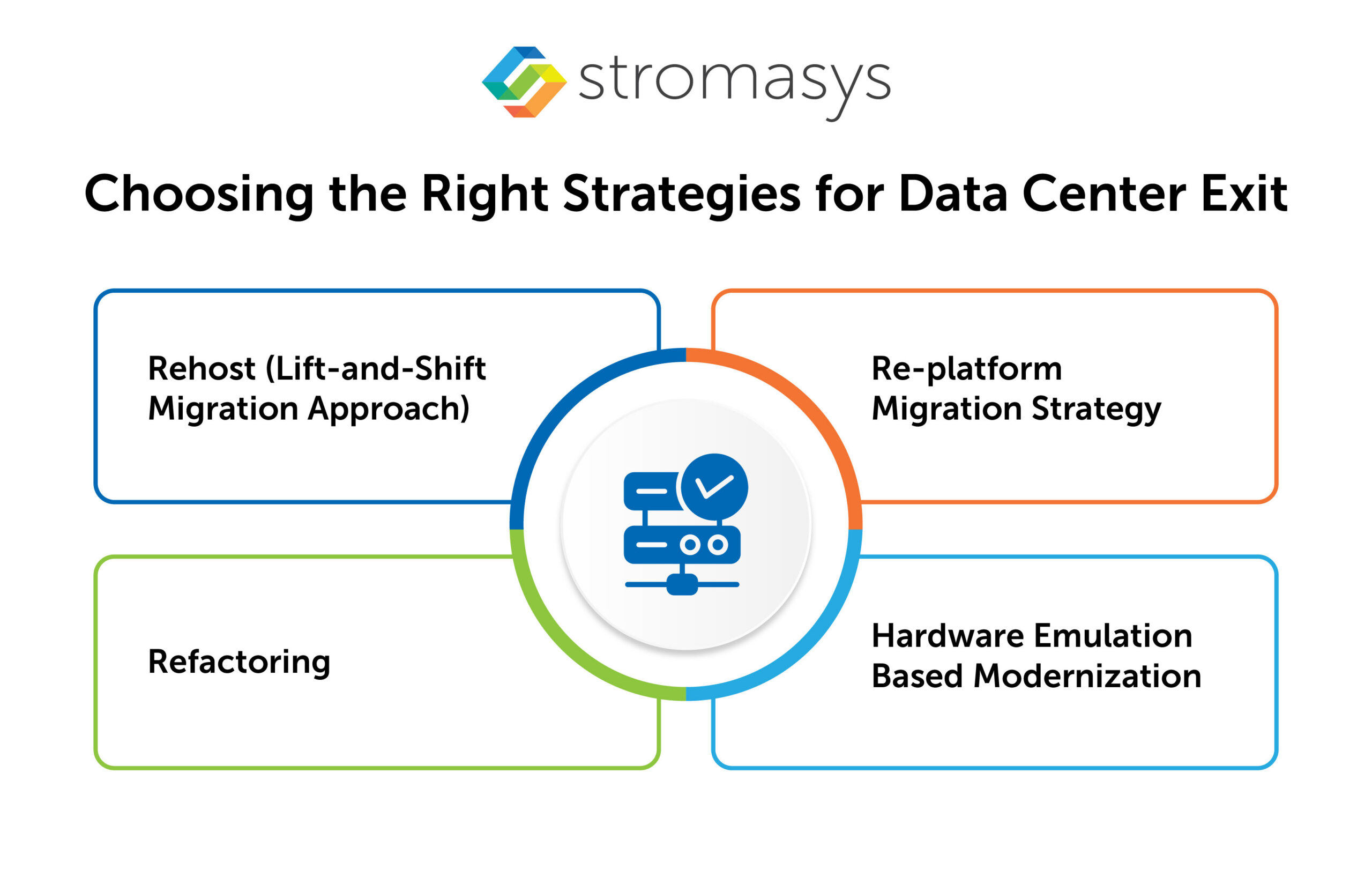
The lift-and-shift legacy migration approach, the critical workloads and applications are moved from the legacy facilities to the cloud/hybrid infrastructure with zero changes and no operational challenges.
In the re-platforming approach, modest optimizations (containers, managed services) are made for better outcomes or operational efficiency.
The refactoring or redesigning approach requires the applications and workloads to be redesigned for cloud-native architectures to ensure long-term agility.
For certain legacy systems, SPARC, VAX, Alpha, PA-RISC, or PDP-11 systems that cannot be rewritten quickly or safely. Therefore, with the hardware emulation approach, these applications can run on a similar environment to their original one on modern x86 or cloud instances.
What ties all of these together is discipline. Based on PwC’s analysis of enterprise data center exits, it was found that a disciplined data center exit can unlock long-term value through run-rate cost reduction, capital efficiency gains, and operating model simplification. Also, the real difference between success and failure is the speed and discipline with which organizations exit legacy environments. In other words, the strategy you choose may not be as important as how consistently and carefully you execute it.
It is also where business continuity and innovation stop being separate conversations. An enterprise that exits its data center not only saves money, but also buys itself the agility to deploy new applications faster, respond to market shifts faster, and recover from any disaster faster.
Legacy systems that were doing a good job decades ago are now increasingly clashing with modern applications, zero-trust security models, and AI power/cooling demands. Then there are the supply-chain disruptions and hardware sourcing risks that have been exacerbated by geopolitical tensions, which are adding another layer of exposure for organizations dependent on aging, proprietary servers with scarce replacement parts.
Visibility into future demand is also limited. You can also add tariff volatility to this mix as well. Planning the exit while you can still control the timeline is a better option than being forced by the end-of-support deadline, lease expiration, or sudden hardware failure with nearly no availability for replacement parts.
A well-executed data center exit strategy pays off in ways that go beyond the balance sheet. The UnitedLayer summarizes the core driver clearly, as enterprises are increasingly evaluating data center exit strategies that particularly minimize expenses and gradually move towards more flexible operating models.
Here are some significant benefits of building a streamlined data center exit strategy:
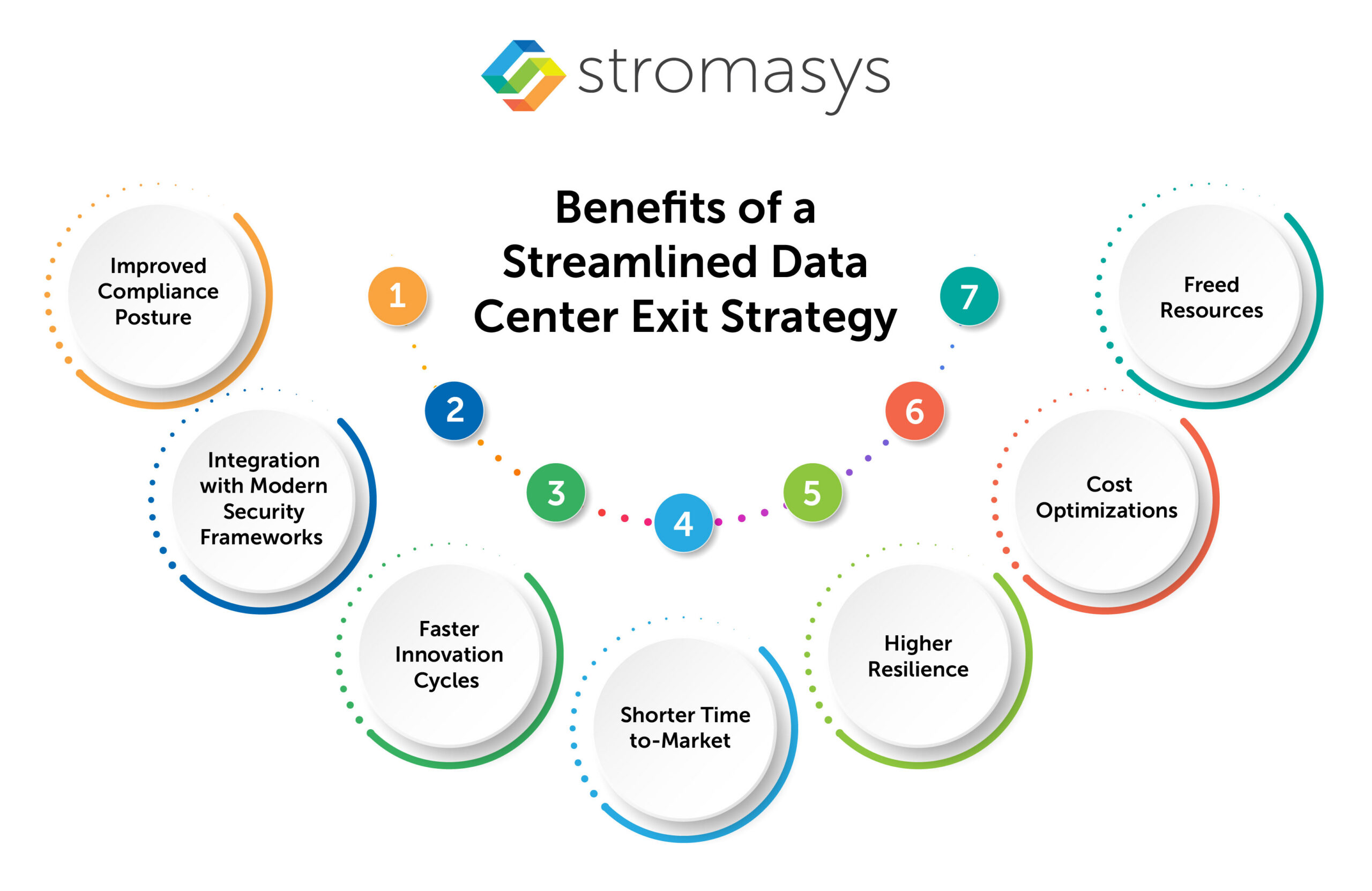
Enterprises increasingly evaluate exit strategies specifically to reduce capital expenditure and move toward more flexible operating models. Asset recovery from decommissioned hardware can offset a meaningful portion of migration costs, improving overall business performance.
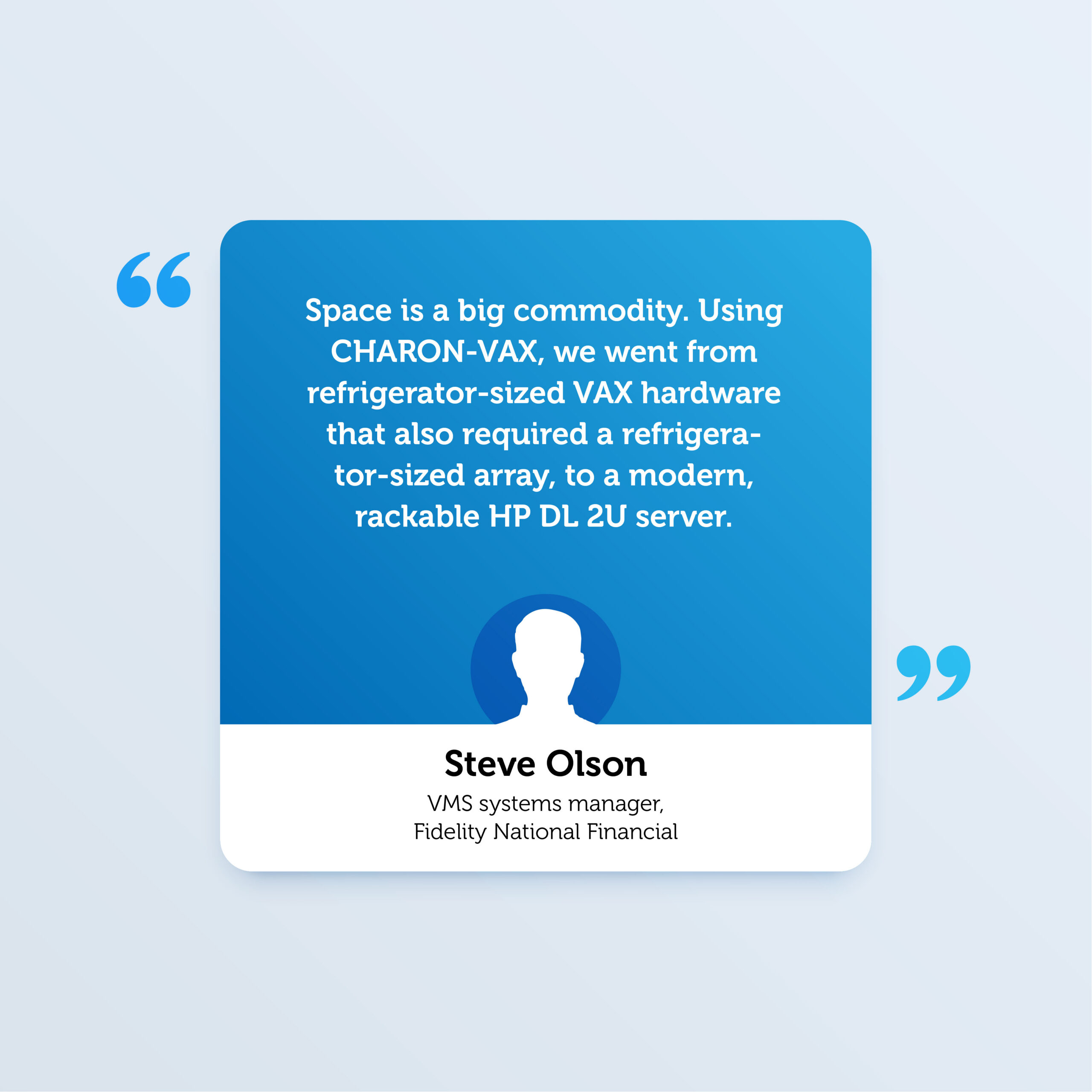
Fidelity, a cybersecurity service provider, relied on nearly 60 production VAX systems (plus development units). They were increasingly at risk after HP systems reached their end-of-lifecycle. This resulted in rising risks of hardware failures, limited availability of spare parts, and migrating to VAX servers would require rewriting or recompiling. This means nearly 7 million lines of code, which can be a very expensive, risky, and time-consuming process for the business.
Fidelity partnered with Stromasys to move their critical VAX applications and OpenVMS environment to run unchanged on modern HP ProLiant servers. With Charon-VAX, they started with a single VAX 4705A replacement and rapidly expanded the approach to the entire infrastructure.
For a lot of enterprises, the hardest part of a data center exit may not be the migration of modern applications, but it’s the critical legacy workloads. With the Charon on the Cloud solution, enterprises can easily move their critical workloads without any issues to a cloud or hybrid platform without any changes in the applications. It uses a lift-and-shift migration strategy to migrate the workloads from the outdated systems to the cloud.
This ensures the original operating system, applications, and data remain unchanged while the performance improves, power and maintenance costs drop dramatically, and the physical legacy hardware can be decommissioned. You can see up to 90% cost reductions and up to 100% operational performance boost.


A data center exit strategy is a structured plan for migrating the critical workloads, applications, and data from the legacy data center to a cloud or hybrid environment without operational disruptions.


The IT landscape is rapidly evolving, and businesses still running legacy hardware are facing numerous...
Read More
DEC Alpha hardware has been pivotal to many businesses due to its reliability, performance, and...
Read More
Legacy application migration is a new trending buzz of IT discussion. Businesses are migrating from...
Read More