
×
 Is Legacy Application Modernization Critical for Business Growth?
Legacy systems create operational challenges, including costly maintenance, security risks, and compliance issues. It requires more than a simple modernization; it needs an improvement in the mentality of holding on to the same software from years back. A real-life case study will make you realize the consequences of the "just a little longer" apathy.
Legacy applications need to be changed immediately, and judging the 7Rs will give you the insights you need. Modernization unlocks countless benefits for legacy applications, but there are risks to avoid as well. With the right approach, right planning, and right method befitting your system, you can make the process simpler, easier, and more secure.
 Articles
Legacy application modernization goes beyond just technology—it transforms business operations and elevates the customer experience.
Most companies approach this as part of a broader digital transformation effort to reshape processes and keep up with shifting market demands.

Research also supports this trend. A study shows that the U.S. application modernization market will grow at a 17.5% CAGR from 2024 to 2030. This is a clear indication that industries are no longer treating modernization as optional.
However, here is the thing: not every legacy application needs to be replaced or modified. Some can be seamlessly migrated with minor changes while others have to be rearchitected depending on their current condition and business requirements. So, here is a comprehensive guide on legacy application modernization, its benefits, proven strategies, common migration challenges, and best practices.


Legacy application modernization refers to changing old systems by replacing them with newer solutions. It can include state-of-the-art software, cloud-based solutions, or modern technology like AI, ML, and IoT.
The goal of legacy application modernization approaches is to make these essential applications faster and more adaptable to today’s technology standards while achieving smoother operations.
More precisely, it is the practice of upgrading, transforming, or replacing legacy software that has been in operations to meet the current business requirements. It can be either by simply adding more functionalities, shutting down applications that are no longer required, or moving them to a completely new platform or technology. The process is carried out using modern architecture, design principles, and tools.
Modernization is basically a transformation to achieve more value, like solving problems related to performance, security, scalability, or legacy challenges that are hindering productivity.
Imagine a company selling its products, relying on legacy software for online transactions. Upgrading to a cloud-based system could speed up transaction times, improve security, and add mobile-friendly options. This, in turn, will create a better experience for both customers and staff.

Basically, businesses consider legacy application modernization due to two reasons:
Operational challenges stem from the applications or hardware itself. Here are the most obvious one you should know:
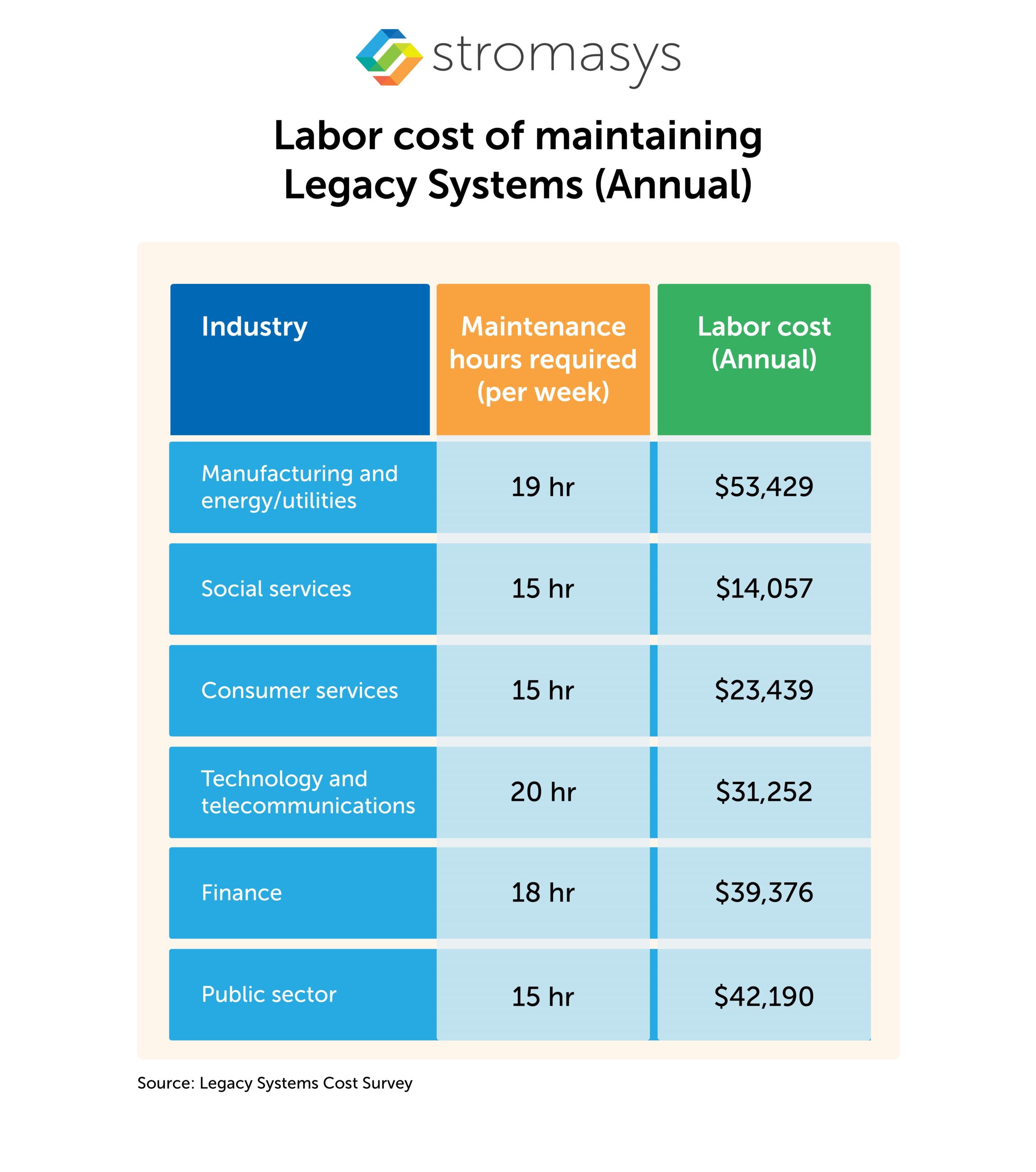
According to ServiceNow, legacy systems cost people around USD 40,000 dollars annually.
Below are the external factors that drive the organization to look for legacy application modernization approaches:
Here, you have read why industry leaders want to modernize legacy applications. However, there are still some company personnel, especially technical staff, stuck operating outdated software, ignoring the risks. Here are some of the key risks involved:
According to research by Qualtrics XM Institute, more than 50% of customers reduce or stop spending with a company after experiencing a bad interaction.
Ignoring the warning signs and not modernizing legacy applications can lead to malfunctions and ultimately frustrate users. So, think twice before procrastinating on your migration decision.
Let’s discuss a more pressing challenge: a lack of support in all areas. Imagine an error occurs, but you receive no help from the vendor—what would you do in that case? What’s worse, the engineers who know these old systems have already retired. In such situations, you will be left clueless, regretting not taking action earlier.
For those who don’t know, data silos are isolated repositories of data, inaccessible to other parts of the business unit. Legacy software doesn’t integrate well with other programs.
When your business adopts new software, this situation leads to data silos. As a result, this limits your ability to add new capabilities and slows down processes.
Is your legacy environment becoming risky? Many organizations ignore the warning signs, assuming they still have time and they are highly mistaken. Southwest Airlines made the same mistake and faced catastrophic consequences of their inactions.
In December 2022, a major winter storm hit the US during the peak holiday season. While most airlines recovered quickly, he decades-old crew scheduling system (known as SkySolver) possessed by the airline collapsed. The airline was forced to cancel more than 16,900 flights over 10 days, stranding over 2 million passengers.
The crisis wasn’t caused by the weather alone. For years, the Southwest Airlines Pilots Association (SWAPA) and other unions have been warning leadership about the outdated scheduling technology, but they chose to repeatedly ignore these warnings.
The airline faced:
This real-world failure shows how delaying legacy modernization can turn a manageable disruption into a billion-dollar operational and reputational disaster.
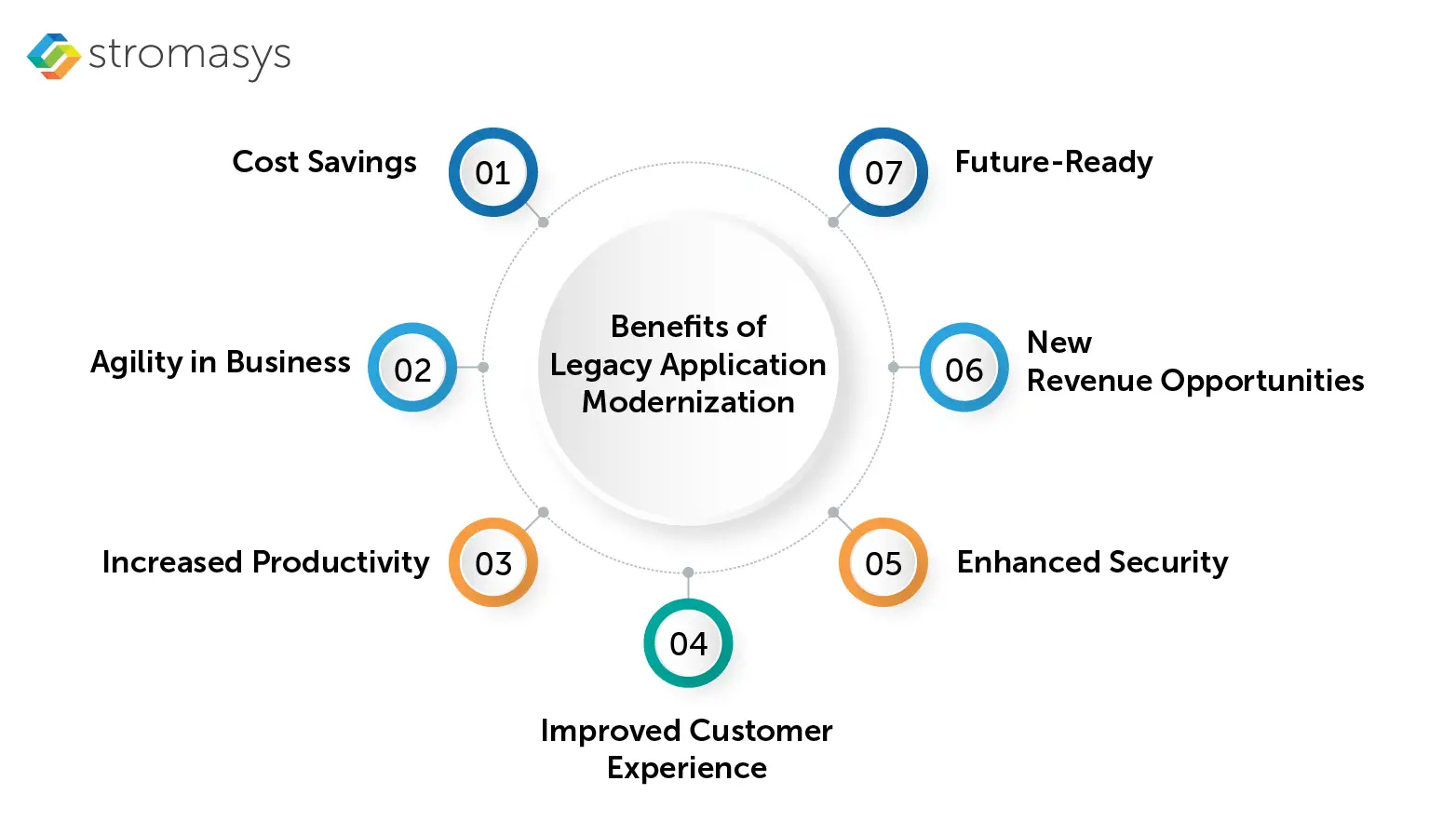
Legacy application modernization can change the way businesses run and revolutionize their performance. Here are the reasons why it’s an exceptionally smart move to make:
Modernizing is a great way to reduce maintenance costs and optimize hosting for businesses. In turn, this change saves money for completing projects that are important for business growth.
Modernized applications may respond more effectively than was possible with applications of older generations. This flexibility allows companies to remain competitive and pivot when needed.
The improved user interfaces and automation tools that are typically part of modern applications can boost productivity. The result? Improved productivity and increased staff morale.
Upgraded applications provide better performance and new features that add value for users. This drives more business from repeat customers.
For businesses, updating their legacy systems can help address these vulnerabilities and better protect sensitive information.
Modernization opens new service and process possibilities that could not be accomplished within the constraints of its legacy environment.
Lastly, updating helps address future developments that will help businesses overcome current issues and welcome new technologies.
After understanding why you should modernize legacy applications, let’s explore how organizations across different sectors have successfully transformed their outdated systems.
Manufacturing companies are migrating their on-premises ERP systems to cloud-native platforms. This helps with real-time inventory visibility and seamless coordination across supply chain and production teams that results in improved operational efficiency.
Banks and financial service organizations are moving their legacy CRM and core banking systems to the cloud. This upgrade provides greater system reliability, stronger customer data security, and improved collaboration across distributed teams.
Hospitals and healthcare providers are modernizing outdated EHR (Electronic Health Record) platforms to secure and interoperable cloud solutions. This transformation enables faster access to patient records, better care coordination, and improved compliance with regulations like HIPAA. This helps with better patient outcomes through data-driven insights.
Logistics and supply chain companies are upgrading outdated fleet and warehouse management systems to real-time, IoT-enabled platforms. This modernization improves route optimization, asset tracking, warehouse efficiency, and end-to-end visibility across complex global operations.
Government agencies are transitioning legacy case management and citizen service systems to dynamic, scalable environments. This change shortens processing times, increases operational efficiency, and delivers better, more transparent public services.
The 7 R’s of legacy modernization strategies are a foolproof framework for transforming their outdated IT infrastructure. Enterprises leverage this proven framework to find the right approach for modernizing legacy applications.
All of these legacy system modernization strategies have their advantages and disadvantages. Make sure that you choose a method that depends on factors like cost, time, and organizational objectives.
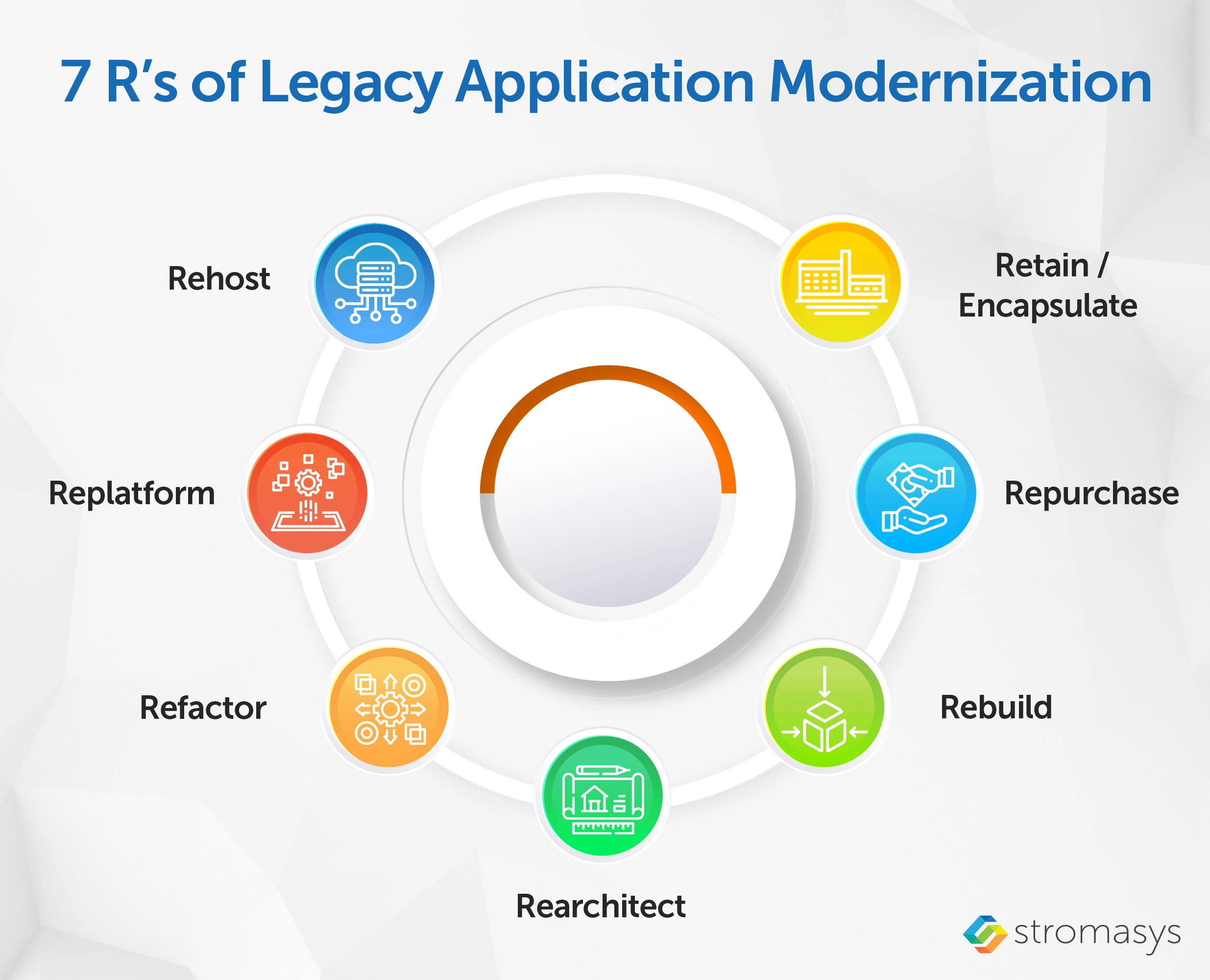
Rehosting, often called “lift and shift,” involves moving applications to a new environment without changing their code or architecture.
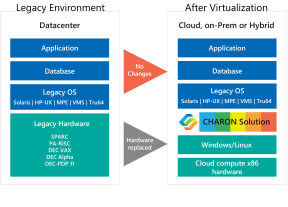
Ideal for: Businesses that wish to retain their mission-critical applications while simply replacing the hardware
Replatforming is the process of making minor tweaks to optimize the application for the new platform without altering the core architecture.
Ideal for: Organizations that want to benefit from the new platform while keeping risk and effort to a minimum
Refactoring is all about restructuring or rewriting the existing code to improve its non-functional aspects, like performance and maintainability, without changing how it behaves externally.
Ideal for software development and DevOps teams.
This is a more extensive change than refactoring. Rearchitecting involves fundamentally redesigning the architecture of an application to take advantage of new technologies like microservices or serverless computing.
Ideal for: Monolithic applications where businesses want to use microservices, organizations significantly enhancing the capabilities of their application
Rebuilding means rewriting the application from scratch while keeping its original scope and specifications.
Ideal for: Current application unable to meet business needs or is too costly to maintain
This is actually the simplest of all the legacy application modernization approaches in a technical sense, as it does not involve replacing an existing application with some commercially viable application.
Ideal for: On-core business applications, which are sufficient without the need for customization
Retaining the legacy applications is a choice taken when the current system has run out of time, i.e., it has reached EOL, but is working relatively well. Compatibility and cybersecurity, however, remains a problem.
For them, encapsulation is the best way forward. You do not need to alter its code, but, by connecting it through APIs, service layers, etc., to the modern system, the legacy code remains preserved.
Ideal for: Legacy applications that are still effective, with the costs or risks of modernization too high
First things first: why do you need a legacy application modernization plan?
As per the Wakefield study, 79% of the application modernization projects fail to yield the intended results. This is where planning comes in. Having a modernization plan is all about doing the right things at the right time.
To help you understand more clearly, we will share the crucial steps through a series of key questions. These questions will help you reflect on your strategy and make informed decisions.
Assess the existing performance of your application. Look for signs such as:
Apart from asking the above question themselves, decision-makers should also run some user feedback sessions to uncover extra pain points and see if migrating will help solve them.
Have a clear set of goals for the modernization effort. Common goals might include:
Deciding your budget and resources helps to maintain project continuity without hampering the business. This includes:
We have already discussed the 7 R’s of legacy application modernization strategy. Choosing the one that is in line with your long-term goals is more important here.
Choosing the right legacy application modernization approach depends on these crucial factors:
Identify potential risks, such as:
To mitigate these risks:
Create a detailed timeline that includes:
Focus on technical aspects like:
Ensure a structured transition by planning:

Even the best-laid legacy application modernization strategies can get derailed if you are not aware of the roadblocks. Some of the common challenges are as follows:
Enterprises must weigh the immediate costs against long-term benefits. Whether you should go with a complete overhaul or only choose selective updates to complete the task requires careful analysis of new infrastructure, training expenses, and potential disruptions.
Employees accustomed to their workflows may resist change and this can slow down adoption rates. To ease this transition, invest in comprehensive training and provide ongoing support.
Future planning is a must. Develop a roadmap that includes modernization objectives, methods to be followed, timelines, and resource needs. To stay competitive, build APIs for easy integration with modern frameworks and leverage automation & AI.
Legacy application modernization requires expertise in outdated technologies, which is hard to find as the industry moves towards newer tech stacks. This shortage makes refactoring an uphill task.
Technical debt arises when engineers sacrifice quality in order to get it done quickly. As with any kind of debt, accumulating technical debt is a tremendous overhead and will be paid back eventually, with extra effort, expenses, and resources.
Companies must evaluate financial and operational risks carefully. Also, it’s essential to clean and organize existing data. This step ensures that outdated data errors don’t carry over into the new system and data is aligned with current business goals.
Are you exploring legacy system modernization services but are unsure of who to trust? Initially, the journey can be overwhelming, especially since there are so many options available.
Many strategies promise legacy application modernization but often come with significant risks and lengthy timelines. That’s where Stromasys stands out as the leading provider of lift-and-shift solutions for enterprises.
Stromasys makes it easy to transform your legacy applications using the Charon emulation solution, without interrupting or altering your business operations.
This is because it only deals with upgrading your hardware and does not involve any changes to your applications. Consequently, companies experience streamlined operations and position their business for future growth.
The simplest way to replace legacy servers is by using a rehosting strategy. It uses the lift-and-shift migration approach that involves moving critical applications to new platforms like x86 servers or cloud environments without making any modifications to the original code.


The IT landscape is rapidly evolving, and businesses still operating on legacy hardware are facing...
Read More
DEC Alpha hardware has been pivotal to many businesses due to its reliability, performance, and...
Read More
Legacy application migration is a new trending buzz of IT discussion. Businesses are migrating from...
Read More