
×

 What Are the Challenges of Operating Your Critical Applications on the Legacy Systems?
Legacy systems are the outdated infrastructure that have been the cornerstone for business operations for decades. Studies have shown that more than 60% of enterprises still rely on them for their critical operations. These aging systems create challenges, including high maintenance costs, security vulnerabilities, and compatibility issues. Common examples of legacy systems include mainframe computers, COBOL software, and outdated ERP systems.
 Article
There has been a widespread dependency on legacy systems. They have been a backbone for decades, and more than 66% of enterprises still rely on outdated hardware for their core operations. More than 60% are used for customer-facing functionalities.
It shows businesses’ reliance on these legacy systems despite challenges like high maintenance costs, limited scalability, flexibility, hardware parts scarcity, and more.
In this blog, we will explore the intricacies of legacy systems, their challenges, different types of legacy software, and best modernization practices to transform the infrastructure to improve efficiency and performance.


Legacy systems are outdated hardware and applications that are still in daily operations. Over time, they lack vendor support, and no more patches or updates exist. Also, maintaining them becomes difficult due to the scarcity of their parts, which hinders business continuity.
Technology evolves, compelling businesses to work on new technologies and innovation to adapt to the growing demands of the marketplace, economy, and other requirements. These aging systems become obsolete with time and cannot adapt to these requirements. These legacy servers have been embedded in the businesses’ core operations for decades. However, several challenges, such as scalability, compatibility with modern technologies, security, hardware failure, and more, hinder day-to-day operations, resulting in unplanned downtime and escalating costs.
Previously, legacy systems were mostly developed for specific purposes only. However, as technology advances, businesses need technologies and tools that are multitasking, less time-consuming, and offer optimum results.

So, here are some common reasons why organizations continue to use these legacy servers.
Here are some well-known legacy servers’ examples that are widely used in different industries:
Mainframe computers are one primary example of legacy hardware, running critical functions for many financial institutions for several decades.
COBOL, or Common Business Oriented Language, is the classic example of legacy software. It is a programming language launched in the 1950s. Despite losing its popularity, it was widely used for payroll processing, and several businesses are still using COBOL-based legacy software for their operations.
Enterprise Resource Planning or ERP systems are crucial for managing core business operational processes. Many enterprises still rely on outdated ERP systems, as migrating to a new one can be complex, time-consuming, and costly.
For decades, businesses have comfortably used outdated databases like FoxPro, dBase, or even the primitive versions of SQL databases despite the availability of more advanced and modern database solutions.
Many organizations have tailored legacy operating systems and applications developed for their operations. But with time, they have become outdated and hinder operational performance. As they age, maintaining them is also becoming a problem due to the scarcity of their parts and the lack of skilled resources to manage them. This often results in the organization’s budget escalating.
Legacy servers are categorized based on different criteria. Here are some of the legacy systems:
Legacy systems that include outdated hardware. They mostly include mainframe computer systems.
Legacy software comprises outdated codebases and software, such as discontinued or extinct programming languages, operating systems, and obsolete software libraries that are no longer supported by the vendors.
Legacy infrastructure comprises vintage network architectures, data storage equipment, and dead communication protocols.
Legacy applications are software applications that are outdated but are still used by organizations to perform certain operations. For example, CRM or order processing applications are examples of applications in legacy systems.
These legacy servers are systems whose vendors have officially discontinued support and are no longer developed. Businesses with these legacy systems are more prone to cyber threats and data loss as they no longer receive security patches and updates.

Businesses relying on legacy systems face the following challenges:
Outdated servers are designed using older technologies, which means that they are incompatible with new modern technologies. As a result, businesses are unable to leverage the advanced technologies that modern systems offer.
With time, many vendors stop working on updating the existing legacy applications and workloads. They believe in spending their resources on modern technology rather than these vintage systems, which are currently in high demand.
Legacy systems have a complex architecture and are not designed to integrate with new systems. It isolates the data from the other systems, hindering operations and efficiency.
Legacy systems lack advanced security measures, making them vulnerable to modern attacks. Also, over time, manufacturers stopped creating security patches and updates for older legacy servers, resulting in poor security infrastructure. This can be easily exploited by cybercriminals and result in the loss of sensitive data. It can even result in non-compliance, leading to hefty fines and legal penalties.
The aging legacy servers have started slowing down, which affects efficiency and performance. This impacts the business’s productivity and ROI. Studies have shown that hardware failure impacts employee productivity. Reports have shown that employees lose up to 22 minutes during legacy software and hardware crashes.
Legacy servers and hardware are more prone to wear and tear as they age. Also, due to legacy systems’ hardware obsolescence, it is challenging to find spare parts at the right time, resulting in high maintenance costs.
According to the survey reports from the Ponemon Institute, the average cost of downtime due to hardware failure is approximately $9,000 per minute. Hardware failure often results in downtime and escalating maintenance costs due to finding parts at the right time.

Here are some reasons why businesses that are relying on their outdated legacy systems for their mission-critical operations to transform them:
Maintenance of legacy systems is expensive. Businesses not only need to make heavy investments in spare parts but also look for rare skilled personnel with knowledge of legacy systems. Also, businesses that need to replace their entire infrastructure may find it expensive.
Migrating legacy system to a new platform raises many challenges, such as whether the new platform will be able to meet business needs. Without the proper technical understanding of the legacy system, businesses may lose important data.
Data protection should be the priority of any business. During legacy software migration, any data loss will not only result in non-compliance and endanger clients’ sensitive information but also damage the organization’s reputation.
Many organizations often overlook user experience. While planning a migration to a new modern platform, users should be comfortable working on it. If they do not find working on it easy and stable, they may not get optimum results and impact business performance.

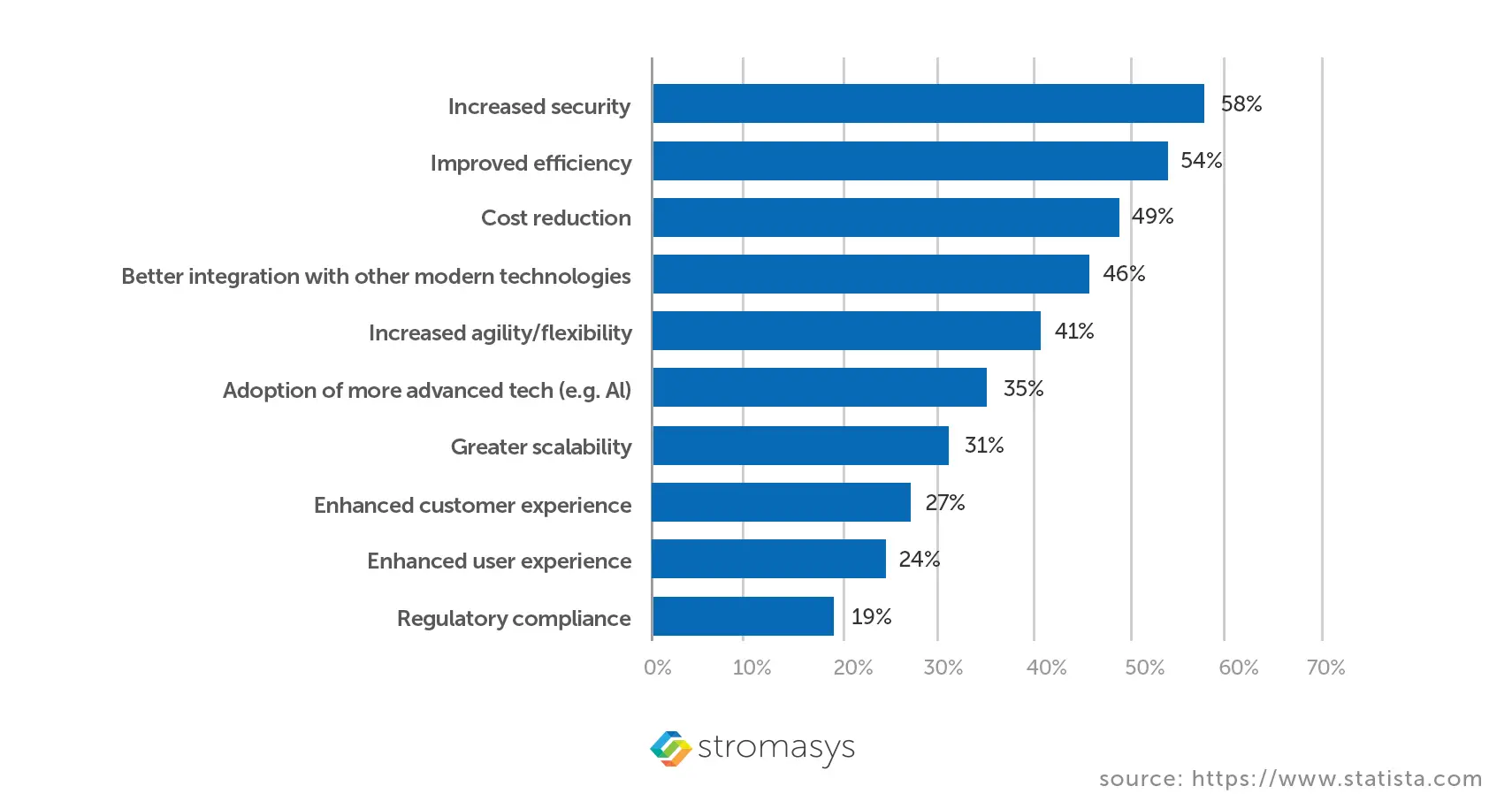
Legacy system modernization is now the need of the hour for businesses looking to improve their business performance while cutting additional costs. Depending on their requirements, companies can modernize their legacy software and hardware in a cloud environment or on-premises.
Here are some common legacy server modernization methods:
In the re-platforming modernization approach, legacy systems are migrated to a modern platform, such as x86 servers or cloud environments, while preserving the outdated server’s data and core functionality.
In the refactoring modernization approach, the legacy architecture and existing code are restructured to make them more scalable and efficient.
This legacy system modernization approach involves redesigning and rebuilding the entire legacy server from scratch, leveraging modern technologies to elevate productivity and efficiency.
Containerization is an approach where the legacy software is encapsulated along with its dependencies in containers to be further deployed and managed.
Legacy system modernization is a strategic move that organizations take to leverage modern technology to harness the full potential of their legacy and incorporate modern technologies for optimum performance and efficiency. This not only brings opportunities but also minimizes costs and enhances security infrastructure and agility.
Legacy systems are the cornerstone of several businesses and have been the core of critical operations. Legacy system modernization is a complex approach that requires skilled personnel and the right technologies for a successful transformation. Stromasys is a leading legacy software and hardware modernization solution provider that enables businesses to transform their infrastructure.
Stromasys Charon solution emulates legacy hardware on a modern platform like an x86 server or a cloud ecosystem like Amazon AWS, Oracle Cloud, or Microsoft Azure. The Charon emulation solution uses a lift-and-shift approach to migrating legacy systems on a modern platform without changing the original code. This enables users to experience the same interface and environment as the existing hardware. On this modern platform, businesses can leverage legacy applications while incorporating advanced technologies to improve scalability, flexibility, security, and reliability while minimizing costs.
Yes, legacy systems are costly to maintain. Over time, their production is limited, resulting in a scarcity of replacement parts, while the price of available replacement parts increases at an alarming rate. They also require specialized support and regular maintenance to remain operational.


The IT landscape is rapidly evolving, and businesses still running legacy hardware are facing numerous...
Read More
DEC Alpha hardware has been pivotal to many businesses due to its reliability, performance, and...
Read More
Legacy application migration is a new trending buzz of IT discussion. Businesses are migrating from...
Read More