
×
 How do supply chain disruptions put organizations running on legacy systems at operational risk?
Since the beginning of 2026, the organization has seen the rise of geopolitical tensions that are ultimately impacting business sustainability. You can rightly say it is an era of frequent disruptions due to port closures, chip shortages, and geopolitical tensions. Let’s not forget legacy systems, especially with single-source hardware dependencies. According to the World Economic Forum's Global Value Chains Outlook 2026, volatility is no longer a temporary disruption. It has become a permanent attribute that companies and governments must plan around. For enterprises, especially those running on outdated infrastructure, this shift has a direct IT consequence. Legacy modernization strategies are no longer a five-year roadmap but an operational risk management priority. When end-of-life hardware depends on supply chains that are increasingly fragile, the cost of inaction compounds fast. Also, they create massive risks for production, as you never know when a hardware failure will halt the entire production. It not only impacts production but ROI as well, damaging the brand reputation if the enterprise is unable to deliver on time. This issue can even escalate and result in non-compliance.
So, here is a blog that explores how volatility accelerates legacy modernization strategies and how hardware emulation can stabilize operations. Hardware emulation gives businesses the freedom to choose to move to a modern x86 or cloud platform for a better-controlled migration.
 Article

The IT teams mostly treat the supply chain challenges as procurement headaches. But the legacy hardware creates deeper vulnerabilities. Industries that are operating on proprietary applications on specialized hardware like SPARC, AlphaServers, or VAX systems mostly face single-source dependencies, especially when the OEM (Original Equipment Manufacturer) support ends, and replacement parts become scarce and expensive.
According to the McKinsey Global Institute, major supply chain disruptions have now hit the average large enterprise every 3.7 years. This is frequently wiping out at least one full quarter of annual profits. Also, based on various reports, from 2020 to 2025 alone, these events have cost the global economy more than $4.4 trillion in cumulative losses. It was driven by lingering pandemic effects, semiconductor shortages, Red Sea shipping crises, and rising climate-related disasters.
You can say that legacy systems amplify these shocks. It can be rightly said that legacy systems aren’t just some old technologies but a direct link to the unpredictable global supply chain chaos.
For decades, many organizations have followed a mindset of “if it is not broken, do not fix it”. But now it is no longer applicable. Based on the World Economic Forum survey report, three out of four decision-makers are now prioritizing resilience and agility as their business drivers for growth.
Right now, three things are occurring in parallel as a direct result of this pressure. The first one is that multi-year planning cycles are easily replaced by urgency. For example, organizations that have mapped a migration roadmap timeline may need to shorten the timeline due to immediate hardware risks.
The second one is about the budget conversations that have shifted from capital expenditure to risk mitigation. This shift in framing usually gets budget approved much faster than raising a request for a standard technology upgrade.
Finally, procurement failures often push organizations toward emergency modernization projects. For instance, if a critical component is not available and your operations are at risk. Then the only option for enterprises is to move on to reactive modernization at a cost and pace they never planned for.
When an organization responds to supply chain pressure and legacy infrastructure risk. They think fast-tracking a full system transformation or application rewrites is the only option available to them. This logic may make some sense on the surface but is not an ideal option. To move out of the hardware soon and migrate critical apps to a new environment while eliminating the dependency, maintaining the timeline is a must.
Let’s say during this transition period, if the organization is still running on the same legacy hardware from which it is trying to move, then it is absolutely not a great idea. Then there is migration itself, which needs to be considered. The rushed cutover under supply chain pressure results in data integrity risks. If the migration is carefully planned and the timeline is maintained, then such risks can be avoided.
The goal of legacy modernization is not just speed but having control.
Traditional legacy modernization planning is no longer sufficient. The question now for decision-makers is how to optimize the supply chain so that it can meet demand during uncertain times.
During these volatile times, one of the most cost-effective and operational strategies is hardware emulation. Hardware emulation is a process of moving out of the aging hardware to a new modern platform. By emulating the behavior of the existing platform on a new infrastructure, businesses can easily migrate the critical applications and workloads without a single line of code changes. This way, businesses can preserve the legacy investment while leveraging the benefits of modern platforms. It allows businesses to eliminate any dependency on failing, outdated hardware.
There are several benefits of hardware emulation:
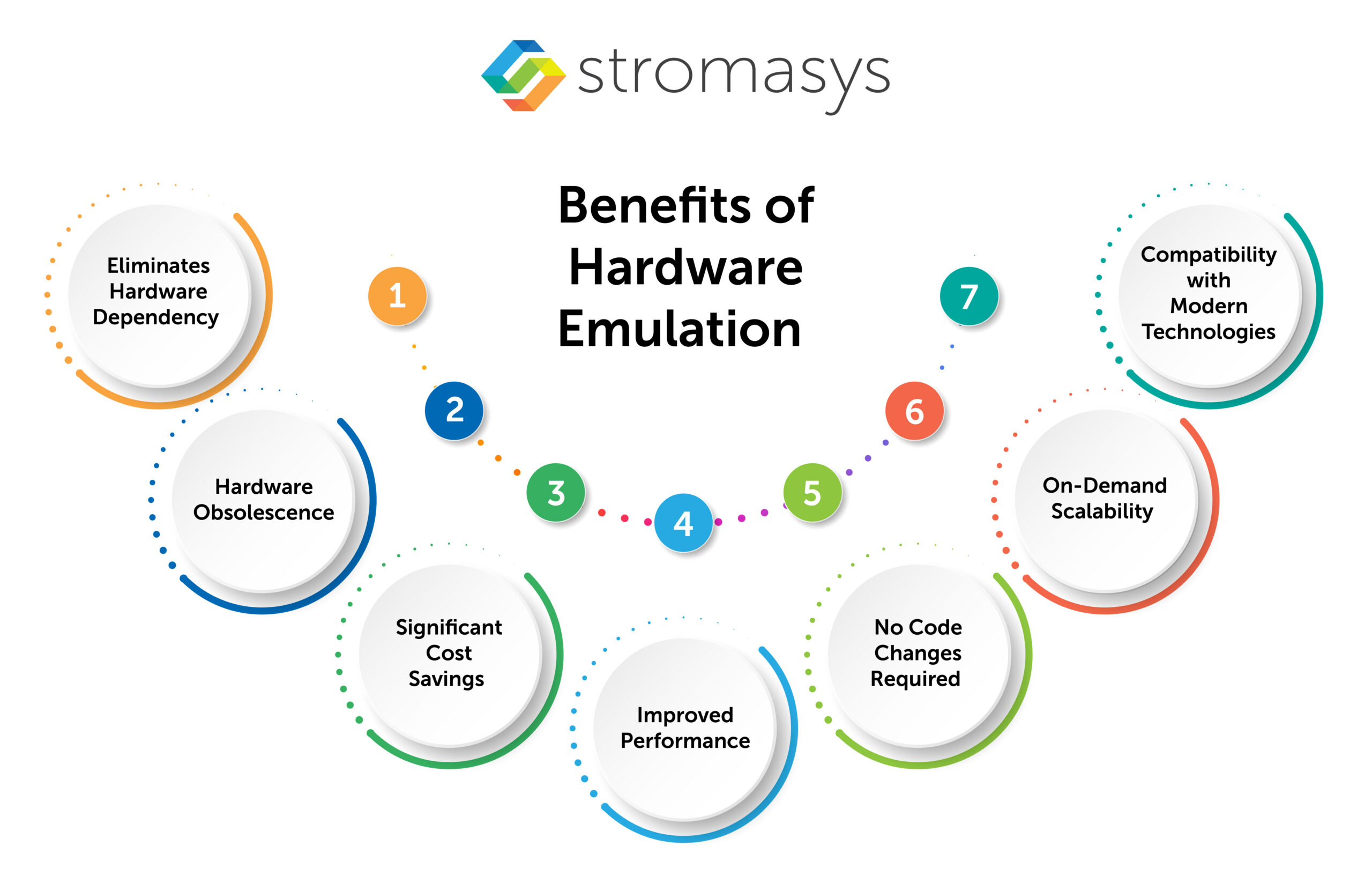
Seamlessly running critical applications on a modern physical server like x86 systems or the cloud environment without binary code modifications.
Eliminates single-source OEM hardware failures along with the need for obsolete replacement parts.
By eliminating the aging hardware, businesses can save on maintenance costs.
The new platform helps improve efficiency by faster execution and better reliability.
Preserves existing workloads and applications and allows them to run on a modern platform without a single line of code modification.
Modern platforms allow businesses to scale up and down depending on the requirement.
Modern platforms can be easily integrated with new technologies like AI/ML, cloud computing, analytics, and more.
Emulation is not delaying the legacy transformation. It is a smart, low-risk migration approach for supply chains to ensure they are stabilized.
Building resilience is a three-step process:
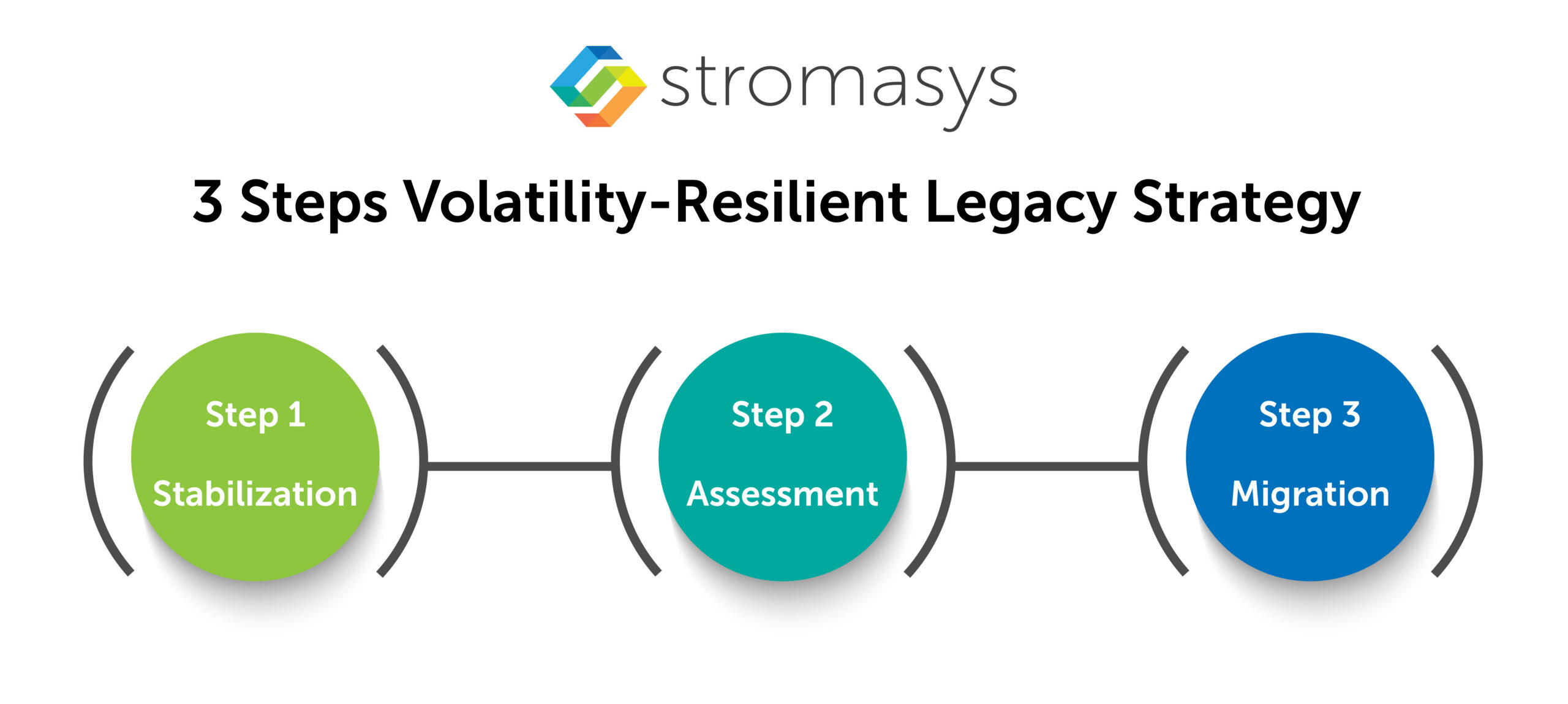
The first step is to stabilize by eliminating the aging hardware before it fails and completely shutting down operations. With hardware emulation, supply chain risks are eliminated, and businesses can see a more stable and supportable environment to operate. It cannot be considered a temporary band-aid but a strategic positioning that gives control.
The next step is assessment. It means once the immediate hardware failure risk is eliminated, you can evaluate your entire infrastructure without any pressure of immediate operational shutdown or disruption. You can identify the workloads based on the priority and modernize them accordingly. This kind of in-depth assessment is only possible when you are not making decisions under pressure.
Now the final step is migration. Execute your legacy system migration on a controlled timeline. Create a proper roadmap for migration, conduct proper testing before the final process begins, and ensure clean data migration. It should not be just because the hardware failure is forcing your hand, but a strategic move at the right time and right moment for a better outcome.
Stromasys is one of the leading global leaders in hardware emulation. They offer commercial-grade emulation solutions to modernize legacy systems like DEC VAX, AlphaServers, SPARC, PA-RISC, and PDP-11 hardware on a modern x86 or cloud environment. Its flagship product, the Charon emulator, mimics the behavior of the existing physical hardware on a modern platform so that critical workloads can now operate on this new system without any risks and disruptions.

It uses the lift-and-shift or rehosting migration approach where it moves the critical workloads and operating systems running on the outdated hardware to a new platform. It preserves the legacy investments while leveraging the benefits of new platforms to improve efficiency, security, scalability, and agility.
The structural volatility in supply chains refers to the rise of permanent, built-in uncertainty due to geopolitics, changing policies, and other challenges that are no longer temporary shocks, resulting in massive risks.


The IT landscape is rapidly evolving, and businesses still running legacy hardware are facing numerous...
Read More
DEC Alpha hardware has been pivotal to many businesses due to its reliability, performance, and...
Read More
Legacy application migration is a new trending buzz of IT discussion. Businesses are migrating from...
Read More