×

 What are the key differences between AIX, HP-UX, and Solaris Unix operating systems?
IBM AIX, HP-UX, and Oracle Solaris are variants of the Unix operating system. They all have unique features, hardware compatibility, and system management tools. While all three excel in reliability, security, and scalability for enterprise workloads, they differ in the supported file systems, virtualization options, and administrative interfaces. HP-UX supports HP 9000 and Itanium systems with VxFS and nPartitions virtualization.
Solaris offers ZFS file systems, Zones containerization, and runs on SPARC or x86 hardware. AIX excels in IBM environments with RBAC security, while HP-UX offers stability with logical volume management. The Sun Solaris OS provides advanced scalability and compatibility with the Application Binary Interface (ABI).
 Articles

Unix is a versatile operating system written in C programming language that has been around for decades and is widely used in workstations, servers, and other high-end processing environments. It has been ported across a wide range of hardware platforms and tailored to cater to diverse enterprise requirements. IBM AIX, Hewlett-Packard’s HP-Unix, and Oracle’s Solaris are quite popular.
The Unix OS was first created on a PDP-7 minicomputer and later adapted for a different computer. The Unix OS follows a fundamental principle to offer powerful yet simple tools for carrying out complex tasks. Its command-line interface allows users to interact using a series of commands rather than a GUI (Graphical User Interface).
Despite the popularity of many open-source OS like Linux, Unix platforms are still in demand. So, here is an overview of the three variants of Unix operating systems, i.e., AIX, HP-UX, and Solaris.
The AIX Unix operating system is an advanced version of the Unix OS developed by IBM. AIX stands for Advanced Interactive eXecutive and was developed to take advantage of all the capabilities offered by IBM’s RS/6000 workstations and server series. It is optimized for IBM’s power server and is designed on RISC-based infrastructure.
The AIX Unix operating system also manages backward compatibility with the older versions to ensure legacy systems run smoothly. It is also compatible with Linux-based applications. To ensure proper security compliance, AIX Unix OS offers comprehensive security features, including RBAC (Role-Based Access Control), trusted Execution, and encrypted file systems. Due to its exceptional reliability and scalability, AIX Unix can be ideal for mission-critical applications.
AIX Unix is popular due to its scalable, robust, and reliable computing solutions for enterprise ecosystems. IBM still supports and works on actively developing AIX with new versions and regular upgrades. Its latest iterations are used in cloud architecture and virtualization.
Known commonly as HP Unix, HP-UX is Hewlett-Packard’s proprietary variation of the Unix operating system, which was released in 1984. It offers security management, flexibility, and high availability and is considered a pure OS. The latest version of HP-UX supports HPE Integrity Servers based on Intel’s Itanium environment.
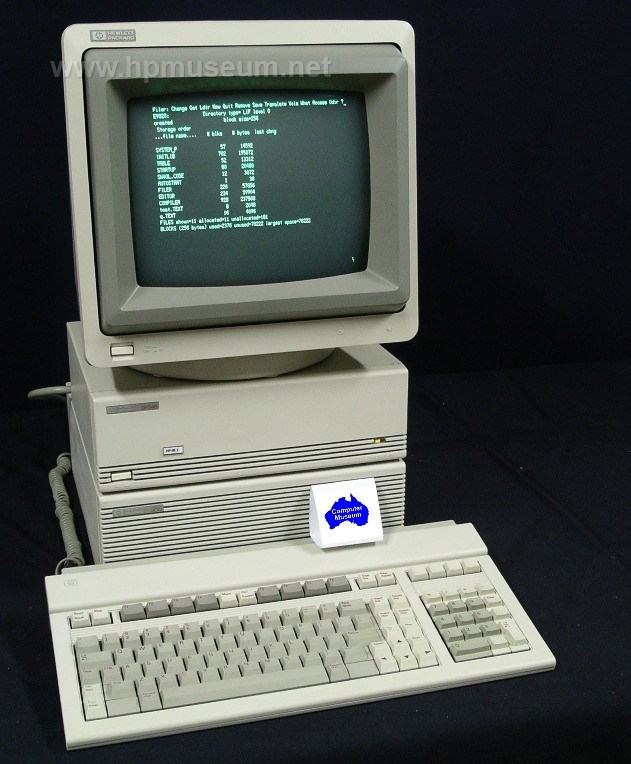
The HP Integral systems support the older versions of HP-UX and the HP 9000 series 200, 300, and 400 systems, which are powered by Motorola 68000 CPUs. HP’s proprietary FOCUS architecture powered the HP 9000 Series 500 computer systems, but later, the HP 9000 Series models were powered by the HP PA-RISC instruction architecture.
It is the first Unix operating system that can contain access control lists for access file permissions and include an inbuilt logical volume manager. HP-UX is an easy-to-understand and stable OS that supports LVM and vxfs. It also has an auto shutdown option when the system is overheated.
Solaris was developed and launched by Sun Microsystems and was a successor of SunOS. They offered three extensions for Solaris Unix OS, which are:
Oracle Corporation later acquired it. The Solaris Unix operating system provides support for legacy systems like SPARC servers and x86-64 workstations. It is popular for its many advanced features and scalability. Solaris has an application binary interface or ABI that executes the application on any OS with a similar microprocessor infrastructure, which results in cost reduction in application development.
Oracle acquired Sun Microsystems and discontinued OpenSolaris development and distribution. In August 2010, Solaris kernel source code public updates were stopped, and the Solaris 11 version was turned back to its proprietary closed-source OS. It is highly scalable, can run on multiple devices, and can carry out high-end processing workloads.
Let’s explore the key differences among AIX Unix, HP-UX, and Oracle Solaris operating systems.
IBM AIX and HP-UX operating systems have graphical user interfaces, while Solaris has a command-line-oriented interface. This common difference in interface architecture can impact the user experience and efficiency while managing system administration workloads.
Manual configuration of the/etc/system file is required for Solaris Unix OS, while HP-Unix and AIX have simpler and more straightforward kernel configuration procedures. This difference affects the level of customization and ease of administration.
HP-UX supports NFS, QFS, and UFS file systems, while AIX supports ISO 9660, UDF, JFS, JFS2, NFS, GPFS, and SMBFS file systems. Solaris Unix supports UDF, NFS, QFS, ISO 9660, UFS, ext2, FAT, and ZFS file systems.
All three operating systems offer basic restore and backup capabilities. The only differences between them are the specific commands that are given and the tools they are using to perform the tasks. For instance,
Legacy systems are vintage systems still used by enterprises but pose challenges. AIX, Solaris, and HP-UX, all three operating systems, are being used for different legacy systems. For example,
Stromasys offers emulation and virtualization solutions for legacy systems like SPARC, PA-RISC, VAX, Alphaservers and more. For businesses that are still dependent on legacy systems, Stromasys Charon’s solution creates a virtual environment to replicate the original system, which was previously running on either Solaris Unix or HP-Unix Operating System.
This approach allows businesses to preserve their data and mission-critical applications while enjoying the benefits of modern infrastructure and extending the life of their aging legacy.
Solaris Unix, AIX Unix, and HP-Unix are all three primary and most used variants of the Unix operating system. They all have their unique specifications and strengths while sharing some standard features. Despite the rise of Open-source OS, these Unix variants are still in demand and support mission-critical legacy systems, ensuring reliability, security, and scalability. Organizations can maintain the balance between tradition and innovative technology by leveraging the strengths of Solaris, HP-UX, and AIX and optimizing their operations.
Unix OS was developed in the 1970s at AT&T laboratories by Ken Thompson, Dennis Ritchie, and others.


The corporate IT landscape is evolving rapidly, presenting significant challenges for businesses. One major issue...
Read More
Did you know that the NASA/ESA Solar Orbiter mission launched in 2020 is powered by...
Read More
Are you looking to eliminate the risks associated with your HP 9000 PA-RISC systems? If...
Read More