
×

 What are open source CPUs, and how are they different from traditional processors?
Open source CPUs are processor designs where the source code and hardware descriptions are publicly available for access, modification, and distribution. In comparison, traditional processors are proprietary CPUs that are packages of ISA and microarchitecture, offered under restrictive licenses. RISC-V is considered one of the most common free instruction set architectures (ISAs) for open source software.
However, RISC-V itself is an open standard, not open source, which means only its ISA is freely available to the public, and individual implementations can be either open source or commercial. This distribution of licensing allows the developers to choose licensing models based on project needs: open source for community-driven projects or commercial.
 Article
The open source CPUs are considered one of the most significant transformations in processor design since the rise of industry-standard architectures. This idea is often associated with modern ISAs, such as the RISC-V architecture, due to its growing popularity in processor design.
However, this rising attention also stems from the confusion and misconception about the actual definition of open source and its context in CPU designing. The actual reality of processor openness is much broader and more nuanced, as it encompasses several forms, ranging from open source implementations to open standards and commercial licensing models. Many think RISC-V is an open source processor, while it can best be described as an open standard ISA.
In this article, we will delve into the definition of open source CPUs, their differences from open standards, and explore licensing modules for businesses.
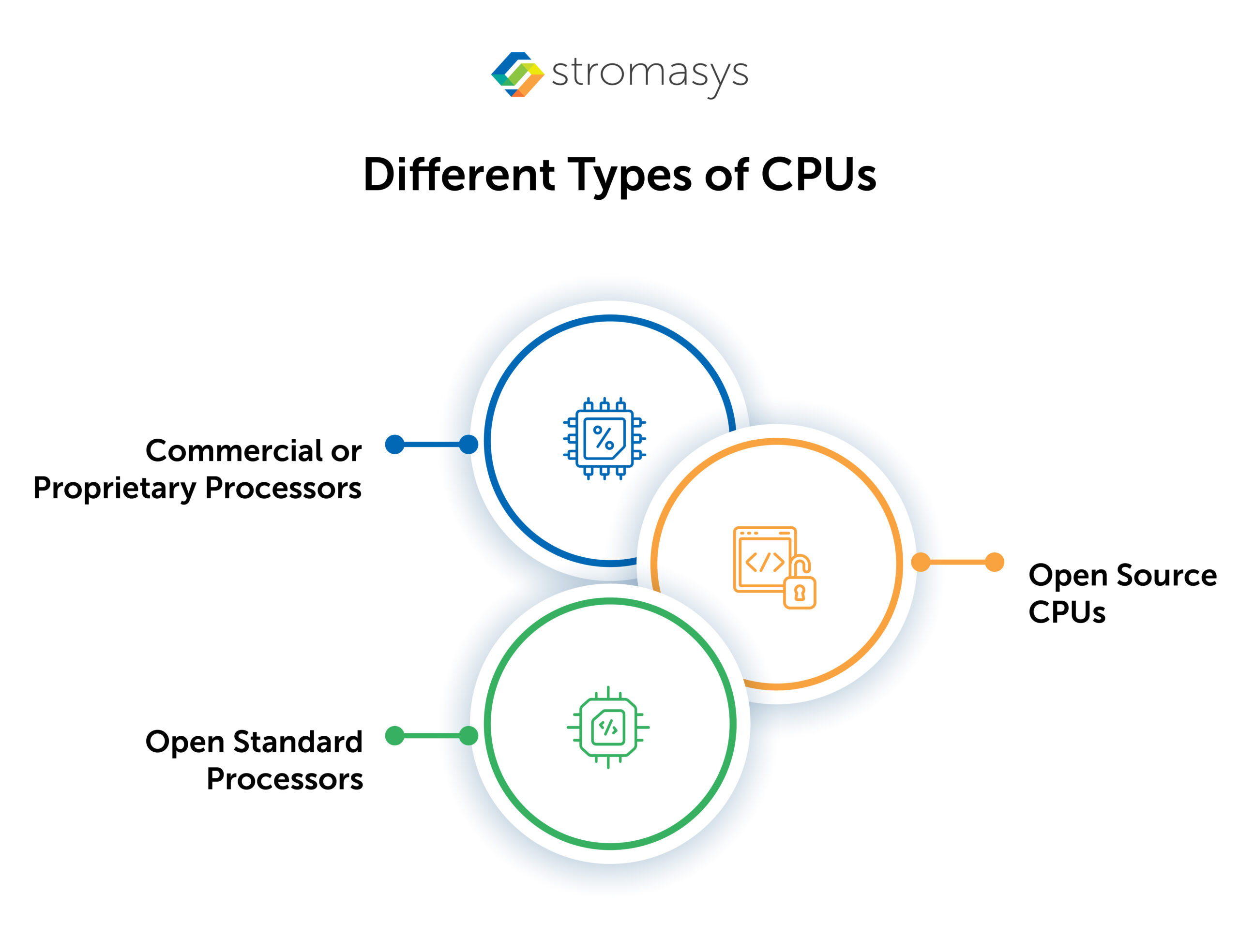
Open Source CPUs: The term ‘open source’ refers to the practice of making the source code of any hardware, software, or application openly available to the public under an open license. This way, users can easily access the design files to study, modify, and redistribute the source code, depending on the conditions specified by the open source license. The rights and restrictions depend on the license terms (e.g., GPL vs MIT).
Open Standard Processors: This refers to public specifications, such as ISA or a protocol, that are maintained by an independent body. It can be implemented, but the implementation source may or may not be an open source.
Commercial or Proprietary Processors: Commercial CPUs are software or processor IP licensed for commercial purposes by vendors. It means that access to, modifications of, and distribution of the design files or source codes are restricted. Customers who opt for these proprietary CPUs receive the vendor’s assistance, warranties, bug fixes, and additional support.22


Open standard processors and open source CPUs follow a similar principle of openness, but they differ in nature, while being available for free access. Open source CPUs allow for free licensing, which means the public can easily modify and distribute the source code or actual design files, such as netlists and HDLs. Examples of open source CPUs include OpenSPARC (initially developed by Sun Microsystems) and OpenRISC.
Whereas open standard processors are available to the public with specific specifications that enable compatibility and interoperability across various technological platforms. Examples for open standards include HTTP (IETF), Verilog (IEEE), and the C language (ISO).
Here is a brief comparison between Open Source CPUs and Open Standard Processors.
| Comparison Criteria | Open Source CPUs | Open-Standard Processors |
|---|---|---|
| Public Access | Source code (software/hardware designs) | Technical specifications and protocols |
| Objective | Enabling collaborative code development | Establishing unified industry standards |
| Key Advantages |
|
|
| Notable Implementations | Linux Operating System | RISC-V ISA |
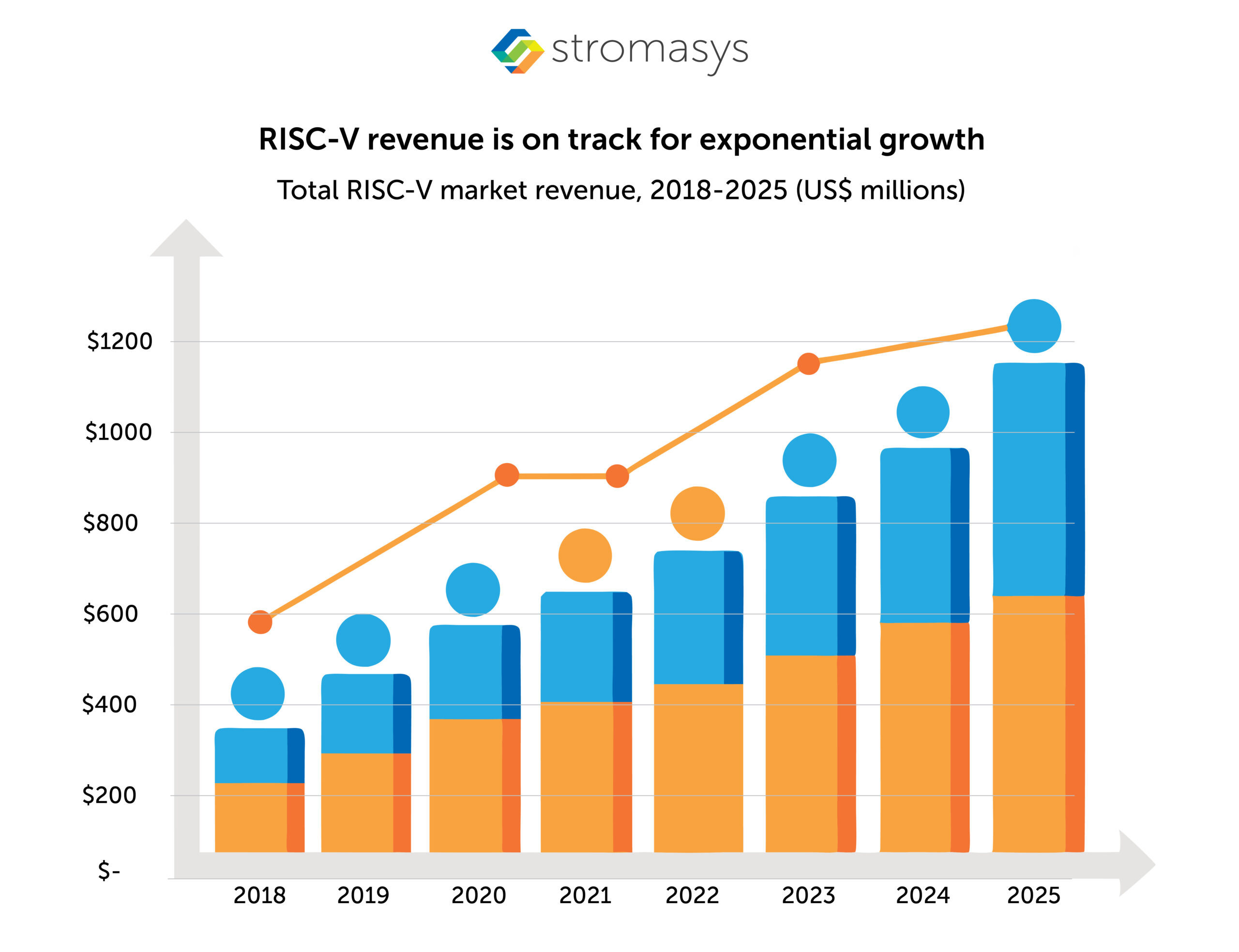
No, RISC-V is not an open source processor, but rather an open standard. It is an open source instruction set architecture (ISA) used for chip design. It enables the public to modify and distribute their own processors or designs based on the RISC-V specifications. A report from Deloitte Global predicts that the market for RISC-V processing cores will double in the upcoming years. It is projected that the revenue for RISC-V will increase from US$800 million in 2023 to approximately US$1 billion by 2024. It explains how rapidly RISC-V processors are gaining popularity.
RISC-V operates as an open standard processor. It has some established guidelines and technical specifications for processor development. It enables seamless compatibility and interchangeability of components across cross-implementations. This standardized approach drives technological advancement, ensures collaborative development, and innovation.
Although the RISC-V ISA (Instruction Set Architecture) adheres to open standard guidelines, individual processor implementations exhibit varying levels of transparency, with some RISC-V processors following open source principles. It means its source code is available for public access and modification. In comparison, others develop commercial processors that follow the RISC-V standards to ensure their specific designs and source code remain proprietary.
Classic processor IP vendors like ARM, Cadence, or more typically compile several element distributions in their licenses, like:
These vendors do not readily offer their ISAs and microarchitectures. Even if they distribute the architecture licenses, it’s the instruction set architecture (ISA) without the microarchitecture, and rarely, that too at a premium price.
Traditional IP vendors have strict control over both the microarchitectures and ISAs. In conventional licensing, both ISA and microarchitecture come as a bundled package, without any modification rights for the licensee. There are specific scenarios where vendors provide architectural licenses that allow ISA use with tailored microarchitecture. These personalization are rarely available and come at premium pricing, making them out of reach for many projects.
RISC-V is not like traditional processors, which are designed by separating the instruction set from the internal architecture implementation. As ISA is available at no cost due to its open source architecture, businesses do not need to pay for expensive licenses. It gives developers the freedom to choose how they want to license their internal designs while taking full advantage of the RISC-V ISA.
Here is a brief comparison between Traditional IP Vendors and the RISC-V Model.
| Aspect | Traditional IP Vendors | RISC-V Model |
|---|---|---|
| ISA Access | Bundled with microarchitecture, high fees | Free and open to all |
| Microarchitecture | Proprietary, no modification rights | Choice of open-source or commercial |
| Architectural License | Rarely offered, premium pricing | Not needed (ISA is free) |
| Flexibility | Limited, vendor-controlled | High flexibility in implementation |
| Cost Structure | ISA + microarchitecture fees | Only microarchitecture fees (if commercial) |
| Modification Rights | Typically none | Depends on microarchitecture license choice |
Now the question arises, “Is RISC-V actually an open source processor?” It is an apparent misunderstanding, as it is an open standard. However, it enables both open source and commercial implementations. The choice of licensing depends on the business requirements:
Open source CPUs are not about replacing existing proprietary models, but rather to offer cost-effective options and flexibility. For developers and designers, it is essential to understand the differences between open source CPUs, open standards, and commercial IP, and to choose the right model to drive innovation and meet diverse market needs. RISC-V is a paradigm shift in processor architecture that offers free licensing and an open ISA while allowing flexibility in implementation and licensing approaches. Understanding the distinction between open standards and open source is essential for making informed decisions about processors, such as RISC-V, and their adoption.
Are you still struggling with your legacy RISC hardware? Stromasys brings Charon PAR, a RISC systems migration solution, to modernize the aging hardware cost-effectively.
An open source CPU is a processor whose source code and design files are freely available, allowing access, modification, and redistribution at no cost.


The IT landscape is rapidly evolving, and businesses still running legacy hardware are facing numerous...
Read More
Did you know a 1990s-era processor design still flies on NASA/ESA Solar Orbiter? That’s right!...
Read More
Fun fact: The HP 9000 series reached its End of Life (EOL) on April 30,...
Read More