
×

 What are the strategies to minimize legacy server maintenance costs?
Legacy server maintenance costs are a burden to the business's expenses but a liability to both operations and finance of the organization. Maintaining outdated hardware entails incurring several hidden and visible expenses, including skyrocketing operational costs, cybersecurity vulnerabilities, technical debt, and integration challenges.
It's a well-known fact that relying on outdated infrastructure exhausts resources and misses out on innovative opportunities, resulting in reduced ROI and poor customer experience. Effective modernization strategies to reduce legacy IT operational costs include conducting pilot migrations and phased rollouts to modernize hardware with flexible, long-term plans. It can help businesses to minimize the cost of legacy hardware while strengthening performance, ensuring resilience, scalability, security, and compatibility.
 Article

Studies have shown that legacy systems, on average, cost 20-25% more annually compared to modern infrastructure. With legacy system migration, businesses can easily manage their expenses and save on their additional maintenance costs.
These expenses can then be later spent on innovative solutions or the sectors that need upgradation. For instance, the Air Force was able to minimize its annual operational costs of one legacy application to $1 million from $35 million a year. Businesses can easily expect to see at least a 15% reduction in legacy server maintenance costs.
Legacy servers are reaching the end of their lifecycle. However, enterprises are heavily investing in them to keep them operational, despite suggestions that they should modernize them. These legacy systems, which were once managing critical operations, are now becoming a financial burden that also impacts business performance.
Here are some factors that impacts the Legacy Servers Costs:
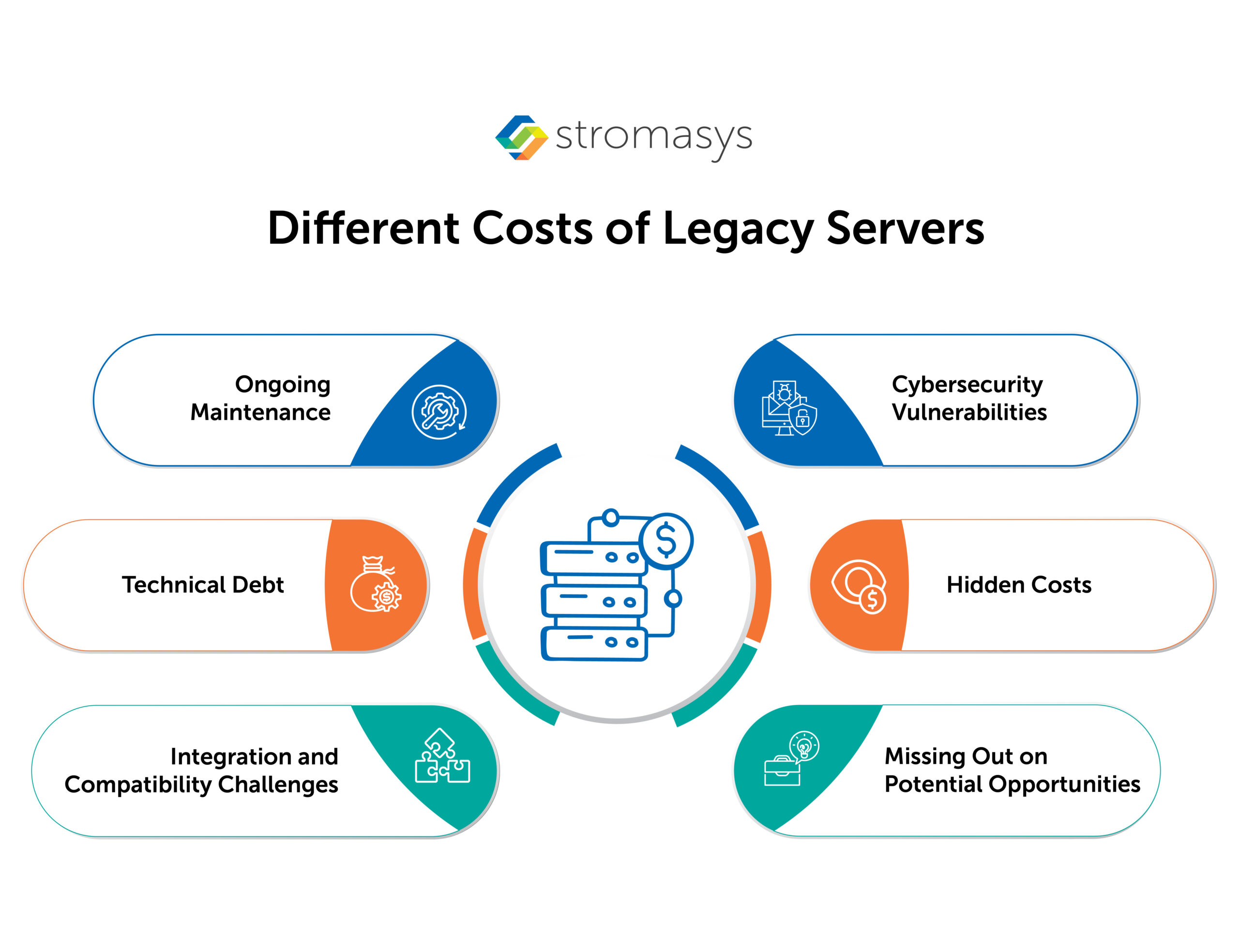
Maintaining the legacy system is very expensive. A study report from Deloitte with 300 business leaders and respondents has compiled the top three challenges that directly impact the business expenses:
The costs of legacy servers and hardware are getting obsolete while its maintenance costs are skyrocketing. It is getting increasingly expensive to maintain these outdated monolithic architectures. For businesses, it becomes difficult to quantify the exact amount of these costs. There are various miscellaneous.
Additional costs associated with maintaining legacy systems include technical support, hardware upgrades, specialized resource assistance, licensing modules, and vendor support.
Operating on legacy systems leaves the enterprises vulnerable to cyber threats due to poor infrastructure. Threat actors can exploit these infrastructure vulnerabilities and gain access to servers, allowing them to access sensitive information of an organization. It can lead to a severe financial crisis.
A high-profile security breach occurred in 2023. It cost on average $4.45 million to the giant shipping enterprise Maersk and credit agency Equifax. Due to its outdated infrastructure and poor security measures, they encountered a data breach.
Legacy systems lack consistent security patches and are not compatible with advanced security measures. They may even lack a backup and recovery approach, which puts the data at risk of permanent loss.
It is the accumulated cost of the shortcuts that are taken during software development. It is an inevitable consequence of maintaining legacy systems that can rapidly drain your budget. It is primarily due to gaps in the software, resulting from poor architecture, a skills gap, and other issues, which eventually need to be resolved.
If these technical debts are not resolved soon, they will accumulate and cause issues for the entire team, halting operations. Dealing with technical debts not only burdens the IT resources but also impacts the budget.
Hidden costs are primarily the indirect expenses that may not be immediately apparent but have a tangible impact on the business’s overall budget. Continuing to operate on legacy systems can result in the following:
Legacy servers are built on monolithic architecture that lack compatibility with modern applications, cloud environments and mobile access. They require custom development and specialized middleware to interact with them seamlessly. These ongoing maintenance of such complex integrations require niche technical skills that impacts the overall IT expenses.
Businesses that focus on maintaining their legacy servers rather than developing innovative solutions tend to lose their market position and competitive edge. Delaying modern technologies like AI, cloud computing, and process automation, businesses will miss out on robust and cost-effective means to modernize their infrastructure.
Consider how competitors are working to improve their productivity and boost ROI by incorporating modern applications to automate and streamline operations. Utilizing agile and innovative technology is a critical differentiator that sets the business apart.
Here are some factors that are to be considered by modernizing the legacy servers and hardware:
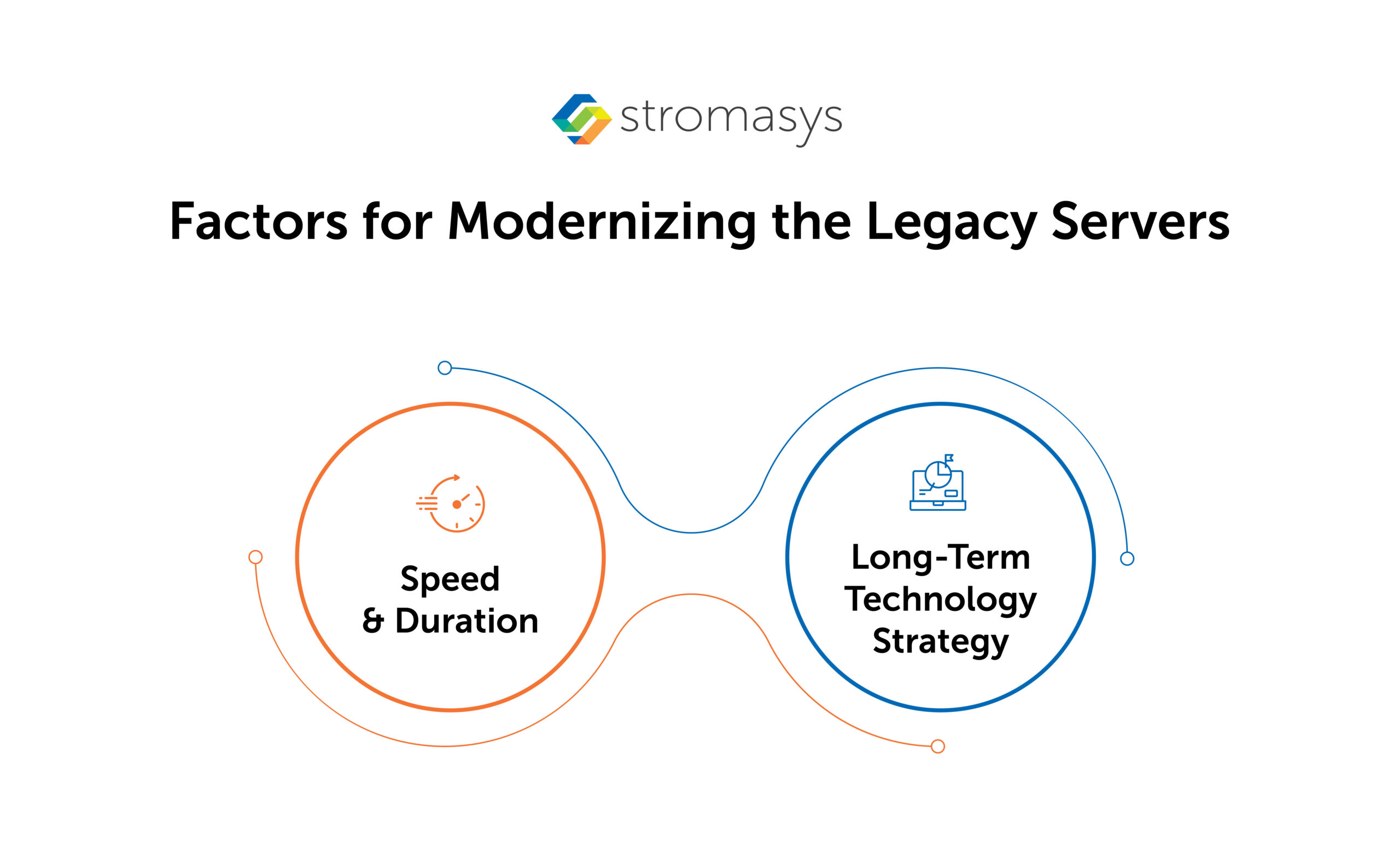
Minimizing the legacy server maintenance costs needs a proper strategic approach to modernize the infrastructure. It will ensure business continuity while reducing annual IT expenses. Enteprises need to create a comprehensive legacy migration approach that includes phased rollouts, employee trainings, disaster recovery plans, and post-migration strategies to ensure smooth transition.
Through legacy migration, businesses will not only eliminate outdated hardware maintenance costs but also save on operational expenses while improving efficiency, scalability, agility, compatibility, and security. As a result, it also enhances the potential growth opportunities. Stromasys Charon emulation software that offers legacy hardware modernization solutions and uses lift-and-shift migration strategy to transform the infrastructure. It preserves the existing investments while integrating modern tech.
Legacy server maintenance costs are the ongoing expenses that organizations must bear to keep their older infrastructure running.


The IT landscape is rapidly evolving, and businesses still running legacy hardware are facing numerous...
Read More
DEC Alpha hardware has been pivotal to many businesses due to its reliability, performance, and...
Read More
Legacy application migration is a new trending buzz of IT discussion. Businesses are migrating from...
Read More