
×
 How does modernization eliminate legacy system challenges?
Legacy systems have been the backbone for running critical operations for decades. They have been deeply integrated into the business infrastructure. Over time, these legacy systems have become an obstacle to business growth and are limiting potential opportunities. Operating on legacy systems can be very challenging due to escalating maintenance costs, security vulnerabilities, poor scalability, and integration issues. By modernizing legacy infrastructure, businesses can improve productivity, reduce costs, enhance security, and support scalability. Businesses must choose between modernization and complete replacement based on their business objective. Legacy migration is a cost-effective modernization approach that enables seamless operations while leveraging modern platforms to boost ROI and business agility.
 Article

By modernizing the legacy infrastructure, you can eliminate these challenges that are hindering your business operations and growth. In this blog, you will explore the reasons for the fall of legacy systems in modern IT enterprises. You will explore the benefits of modernizing the legacy systems and different strategies to transform your infrastructure.
Legacy systems are the outdated infrastructure that includes obsolete hardware and software. These are the monolithic systems that were once the core of business operations, but now they are hindering growth.
Some of the common legacy system examples are:
It is unfortunate that businesses are still clinging to these legacy systems despite the emergence of new modern technologies.
Here are some significant reasons that result in legacy systems’ downfall:
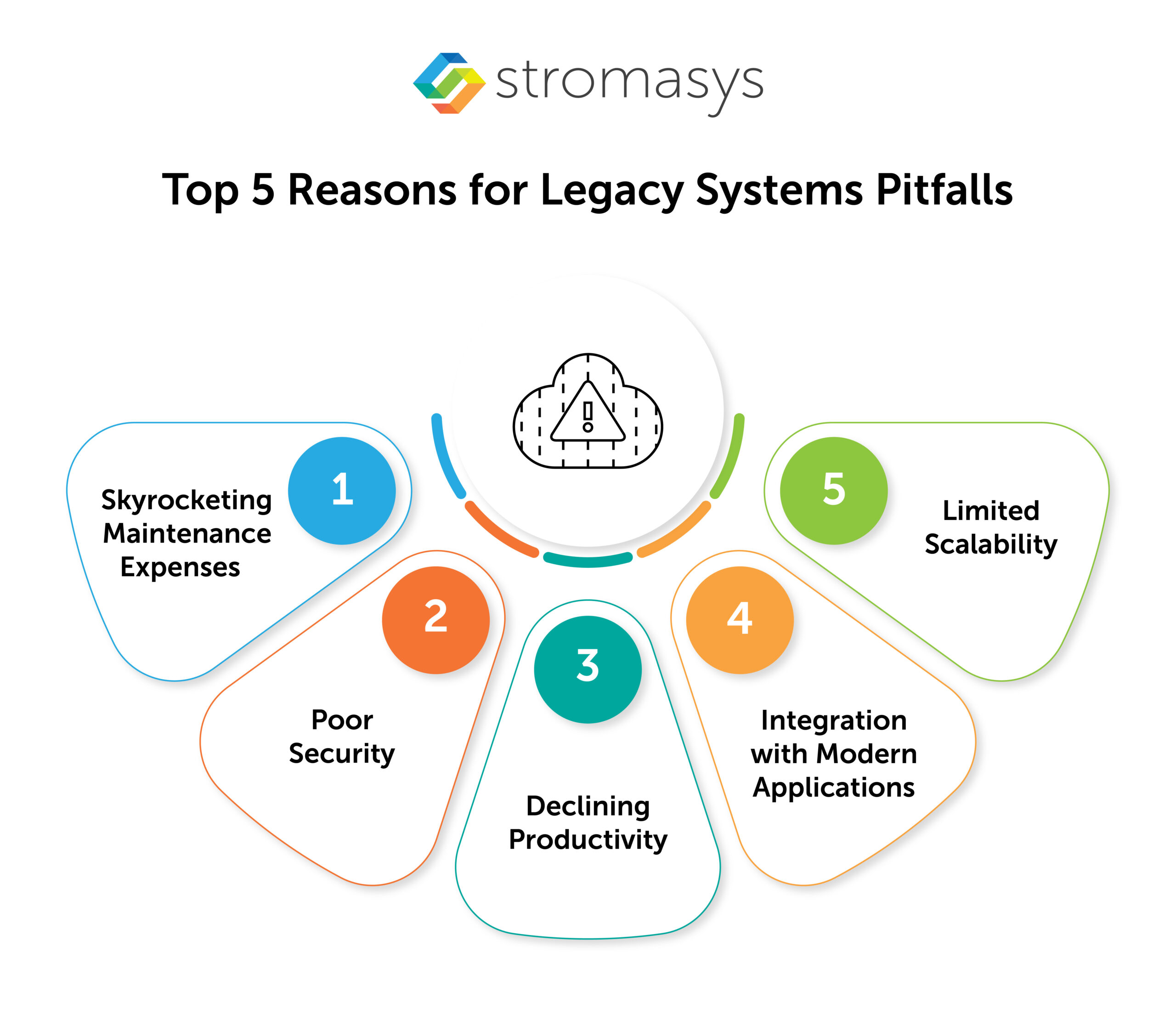
The legacy system requires constant maintenance to operate seamlessly. Also, the replacement parts are scarce, which results in overpricing of these parts. With these legacy systems becoming obsolete, the vendor support also decreases, and they are removed from the mainstream business. They required specialized IT personnel for their maintenance, which also added cost to the budget.
The cyberattacks are getting more advanced. Also, the outdated legacy infrastructure is not up-to-date with the modern security measures to tackle them. This makes them more vulnerable to cyberattacks. It not only endangers the sensitive client information but also results in non-compliance.
Non-compliance can result in hefty fines and legal penalties. Oracle Health, formerly known as Cerner, experienced a data breach in 2023. Its legacy infrastructure was exposed to a cyberattack that resulted in the exposure of sensitive patients’ records across several US hospitals. It led to a violation of HIPAA compliance and damage to public trust.
One of the biggest obstacles to operating on legacy systems is that they tend to get slower as they age. They become characteristically slow in loading, and you will experience lag while executing any programs. One of the significant factors contributing to this inefficiency and system lag is the lack of updates that address any issues. This ultimately results in declining productivity, impacting the ROI.
The legacy systems are designed on monolithic architectures. This results in incompatibility with modern applications. It means businesses are unable to integrate modern applications and software with legacy systems. It even results in data silos that impact the operations of the businesses.
In today’s marketing landscape, customers’ demand is increasingly rising. This makes scaling up to meet the growing demands difficult. The outdated legacy systems are not designed to scale up and down, which hinders their operations.
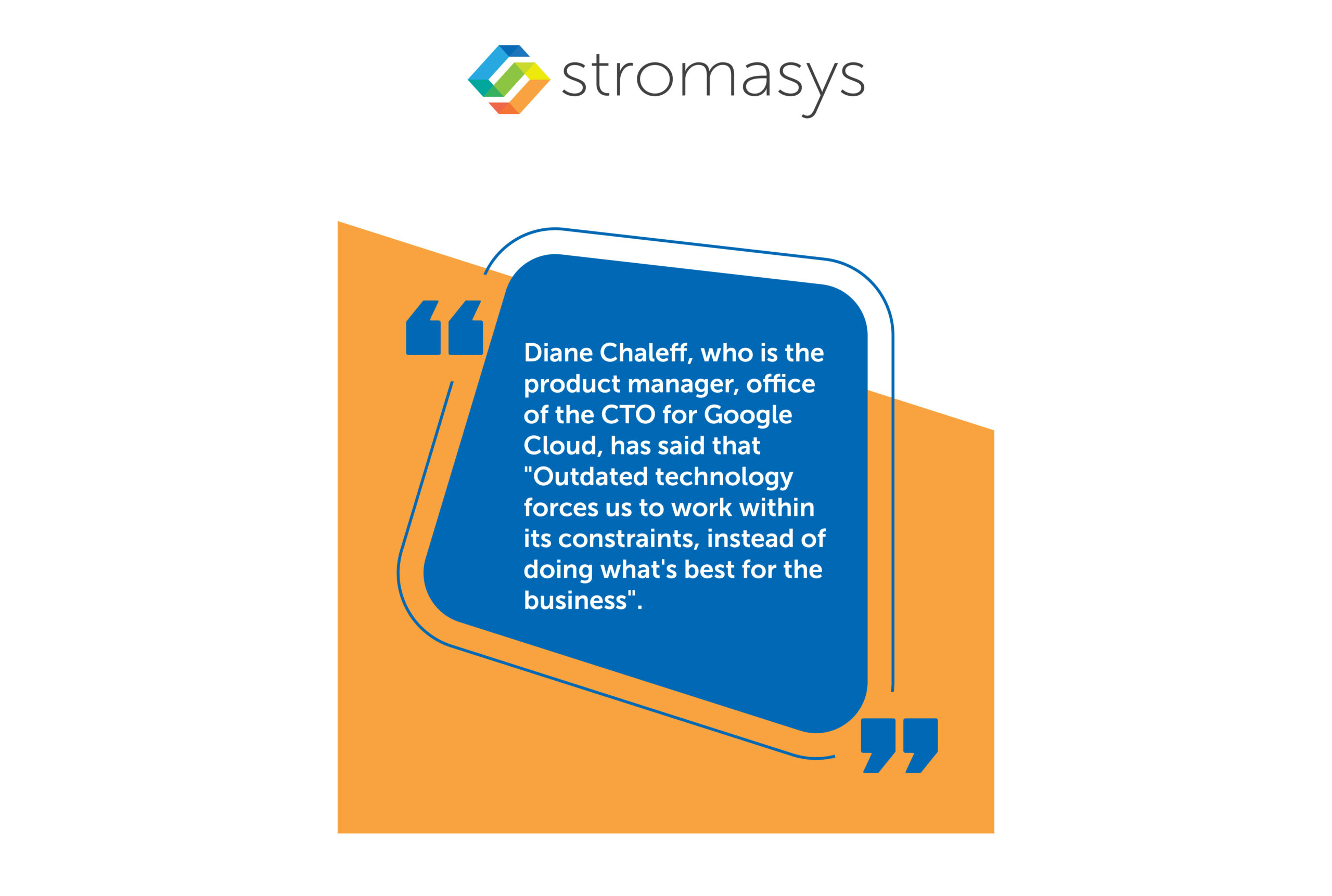
The Forrester Research report from a recent survey of 3700 organizations has stated that approximately 72% of their budget is spent on maintaining their legacy systems. Modernization of legacy systems or replacement is a significant change for the organization’s infrastructure.
Replacing the entire legacy infrastructure can be very expensive. This option is only feasible for those businesses that are operating on monolithic architecture with no patches available, and legacy systems are no longer sustainable. A complete overhaul is necessary for outdated systems with unfixable security issues that can result in compliance challenges, along with other problems like a lack of technical support due to hardware obsolescence, and failing to integrate with modern tech, which hinders growth and innovation.
When your legacy systems are still operational, then modernizing the infrastructure is the right option to choose. Legacy system modernization not only allows for transforming the infrastructure cost-effectively but also preserves the legacy applications. Numerous studies have shown that businesses can automate operations and streamline processes by upgrading their legacy systems. This helps in improving the operational efficiency and productivity, which elevates the response time and minimizes errors. Studies have shown that modernizing the infrastructure can reduce the operational costs up to 60%.
Legacy system modernization includes migrating to a new modern platform that can either be on-premises, like x86 servers, or a cloud platform. Microsoft Azure studies have shown that enterprises that migrate to the cloud platform have experienced 228% ROI over the past three years, with a 40% reduction in infrastructure costs.
Stromasys is a leader in legacy system modernization. It offers a legacy migration solution to transform the legacy infrastructure using the lift-and-shift migration approach. It’s Charon Emulation solution mimics the behavior of legacy hardware on a modern platform without any modifications. This allows businesses to seamlessly operate on their critical applications while leveraging the benefits of a modern platform.

It is a cost-effective method that is available for both on-premises and cloud platforms. It enhances agility, security, scalability, and compatibility with modern technologies.
The various reasons for legacy system failure are:


The IT landscape is rapidly evolving, and businesses still running legacy hardware are facing numerous...
Read More
DEC Alpha hardware has been pivotal to many businesses due to its reliability, performance, and...
Read More
Legacy application migration is a new trending buzz of IT discussion. Businesses are migrating from...
Read More