
×

 How do legacy systems impact Industry 4.0 adoption and smart factory initiatives in manufacturing industries?
Legacy manufacturing systems include outdated hardware and software platforms like PLCs, SCADA systems, and proprietary architectures like SPARC, VAX, AlphaServers, and PA-RISC. They continue running critical production processes despite predating modern connectivity standards. For decades, they have fulfilled their purpose of maintaining a stable and reliable operation.
But with time, these outdated infrastructures have aged and are in conflict with modern technologies and smart factory requirements. They lack the open interoperability, real-time data streaming, and cloud connectivity that Industry 4.0 initiatives depend on. By modernizing legacy systems, manufacturers can overcome these challenges and easily adopt smart manufacturing initiatives. With hardware emulation, manufacturers can easily eliminate aging hardware while continuing to run the critical workloads on modern infrastructure that supports IIoT integration, AI/ ML, and real-time analysis without any operational disruption.
 Article

When talking about the legacy systems in manufacturing, it includes programmable logic controllers (PLC), SCADA systems, specialized hardware (VAX, AlphaServer, PA-RISC, SPARC, or PDP-series servers), and ERP platforms. They were once the state-of-the-art technologies, but now they are limiting growth opportunities.
These systems are not some outdated systems that are just gathering dust. But they are actively being used in the manufacturing sector. They were designed for stability and reliability, and they did deliver them with precision. But now, with time, they have aged and are unable to deliver better results. The problem is not that they have stopped working; it is that they are unable to scale up to the growing market demands.
Complete replacement of the legacy infrastructure is not a feasible option when your critical workloads and applications are still operational. These took years to validate, especially in regulated industries. So, manufacturers are struggling with two challenges:
Smart factory initiatives have certain requirements like real-time data collection, open interoperability between hardware and software, and continuous connectivity between the shop floor and the systems to ensure smooth decision-making. But the framework of the legacy systems was not designed with these modern concepts.
You can say that the most outdated concept is of an open API. The legacy systems were engineered as closed and self-contained systems due to their monolithic architecture. They were reliable but offered limited flexibility and lacked a modern security posture. This hinders the smooth data flow, which is the primary requirement of smart manufacturing.
It’s not a hypothetical problem. Based on a 2026 market survey report, the legacy system interoperability gaps rank as the second-biggest barrier to scaling smart manufacturing initiatives. It was cited by 39% of manufacturers. Legacy systems create data silos, which is one of the primary reasons AI and analytics initiatives are blocked even before they reach production scale.
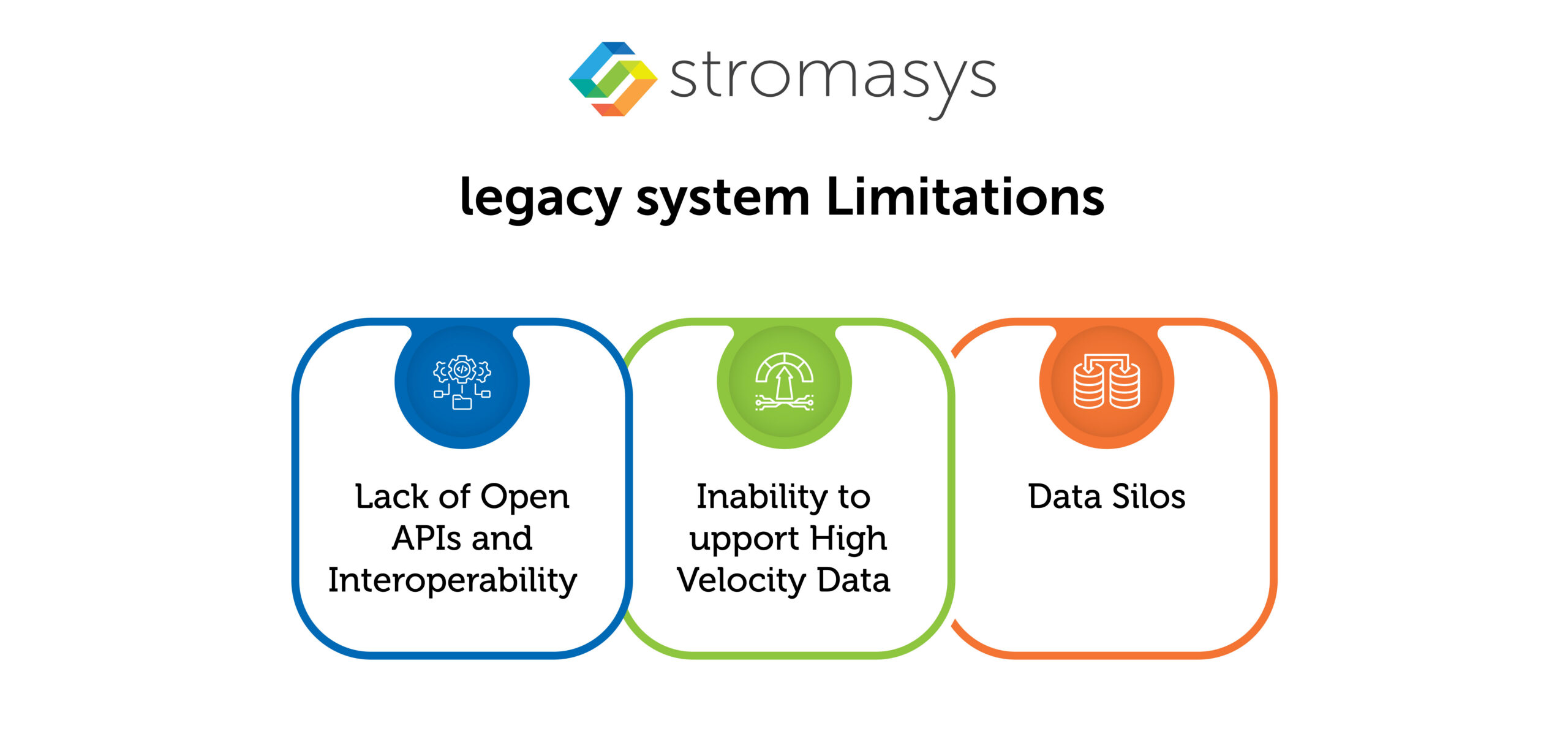
The key limitations include:
The heterogeneity in legacy OT (Operational Technology) and IT systems creates significant integration problems for many SMEs (Small and Medium Enterprises) who want to transition to smart manufacturing. This results in the building of digital islands where critical frontend operations are running on the legacy hardware while the backend teams are pushing for modern tech like cloud analytics. It leads to incomplete visibility and suboptimal decisions.
Here are some significant factors that slow down smart manufacturing initiatives:
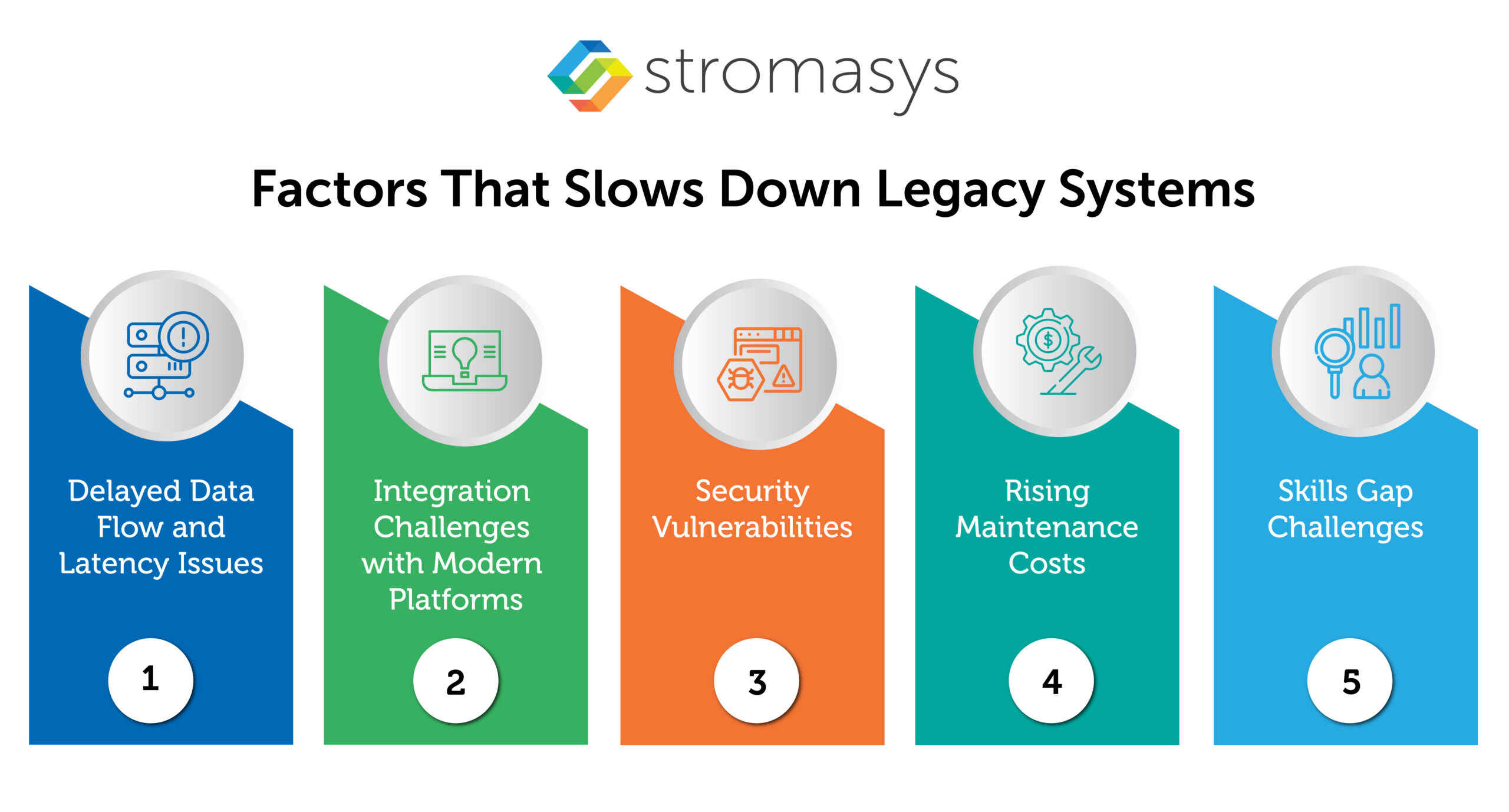
Real-time IIoT requires quick responses, but operating critical applications on legacy systems results in significant latency through batch processing or manual data entry. It delays predictive insights.
Trying to integrate legacy MES or SCADA to new IIoT platforms or other innovative manufacturing initiatives requires expensive custom gateways. This can lead to frequent failures and increased technical debt.
Legacy systems have reached their end-of-life, which means they will no longer get security patches and updates from their vendors, which makes them vulnerable and prime targets for cyberattacks. And modern security features like zero-trust architectures are difficult to implement on the outdated systems. Any data breaches in businesses that rely heavily on legacy systems can cost millions on average.
Survey reports have shown that businesses, on average, spend around 80% of their IT budgets on maintaining their legacy infrastructure. According to ServiceNow research, the average annual labor cost per worker for maintaining legacy systems is around $39,000 globally. In the manufacturing and energy/utilities sectors, this cost rises significantly to $53,429 per worker.
The legacy experts are retiring, taking away all the institutional knowledge and skills with them. Also, the new engineers are trained on modern technologies. According to Bureau of Labor Statistics projections, more than 32% of current production workers are expected to retire by 2030.
The cost of inaction is not subtle. Here are shocking stats:
Why rip and replace is not an ideal solution for manufacturers. Well, the answer is simple: full replacement carries a level of operational risk, and most manufacturers cannot take that risk. The full replacement is also called forklift upgrades. It means completely shutting down the production lines that have been in operation for decades. Many legacy applications are tied to compliance certifications and validation processes. Complete replacement means starting from scratch on new hardware, an expensive and time-consuming process in regulated industries.
Then there’s another factor of cost. Full replacement means getting new hardware, new software licensing, rewritten applications, extensive testing, and downtime that will occur during the transition. This is all before the smart factory investment even begins to pay off. So, you can say that for most manufacturers this math simply doesn’t work.
Instead of replacing everything, there are alternate legacy migration approaches that allow you to migrate from the outdated infrastructure but continue to operate critical applications and workloads. Hardware emulation is one of the most cost-effective and easy legacy modernization approaches to transform the outdated infrastructure. It allows manufacturers to move out of their current legacy platforms like SCADA systems, PLCs, specialized hardware, and more and run their critical workloads on a new system for better efficiency.

Stromasys is one of the leading legacy migration service providers. It offers the legacy emulation solution known as the Charon that lets manufacturers run their existing applications, unchanged, on modern x86 hardware or in the cloud. It is a low-risk solution that replicates legacy hardware like VAX, Alpha, PA-RISC, SPARC, and PDP-11 without any binary code changes.
Here are some significant benefits of legacy system migration with the Charon emulation solution:
Here are some steps that manufacturing industries should take for seamless legacy transformation:
Legacy systems are designed on a monolithic architecture, meaning they lack open APIs, real-time data streaming capabilities, and modern connectivity standards. This prevents them from integrating with IIoT platforms, cloud analytics, and other smart factory technologies.


The IT landscape is rapidly evolving, and businesses still running legacy hardware are facing numerous...
Read More
DEC Alpha hardware has been pivotal to many businesses due to its reliability, performance, and...
Read More
Legacy application migration is a new trending buzz of IT discussion. Businesses are migrating from...
Read More