
×

 What should financial institutions consider before migrating to Oracle Cloud?
Migrating legacy financial systems to Oracle Cloud is not a simple technical upgrade, but a business transformation. It touches data integrity, compliance, cost, and how finance teams work every day. The organizations that have shown outstanding results are the ones that have treated this process as a full program and not a system swap. They invest early in data quality, start with a phased rollout of core financials, and bring in skilled experts who understand regulated environments. Those who are struggling are usually the people who underinvest in change management or try to recreate every old workaround in the new cloud setup.
Legacy platforms like Oracle E-Business Suite now only receive security patches, while Oracle Fusion Cloud ERP brings AI-powered reconciliation, automation, and real-time analytics. Some real deployment examples include HSBC’s global rollout across 300 legal entities and a major US bank consolidation of nearly 4,000 applications with Cognizant, which show successful migrations. This showcases that enterprises that plan for data quality, compliance continuity, and change management see measurably faster financial close and stronger ROI.
 Article

Legacy financial systems do not fail overnight. It is a gradual process that includes rising maintenance costs, declining vendor support, and incompatibility with the tools finance teams now expect, like AI-assisted reconciliation and real-time reporting.
There is a clear market shift that data shows perfectly. Did you know? The on-premises ERP now retains only 30% of the market share. This is largely concentrated among the organizations that need to follow heavy compliance requirements, while the cloud deployment has become a popular option according to the NextMSC 2026 report. There are reports that have stated that the global cloud ERP market is projected to reach $117.03 billion by 2030. This figure shows the shift towards the cloud environment from legacy systems.
Standing still is no longer an option. Every year without modern capabilities will widen the gap with competitors. This shows the increase in the gap in modern technologies like automation, real-time visibility, and AI-assisted processes.
Based on ERP Research, enterprises that are still operating on legacy ERP report spending 3 to 5 days on manual account reconciliations alone, along with 2 to 4 days on intercompany elimination and consolidation. It is mostly due to the architecture design of legacy systems. They were never designed for automated matching or real-time visibility.
There is another challenge regarding limited vendor support. Platforms like Oracle E-Business Suite now receive security patches and tax or legal updates, but no new functional capability. It means that the organizations that are still operating their critical operations on EBS are falling further behind modern technologies like AI-assisted financial close, intelligent procurement, and real-time supply chain visibility with every release cycle they miss, based on the ERP Research reports.
Here are some key considerations that enterprises need to focus on for a successful migration to Oracle Cloud Infrastructure (OCI):
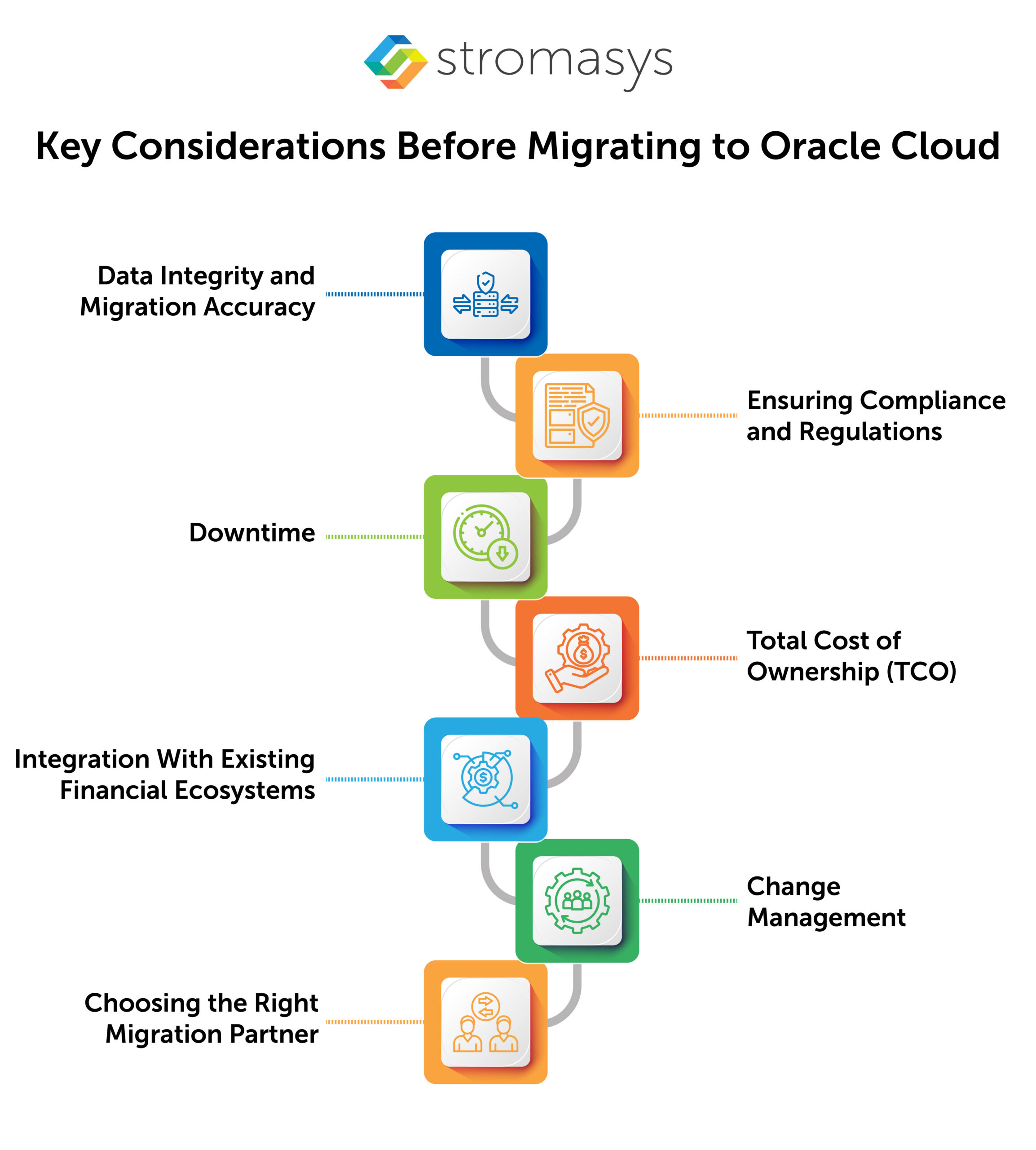
The data structure in legacy systems is outdated and contains incomplete records, duplicates, inconsistent coding, and historical workarounds. It requires careful cleansing and validation to map these to the Oracle Cloud Infrastructure data model. Any incomplete or incorrect data can hinder the migration process and can cause challenges after going live. Therefore, it is recommended that data quality work should take place before cutover.
For financial institutions, there are some specific regulatory frameworks that include SOX controls, PCI DSS for payment data, GDPR and data residency rules, and industry financial reporting standards. These compliance regulations are non-negotiable. Unlike many other sectors, banks and financial firms cannot treat compliance as a secondary concern. Controls, audit trails, and access governance must be validated in the new environment (Oracle Cloud) before starting with the operations ahead.
Financial operations are critical. Transactions of millions of dollars take place every day, and it cannot pause during the migration process. The migration planning must include full disaster recovery considerations, parallel-run options where feasible, and a clear rollback strategy. Downtime is not an option for financial institutions.
Total cost of migration is often underestimated. Based on the ERP Research report, mid-market Oracle ERP Cloud implementations, around 500 users, typically run $4 to $10 million over five years, and enterprise deployments with 2,000 or more users often exceed $20 million once licensing, implementation services, data migration, and training are complete. Well, Oracle Cloud Infrastructure (OCI) does offer a total cost of ownership up to 50% less than on-premises ERP, but it totally depends on how carefully planned and executed the migration process and implementation are.
Core banking systems, trading platforms, treasury tools, and third-party risk and compliance software all need to keep working through and after the migration. Integration architecture, data flows, and interface testing are often ignored in the early migration process. Underestimating them can cause delays and cost overruns.
Oracle Cloud is built around a configuration-first model. This architecture requires heavy customization, which is a change for the teams who used to years of operating legacy workarounds. Staff retraining is also a matter of importance and priority as the migration process itself.
Based on the IDC reports, 70% of successful cloud migrations involved collaboration with experienced cloud migration service providers. Therefore, it is necessary to choose the right service provider who will understand your business objective and the reasons for moving to the cloud and bring in the right skills required for the process.
Oracle Cloud has been designed specifically to address the above concerns. However, the results still depend on how well an organization implements it.
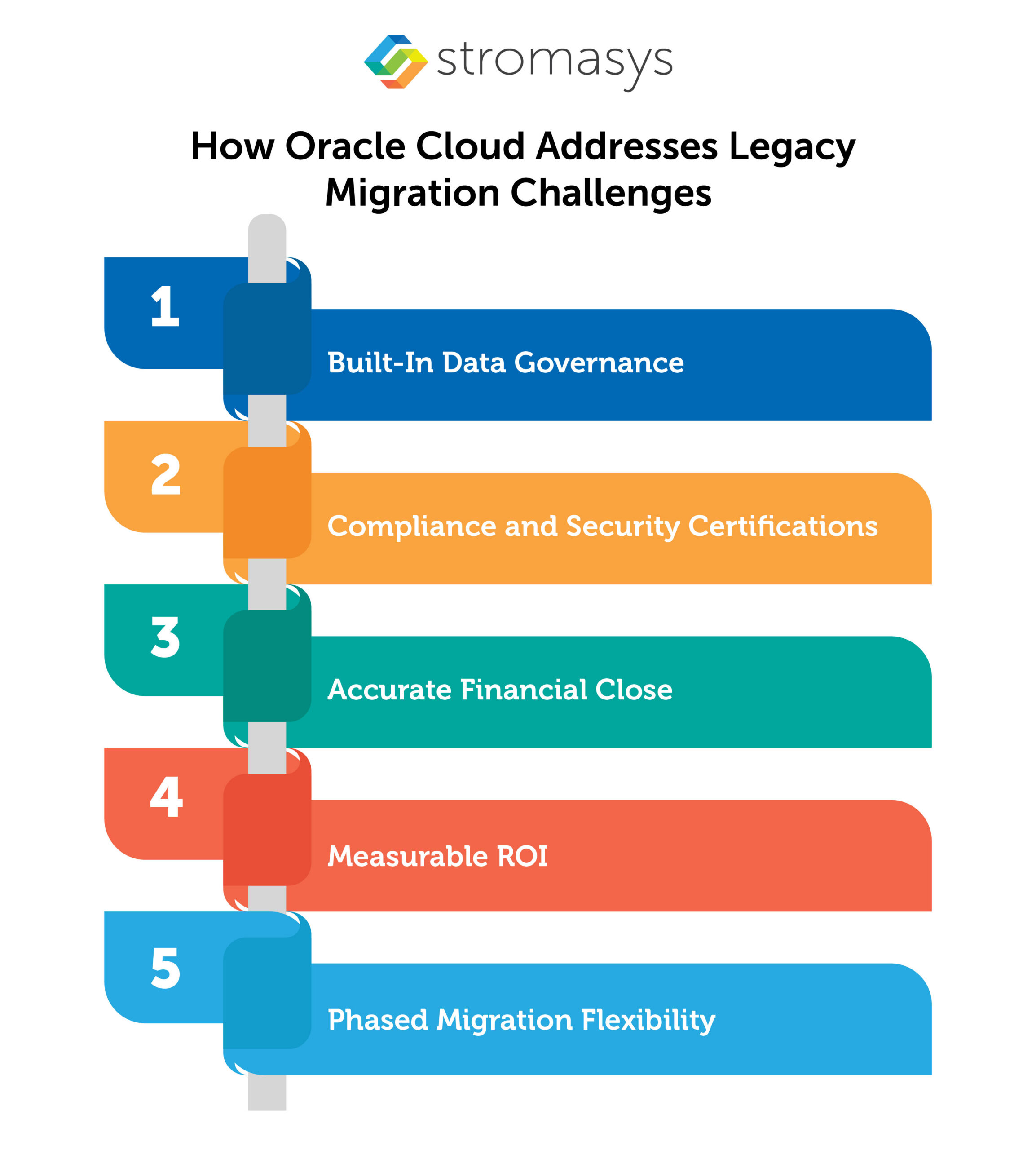
Oracle offers built-in tools that are designed to preserve data integrity during the migration from the legacy to the cloud data model. Combined with structured cleansing and validation cycles, these tools reduce the risk of post-go-live data issues when used properly. It reduces the manual reconciliation work that often disrupts the migration process.
Oracle Fusion Cloud ERP has a built-in risk management and compliance model, data isolation capabilities, and certification coverage that are required in regulated financial environments. However, the outcomes still depend on correct configuration of access controls, monitoring, and governance.
Financial close is one of the most persistent pain points on legacy systems. Enterprises that have migrated to Oracle Cloud have seen measurable improvement. Based on the ERP Research report, organizations that have used Oracle Account Reconciliation Cloud (ARCS) have shown a 30 to 50% reduction in time-to-certify account reconciliations through AI-powered auto-match for bank accounts, intercompany balances, and prepaid accounts.
According to the Oracle and Nucleus Research analysis, businesses that have implemented Oracle Cloud ERP have seen an average ROI of 3.2x. And 52% of that return is associated with productivity gains and reduced IT costs rather than direct cost cutting alone. Results vary depending on the scope and execution quality.
Oracle also supports phased migration. It is a better migration path than forcing a single disruptive cutover. This allows each functional area to stabilize before the next phase begins. It not only reduces operational risk but also allows teams to stabilize one functional area before expanding. The recommended sequence typically starts with Financials, Procurement, then Supply Chain and Manufacturing, and finally the HCM.
Here are some migration examples:
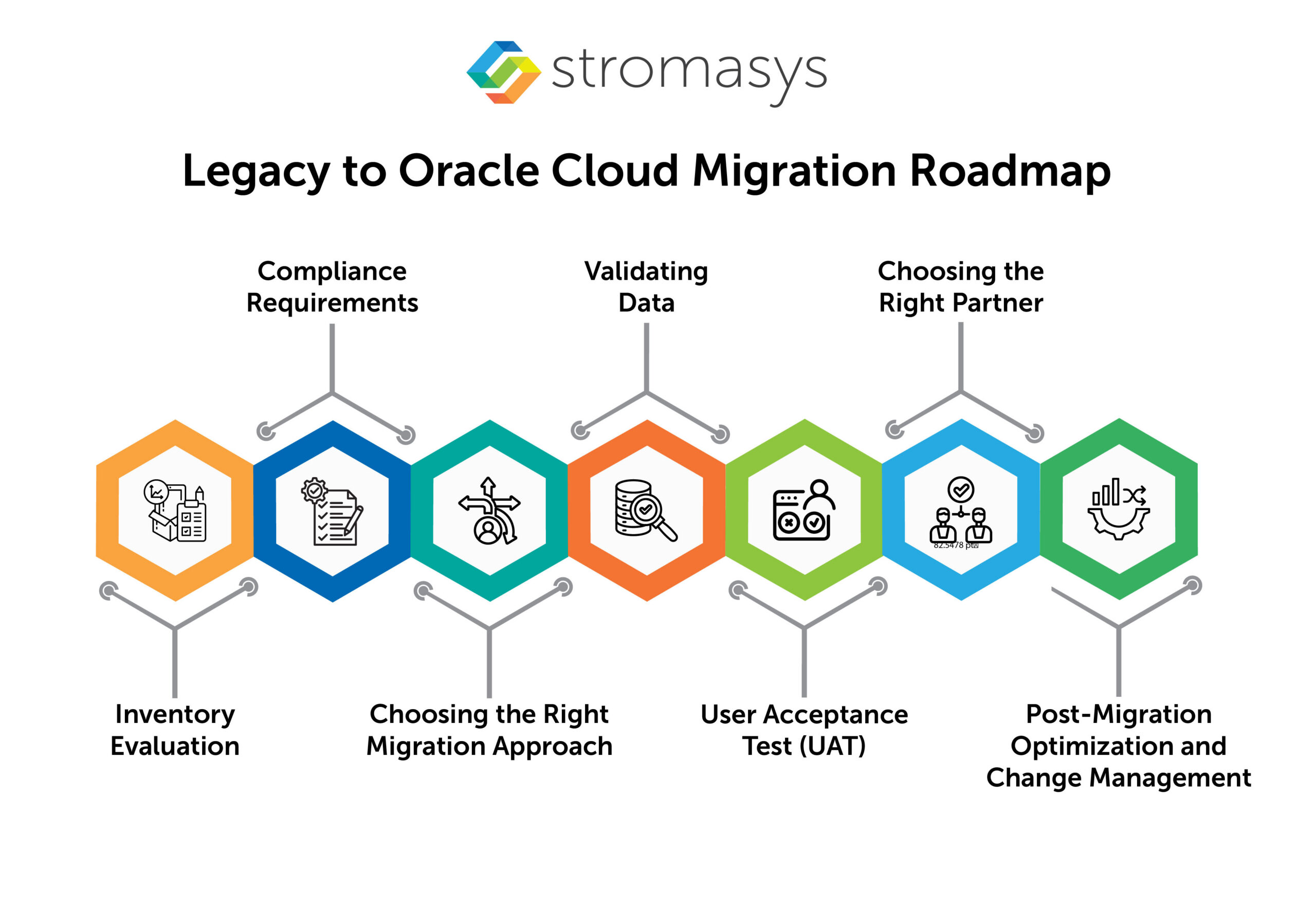
Here are steps that a financial institute should follow if it wants to move its critical workloads and applications from a legacy environment to Oracle Cloud:
Financial institutions are one of the critical industry that carries millions of transactions daily. They are still carrying out their critical operations on decade-old legacy systems. Here, the real obstacle to migration is not Oracle Cloud, but the legacy hardware underneath.
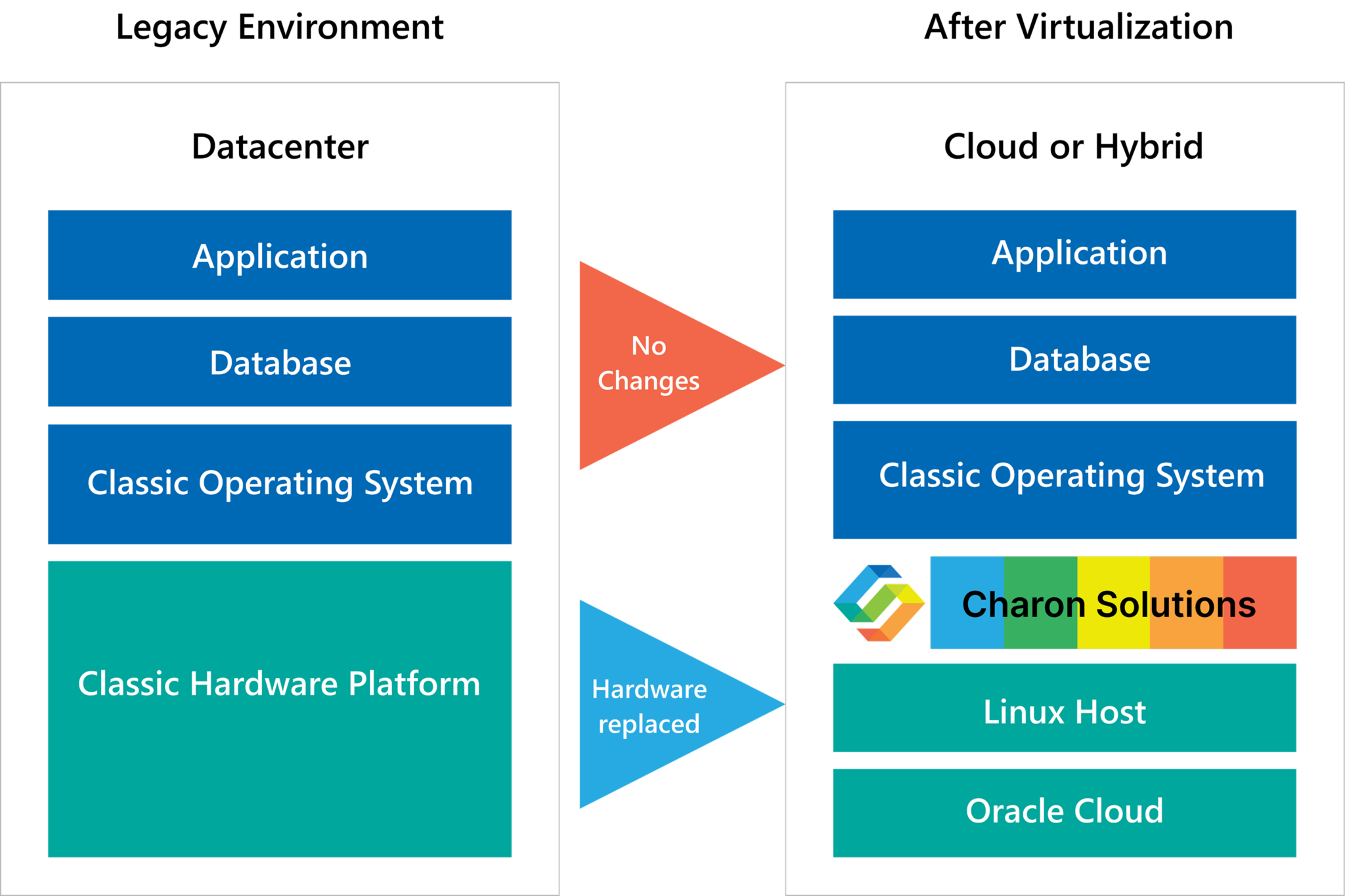
Charon on the Oracle Cloud solutions address this aging platform issue. It replicates the behavior of outdated legacy systems on a modern Oracle Cloud Infrastructure, so original applications keep running unmodified without any interruptions. Here are some benefits of migrating with Stromasys:
Migrating legacy financial systems to Oracle Cloud involves moving core financial functions, including general ledger, accounts payable, accounts receivable, fixed assets, and reporting. These critical workloads and applications are migrated from an on-premises legacy platform to Oracle Fusion Cloud ERP, along with the underlying data, integrations, and business processes that support them to continue their operations.


Many businesses still rely on legacy systems. This may be due to an investment in...
Read More
New technologies are emerging rapidly, yet several organizations depend on outdated systems for critical operations....
Read More