
×

 Why is aging PA-RISC hardware becoming a critical challenge for German manufacturers?
Germany's manufacturing sector faces a critical infrastructure challenge as aging PA-RISC hardware systems reach end-of-life. Operating on the legacy systems not only raises the issue of hardware failure but can also lead to escalating costs and compliance risks. These challenges are a barrier to manufacturers who want to adopt Industry 4.0. However, it is not the end of PA-RISC systems. There are various solutions to modernize the legacy systems, and businesses can choose which is the right method for them to transform their outdated PA-RISC infrastructure.
If they want to cost-effectively modernize the aging PA-RISC hardware while continuing to use their existing critical applications, then hardware emulation is the best option for them. It is a legacy virtualization method that mimics the behavior of aging PA-RISC on a modern platform so that the existing workloads can seamlessly operate without any operational disruptions or expensive rewrites. Another alternative is an expensive one, i.e., a system overhaul. It means completely replacing the entire legacy infrastructure, which can hinder the operations, as it is time-consuming. There is another mid-way solution also known as the hybrid approach, which is the combination of both hardware emulation and system overhaul. Here, it replaces the hardware that can no longer operate while migrating the critical applications to a new platform, preserving the legacy workloads.
With proven migration strategies available, German manufacturers can transform this legacy crisis into a competitive advantage.
 Article

PA-RISC (Precision Architecture – Reduced Instruction Set Computer), was developed in the 1980s and powered several critical workloads running on HP 9000 and HP 3000 systems. German manufacturers have embraced this architecture for its stability and reliability for decades. It was also widely known for its performance in controlling production lines, SCADA (Supervisory Control and Data Acquisition) systems, and process automation. The automotive, chemical, and heavy machinery sectors also invested heavily in PA-RISC-based infrastructure, for its reliability and expected these systems to deliver decades of efficient service.
But after several decades, HP discontinued the sales of PA-RISC systems in 2008. Its standard support also ended in 2013, which rendered most of this infrastructure obsolete.
Here are some significant PA-RISC hardware challenges the manufacturers struggle with in 2026:
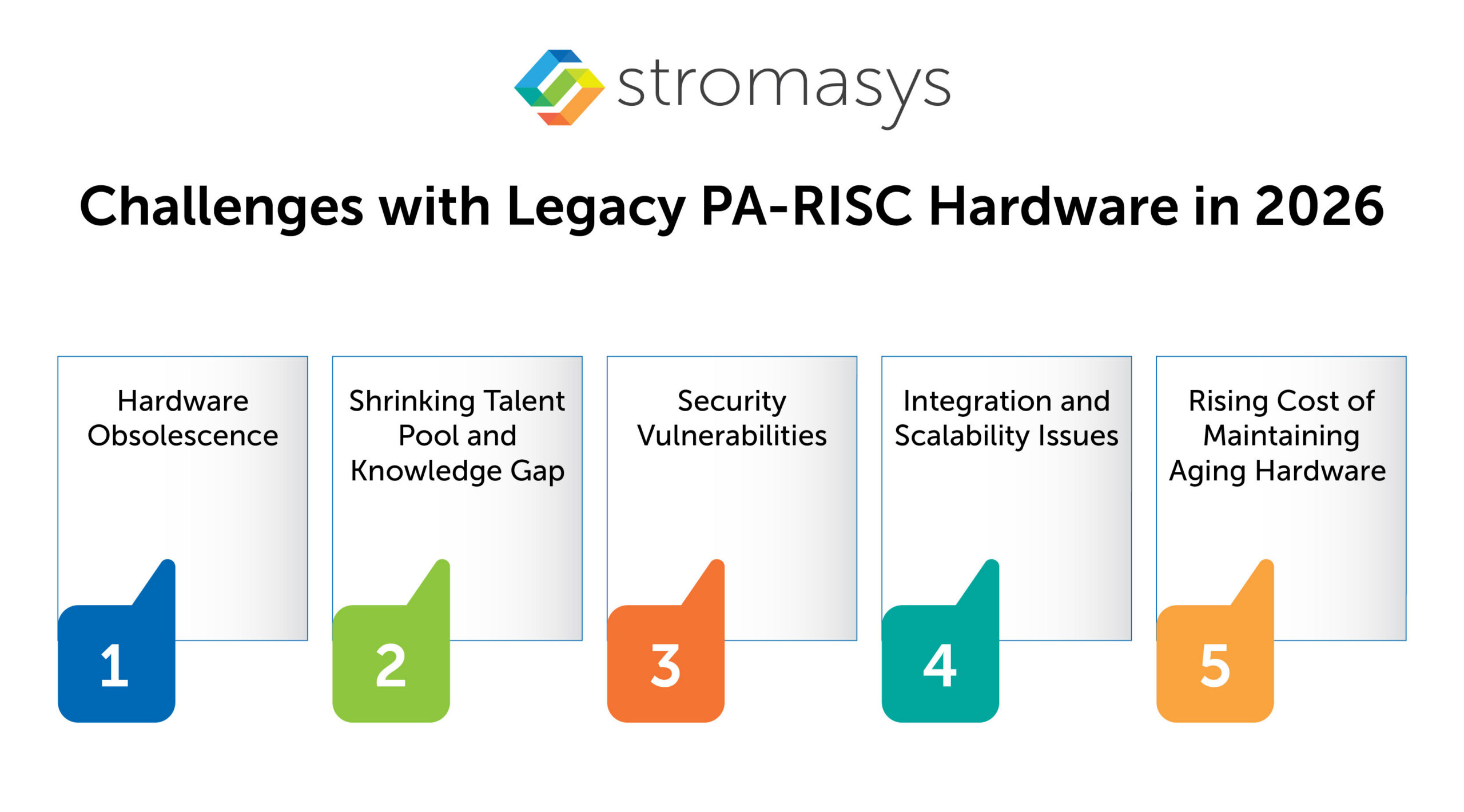
Support for PA-RISC ended years ago, which has resulted in the scarcity of replacement parts and escalating maintenance costs. The aging hardware is prone to failure, and daily operations increase the risk. This critical failure can result in production downtime that will impact not only the business ROI and production but also result in damage to brand reputation.
PA-RISC is a legacy hardware that was developed in the 1980s. It means the experts who are skilled and have in-depth knowledge about it are retiring. The new and young engineers trained on legacy systems are not well-trained on legacy systems. There are no bootcamps or online courses for aspiring PA-RISC specialists. This creates dangerous knowledge gaps, and consultants who offer services ask for premium rates.
Legacy systems significantly expand attack surfaces. A report from Cybersecurity Ventures predicts that the global annual cost of software supply chain attacks will reach $138 billion by 2031, nearly doubling from $60 billion in 2025.
Legacy systems lack modern security measures like encryption, secure boot processes, or the ability to receive security patches. This expands the attack surface area and exposes the critical infrastructure to potential breaches. Legacy systems are vulnerable and have a high chance of being exposed to ransomware attacks.
A couple of years ago, a group of threat actors carried out a major ransomware attack on the Colonial Pipeline. It is a system responsible for delivering 45% of the fuel consumed on the U.S. East Coast. The attack forced a complete shutdown of the pipeline, which created widespread panic. It caused fuel shortages across multiple states and significant economic disruption. To restore operations quickly, Colonial Pipeline paid a $4.4 million ransom to the attackers.
PA-RISC systems are outdated hardware, as they are designed on a monolithic framework. It means it is not compatible with modern technologies like IoT, cloud platforms, and AI analytics, creating data silos that hinder digital transformation. It also means it struggles with Industry 4.0 technologies and manufacturers who want to incorporate more advance features like predictive maintenance, real-time optimization, or flexible production systems find themselves struggling as it hinders digital transformation.
Did you know? Unplanned downtime in German manufacturing can cost around €147,000 per hour. Reports have shown that large plants lose an average of $129 million annually to downtime. Moreover, legacy hardware escalates these risks.
Here are different migration strategies to modernize the aging PA-RISC hardware:
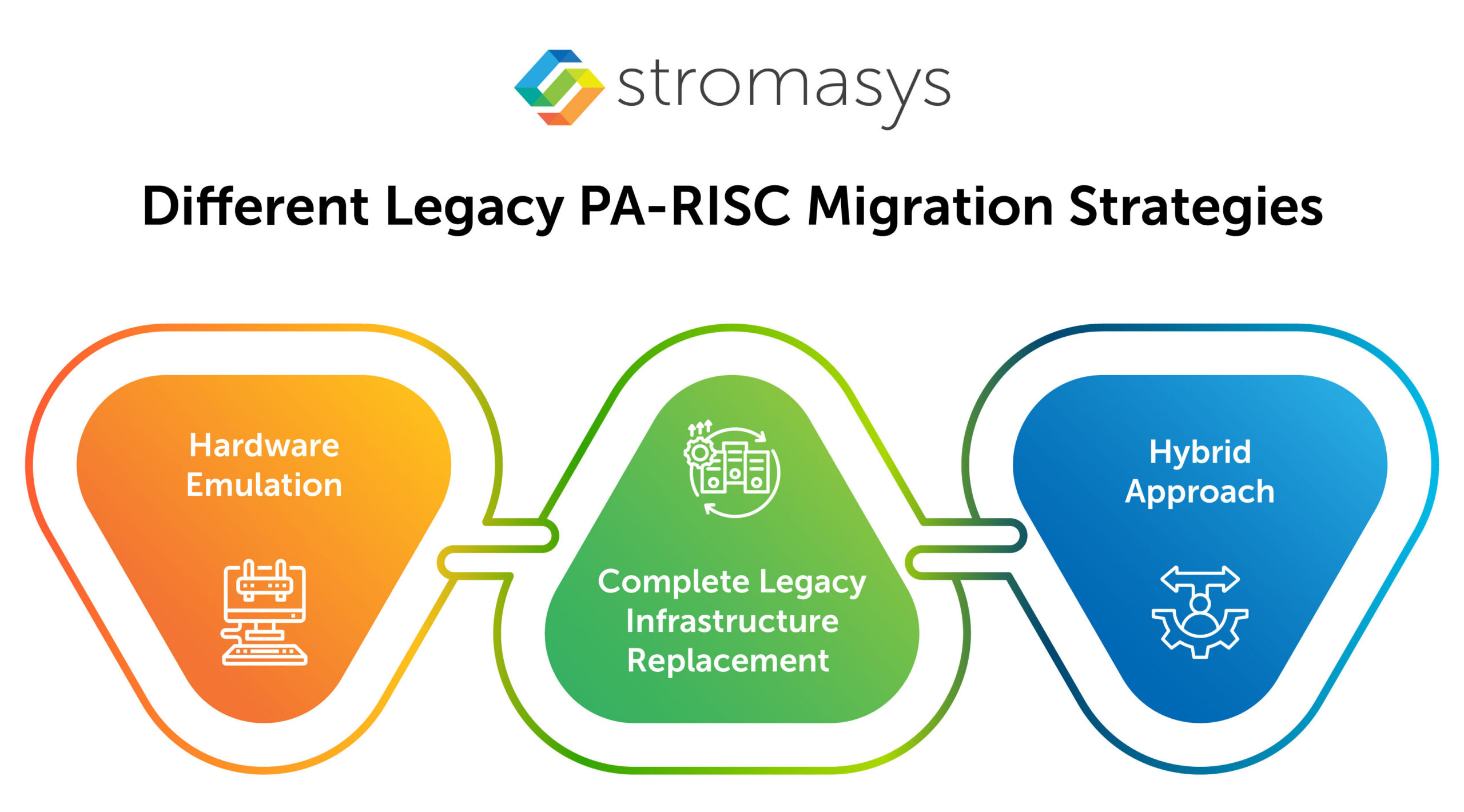
Hardware emulation is a migration approach of moving the critical applications running on the outdated PA-RISC to a modern x86 platform or cloud environments like AWS, Azure, or Google Cloud. It extends the life of legacy applications while leveraging the benefits of modern platforms without any rewriting or operational disruptions.
Solutions like Charon PAR seamlessly migrate critical workloads like HP-UX, MPE/iX operating systems, and other applications to a modern platform without any modifications. It addresses hardware obsolescence and improves security to improve efficiency. Though it doesn’t fully unlock Industry 4.0 capabilities, modernizing the system allows manufacturers to integrate with new technologies while eliminating dependency on legacy architecture.
Another alternative approach for manufacturers is to replace the entire legacy infrastructure. It is a way to embrace open industrial standards like OPC UA (Unified Architecture) for machine-to-machine communication and IEC 61131 for programmable logic controllers. This approach involves replacing proprietary PA-RISC systems with modern industrial PCs and PLCs that support these standards.
The hybrid approach is the combination of both modernization strategies. Many German manufacturers, particularly small and medium enterprises (SMEs), are adopting this strategy. They replace the critical systems that are no longer supported and cannot be preserved, while less vital PA-RISC systems that are still operational are moved to a modern platform.
Since the 1980s, Racine Water & Wastewater Utilities in Wisconsin has been operating on its HP A-400 since the 1980s. This server has been a reliable system for them for decades for running MPE/iX for their primary billing system. They migrated from HP A-400 to a new platform in 2008, but only four years of data were transferred. This left more than 25 years of historical billing records trapped on obsolete hardware. With Wisconsin state regulations requiring access to these records, the utility faced a serious compliance risk and potential loss of critical historical data.
Ken Scolaro, Administrative Manager at Racine Water, partnered with Mike York of Assertive Systems Corporation to find a viable solution. After extensive research, they discovered the Stromasys Charon PAR emulation solution. They partnered with Stromasys and, using CHARON/A408 hardware emulation, they successfully recovered the entire system from old DDS1 backup tapes. It became possible even after one of the original disk drives failed during the process. The legacy environment was virtualized onto a modern PC, allowing the existing applications and full historical database to run without any code changes or staff retraining.
The entire migration preserved legacy applications and data integrity while eliminating dependence on obsolete hardware.
The original hardware was completely replaced with a modern, reliable PC running the legacy system with Charon PAR. Staff regained full access to over 25 years of billing records, and the applications performed exactly as before.
The system installed easily without any unexpected problems and has run flawlessly ever since.
-Mike York, President, Assertive Systems Corporation
One of the best options for enterprise-grade HP-UX emulation is Charon PAR. It emulates the environment of aging PA-RISC hardware on a modern platform so that the existing HP-UX operating system can seamlessly operate without any code changes.


The IT landscape is rapidly evolving, and businesses still running legacy hardware are facing numerous...
Read More
Did you know a 1990s-era processor design still flies on NASA/ESA Solar Orbiter? That’s right!...
Read More
Fun fact: The HP 9000 series reached its End of Life (EOL) on April 30,...
Read More